
5 steps to help you achieve the Sustainable Development Goals socially, economically and environmentally

5 steps to help you achieve the goals of sustainable development socially, economically and environmentally
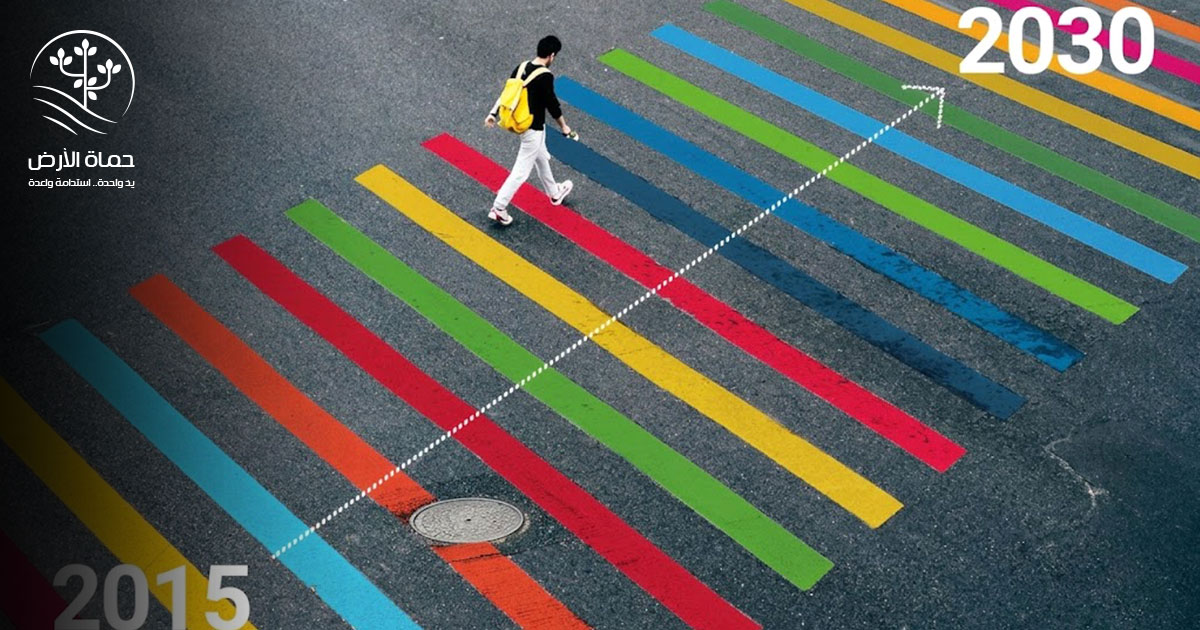
The Sustainable Development Goals are 17 global goals adopted by the United Nations in 2015 within the 2030 Agenda, and they combine three complementary dimensions: first social, then economic, then environmental. In Egypt, these goals are embodied in “ Egypt Vision 2030 “; It is the national plan for sustainable development, which was launched in February 2016 according to the three dimensions.
From this angle, The Earth Guards Foundation presents to you, the reader, simple steps that will help you achieve the goals of sustainable development in your life and the lives of others, and this After we quickly introduce you to the concept of sustainable development and its three dimensions; So keep reading.
What is sustainable development?
Sustainable development is meeting the needs of people today without compromising the rights of future generations to meet their needs, and it has seventeen goals of various dimensions, and these goals can be measured and tracked until 2030.
These goals are called Sustainable Development Goals in English, abbreviated to (SDGs), and they are the basis of what is known as the 2030 Sustainable Development Plan, which was approved by the United Nations.

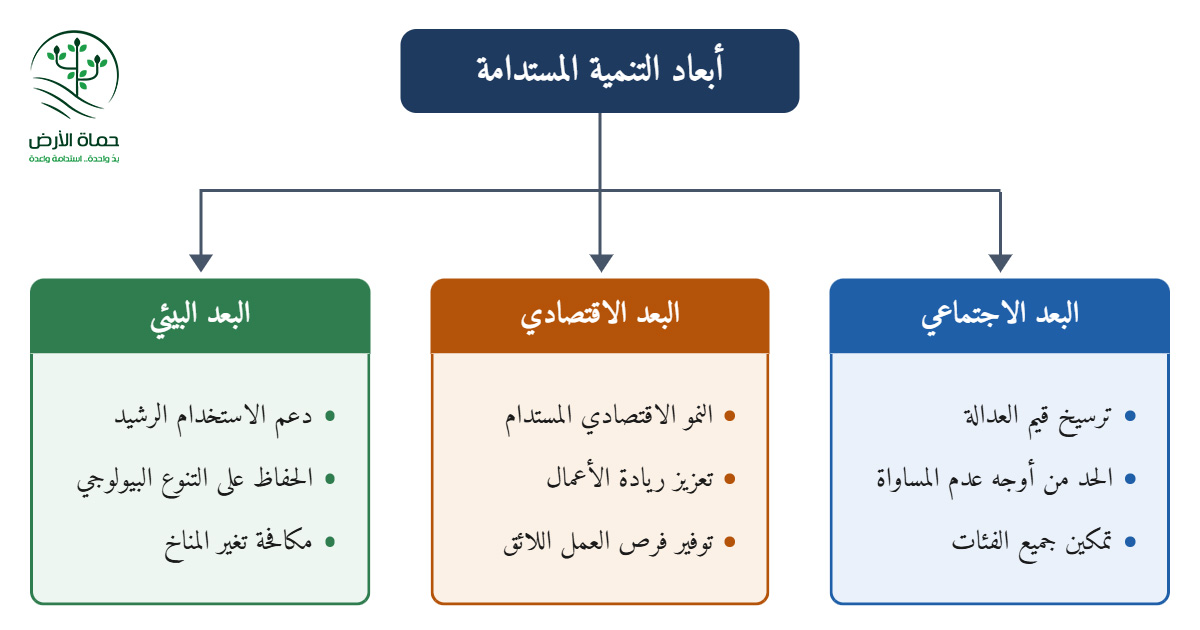
The sustainable development goals plan is based on three important dimensions:
- Dimension Social
- The economic dimension
- Environmental Dimension

The social dimension: humans first
The social dimension is the foundation and essence of the sustainable development goals; The goal behind this plan is humanity, which calls for the right to food, good health, education, equality, and justice. There is no meaning to development that leaves segments of society behind.
The economic dimension: sustainable livelihood opportunities
Then there is the economic dimension, which includes decent work, growth, innovation, energy, and infrastructure; Based on the fact that growth that does not create jobs and is not distributed fairly is not It is considered real sustainable development.
The environmental dimension: a breathing land
The environmental dimension relates to the land on which humans live, and is limited to issues of climate, water, biodiversity, and natural resources. If this foundation is exhausted, the other two dimensions collapse with it.
Here is a common mistake that reduces sustainability to planting trees, recycling waste, and other efforts to preserve the environment around us. Thus, we drop two entire dimensions of it, and that is why Egypt’s national agenda – Egypt Vision 2030 – came in a comprehensive format that addresses the goals of sustainable development with their social, economic, and environmental dimensions together.

Integration between society, economy and environment
Any successful policy measures its impact by achieving well-being, jobs and natural resources together, not by working in isolation. This integration prevents the depletion of resources or the widening of social disparities, so development loses its meaning with time. Therefore, our vision of sustainable development should be based on humans first, then the economy, then the environment.
5 steps to achieving sustainability
Now we will answer you in simple steps on how to achieve comprehensive sustainability in our lives, and this is based on the fact that achieving development goals is not a responsibility limited to governments alone; Because they – that is, the seventeen sustainable development goals – are achieved when individual decisions are integrated with community initiatives and institutional policies. Here are the steps in order.
1- Start with a mindset before the project
Sustainability is thinking about how today’s decision will impact tomorrow; This is why you must ask yourself before any decision: Does it serve my future? Does it conserve or consume resources? Does it actually solve the problem or postpone its impact?
2- Turn thinking into a habit
The impact of one individual may not be seen alone, but it gains real weight when conscious practices turn into broad collective behavior. Rationalizing water and electricity consumption, reusing and recycling, and choosing products that are less harmful to the environment. All of these are practices that reduce resource depletion.
Thus, the strong link between individual behavior and the goals of sustainable development becomes clear. It supports the conservation of resources The environmental dimension, and the efficiency of spending enhances the economic dimension, while community participation contributes to consolidating joint responsibility towards the present and the future.
3- Join a community initiative
You should know that planning, commitment and continuity are important conditions for teamwork. That is, you need to search for an environmental, educational, or awareness-raising initiative near you, and join it as a volunteer or participant with your opinion; Because initiatives are the space where ideas turn into real impact, and community participation is an essential driver of sustainability, not just a part of it.
4- Start a small project
It doesn’t take a huge project to achieve a sustainable positive impact, there is Some small or even micro projects can change the consciousness of an entire generation. If you seek to become an entrepreneur, you must commit to implementation and continuity.
5- Find someone who supports you
There is no doubt that the efforts of individuals are great, but sustainability is not achieved by them alone, and this is what we alluded to previously. Because individuals always need governments that support them with effective decisions, transparent governance, and guaranteed basic rights, and civil society institutions contribute – through their relationships, funding, and training capabilities – to spreading awareness and increasing the impact of effective participation among members of the same society.
Hence, the five steps gain their meaning when the boundaries of individual behavior extend to building a general culture that reviews consumption patterns. It supports local initiatives, gives small enterprises opportunities to grow, and demands that institutions implement fairer and more efficient policies.
Accordingly, the vision of the The Earth Guards Foundation is based on that the most important test of sustainable development lies in its ability to combine what a person needs in his life, economy, and environment; Progress cannot be reduced to an increase in economic indicators if its fruits remain far from the groups most in need. Environmental protection is not considered a complete achievement if it lacks means of decent living. Nor is social justice sustainable in light of the depletion of resources and the deterioration of the necessities of life.


