

AI drives progress amid fears of widening economic gap
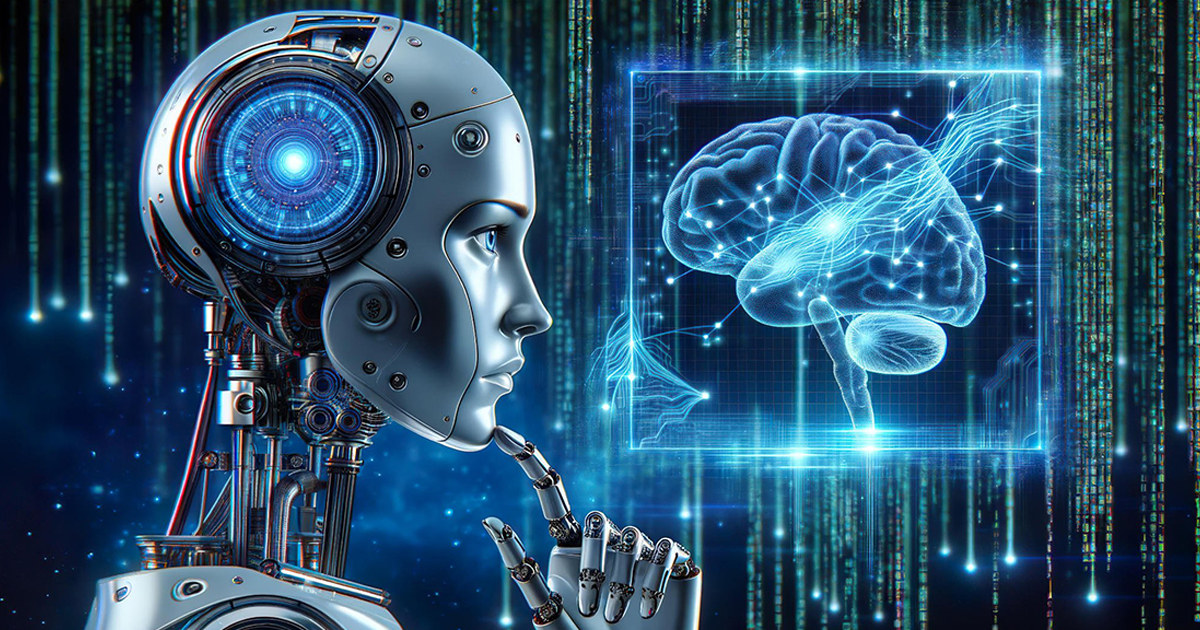

Artificial intelligence leads the path of progress amid fears of a widening economic gap
The world is witnessing profound economic and social transformations that are reshaping patterns of production and daily life, at a time when pressures on the most vulnerable groups are increasing and gaps between countries are widening. At the heart of this scene,Artificial Intelligenceemerges as a rising force that holds great promise for enhancing growth and productivity, but – in the absence of fair governance – it may turn into a factor that deepens imbalances instead of addressing them.
International estimates indicate that the uneven expansion in the adoption of these technologies threatens to deepen the economic gap. Countries with advanced digital infrastructure benefit more quickly, while other economies face challenges in building capabilitiesAnd the skills needed to catch up with this transformation.
This contradiction is clearly evident in regions that combine disparate development models, such as Asia and the Pacific, where there are global technological centers alongside countries that are still fighting the battle of building digital foundations. Which makes the region a revealing example of how artificial intelligence can be either a lever for development or a new source for widening digital divides.
The development of artificial intelligence portends a new global gap
In detail, a recent report issued by the United Nations Development Program warns that artificial intelligence “is advancing rapidly, while many countries are still at point zero,” in a description that reflects the widening gap between countries capable of developing these technologies and those that only receive their effects without possessing real tools to keep up.Transformation.
The UN report – which was briefly titled: – The Next Great Divergence – raises fears of the emergence of a new pattern of technological inequality, a pattern that is reshaping the balance of economic power globally. Over the decades, low-income countries succeeded in reducing the development gap with major economies during the second half of the twentieth century, driven by technological progress, trade openness, and improved levels of education and economic income.

However, the acceleration of artificial intelligence threatens to change the course of this reduction. The gap may widen again unless comprehensive policies are adopted that ensure a more equitable distribution of technology gains, and prevent entire countries and groups from being left out of the digital transformation path.
This imbalance clearly appears when looking at regional experiences, where highly advanced technological centers are adjacent to…Economies still struggling to catch up with the global digital transformation; Because in these contexts the gap extends to the ability to localize and adapt it to serve development. Which makes the future of benefiting from artificial intelligence dependent on the extent of comprehensive policies and their ability to transform innovation into broad social and economic value. We find it present in a region such as the Asia-Pacific region.
Asia and the Pacific is an example of an uneven global transformation
UNDP report focuses on the Asia-Pacific region as the “global testing ground” for the impacts of AI; Because of the sharp disparity between technologically advanced countries and others that still suffer from a lack of electricity or Internet connectivity.
This is what the numbers reveal; Although the Asia-Pacific regionIt embraces more than 55% of the world’s population, and accounts for more than half of the users of artificial intelligence technologies. Benefiting from this digital boom remains unequal among its countries.
Also, recent estimates indicate that China, for example, alone holds about 70% of global artificial intelligence patents, in addition to the establishment of thousands of startup companies specializing in smart technologies within a limited number of Asian economies, while other countries in the region remain outside this accelerating digital path.
On the other hand, limited skills and computer capabilities and weak governance systems limit the extent of the potential benefits, while the associated risks multiply. Such as job losses, the exclusion of broad categories of digital data, and rising global demand for energy and water due to artificial intelligence-intensive systems.
The effects of the global social crisis affect the most vulnerable groups. Data show that women’s jobs are nearly twice as likely to be replaced by technology compared to men’s, and at the same time, young people’s employment – especially between 22 and 25 years old – declines in jobs that are subject to automation (employing digital technologies and smart systems to carry out tasks and processes that were previously handled by humans manually).

Promising opportunities and absent governance
Despite these challenges, the spread of artificial intelligence reveals great opportunities to improve the efficiency of public governance, in promising global models, such as:
Bangkok
Bangkok is contributing through its “Traffy Fondue” platform, which provides an easy way for citizens to report city problems; inProcessing about 600,000 complaints from citizens, which helped reduce response time and improve coordination of the work of local authorities.
It is an example of employing artificial intelligence to enhance trust between citizens and public institutions, and transform daily data into a practical tool for decision-making and improving the quality of services. Provided that this is coupled with transparency, accountability, and broad participation, so that smart technologies do not turn into a new source of inequality or exclusion.
Singapore
Similarly, Singapore has succeeded in employing digital solutions and smart systems through the “Moments of Life” service in creating a qualitative shift in improving the efficiency of government services. This service has shortened the time for completing procedures related to newborns from about 120 minutes to only 15 minutes.
The UN program report highlightsThis model is considered evidence of the ability of artificial intelligence to simplify the citizen’s journey within public institutions, improve integration between government agencies, and transform services from fragmented procedures to integrated experiences, thus enhancing confidence.
Beijing
In Beijing, there is also digital twin technology, which has become real-time digital models that support urban planning and flood risk management. That is, it has become a virtual model that represents the living digital copy of any actual entity or system.
Artificial intelligence is at a crossroads
Considering the above – in light of the rapid spread of artificial intelligence technologies – only a few countries have comprehensive regulatory frameworks that govern artificial intelligence technologies, at a time when warnings indicateThe United Nations indicated that the misuse of these technologies may cause more than 40% of data breach incidents related to artificial intelligence by 2027.
These warnings are accompanied by a recommendation to quickly address the roots of the problem, and an affirmation that the future of digital transformation will depend primarily on the extent of countries’ ability to build a fair digital infrastructure, develop skills, and establish government frameworks capable of protecting societies from the repercussions of this accelerating transformation.
In conclusion, the United Nations Development Program reveals that the digital divide is a technological issue anda social and economic challenge; The future of benefiting from artificial intelligence is linked to the ability of countries tolocalize innovation, qualify cadres, and develop comprehensive policies that guarantee digital justice, taking into account the protection of the most vulnerable groups from the effects of automation.And digital exclusion.
ThereforeEarth Defenders Foundationcalls on all societies to develop smart and sustainable policies; In order to bring about a positive shift in efforts to integrate artificial intelligence and its tools into comprehensive development strategies; Strategies that balance innovation with the distribution of benefits and risks, and place humans at the center of this global digital transformation.


