Plastic waste crosses borders.. How did Britain’s waste reach Türkiye’s fields?
On the outskirts of the city of Adana in southern Turkey, a water canal passes near one of the major recycling areas, before extending to agricultural lands in the Çukurova Plain, one of the largest and most fertile agricultural basins in the country. But today these waters carry with them disturbing effects Plastic wasteAfter recent samples revealed high levels of microplastic in a stream directly linked to canals used to irrigate crops.
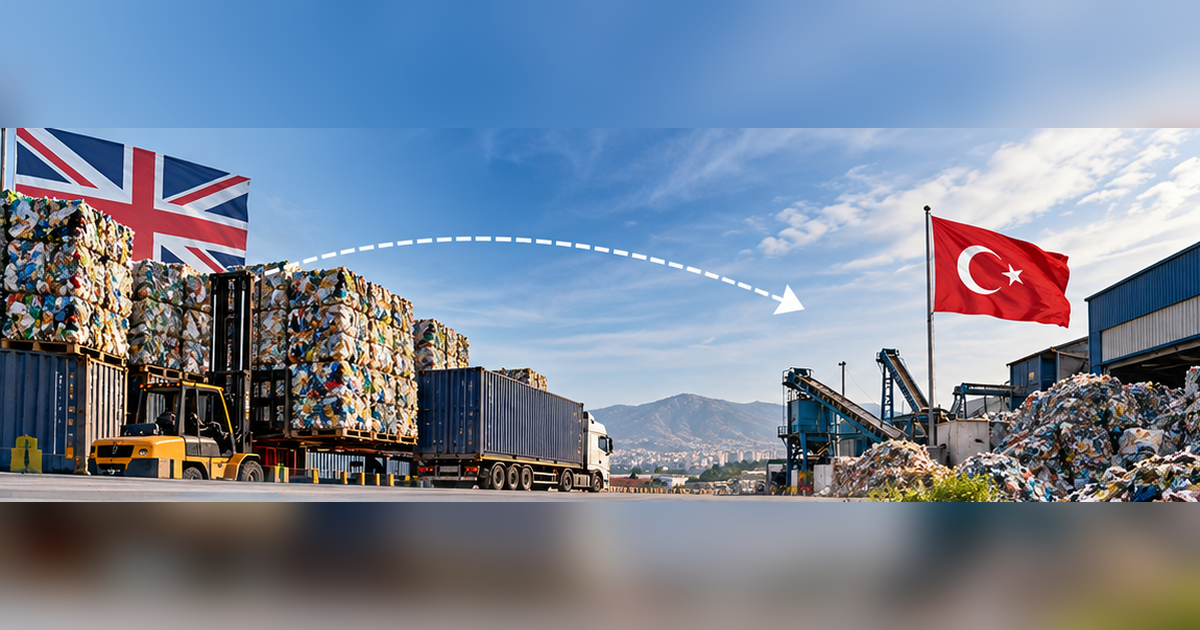
The story begins far from the Turkish fields; In Britain, huge quantities of plastic are collected under the umbrella of recycling, and then some of it is exported abroad for processing. In recent years, Türkiye has become one of the most prominent destinations for these shipments, which has raised a broader question about who bears the real environmental cost of waste after it leaves the country that consumed it.
Britain exported about 675,000 tons of plastic waste during 2025, the highest level in eight years, of which nearly 139,000 tons went to Türkiye.
In the same year, exports exceeded European Union Of used plastic to Türkiye 500 thousand tons, an increase of 19% compared to the previous year.
These numbers reveal the volume of cross-border trade in plastic waste, as large quantities of materials disposed of in European countries move to processing and recycling facilities located thousands of kilometers away.
In Adana specifically, an analysis of import and export data showed that 13 British companies sent 545 shipments totaling about 52,000 tons to eight facilities within the recycling zone between May 2021 and July 2024.
Plastic gets into the water
The problem became clear when examining the water surrounding the area. Samples taken from the canal after it passed through the recycling area recorded levels of plastic pollution that amounted to about 10 times the levels recorded in the sites located before the area.
The researchers also found plastic granules, films, and fragments that are highly consistent with waste resulting from plastic processing and recycling operations.
These results are of great importance because the polluted stream overflows onto agricultural lands during heavy rains, then empties into a larger canal used to irrigate crops in the Çukurova Plain, and here the plastic waste crisis moves from processing facilities to an issue linked to water quality, agriculture, and food safety.
From water to crops
Turkish marine biologist Sedat Gundogdu, who conducted the sampling, warned that the discharge of microplastic-laden water into irrigation canals raises concerns about farmland pollution and food safety.
And represents Plain Çukurova It is an important agricultural production area, so the arrival of plastic pollutants into the irrigation network raises questions about what could happen to the soil and crops in the long term.
This intersects with the sixth goal sustainable development Concerned with clean water, which is associated with improving water quality and reducing pollution, especially when irrigation sources themselves become a pathway for pollutants to move into the agricultural environment.
It appears here that dealing with plastic waste is related to how it is disposed of, as well as what happens after it enters treatment facilities and the extent to which these facilities are able to prevent the transfer of waste to water and soil.
The road ends in the sea
The impact of pollution from plastic waste extends far beyond the fields. The water emerging from these canals eventually reaches the Mediterranean Sea.
This means that microplastic resulting from processing operations could transform from an internal problem in Adana into part of the broader marine pollution crisis, and researchers believe that this increases the accumulation of plastic in the sea and undermines efforts to protect marine systems.
Hence, the file is also linked to the fourteenth goal of the Sustainable Development Goals on life under water, especially with regard to reducing marine pollution coming from land-based activities.
What does “waste colonization” mean?
The results of the investigation revived the use of the term “waste colonialism,” which is a term that describes the transfer of part of the waste of rich countries to other countries that have systems less capable of controlling or managing these quantities to the same standards.
The idea here is that the exporting country benefits from eliminating a portion of the waste burden outside its borders, while the receiving communities bear a greater portion of the environmental, health, and economic risks.
Activists in Britain and Turkey believe that the continued export of plastic waste on this scale reflects an imbalance in the distribution of responsibility, especially when pollution appears in areas where people live less able to cope with its effects.
This discussion also points to the essence of Sustainable Development Goal 12 on responsible consumption and production, which calls for sound management of waste, reducing its production and promoting recycling in a way that protects the environment and society.
Recycling or moving the problem?
Worrying signs have previously appeared in Adana. In 2021, a previous investigation revealed traces of plastic waste coming from British stores that had been disposed of or burned in the area.
In the same year, Turkey announced a ban on some types of waste, including polyethylene, which constitutes a large proportion of British plastic exports, before retracting the decision after pressure from the recycling sector.
The current investigation does not indicate that British exporting companies have committed illegal acts, but they are obligated under rules regulating waste trade to ensure that what they export is treated in an environmentally sound manner.
The British government says that there are strict controls on the export of waste, and that companies are required to ensure that it is managed safely, in addition to taking steps to reduce the need for export in the future.
Europe tightens restrictions
At the same time, the European Union is moving to tighten restrictions on plastic waste exports as well, with a ban on some exports to countries outside… Organization for Economic Cooperation and DevelopmentHowever, Türkiye is already a member of the organization, which raises concerns among activists that the flow of waste to it may increase rather than decrease.
The researchers call for the installation of mandatory microplastic filtration systems inside recycling facilities, along with independent monitoring of wastewater in agricultural areas.
Activists also call for increased investment in reducing the use of plastic and processing it within the countries that produce it, instead of increasing reliance on exporting it abroad.
When the waste gets into the food
The story of Adana reveals that the journey of plastic does not end when it is thrown into the recycling bin. A container used in Britain may travel thousands of kilometers before reaching a facility in Turkey. Its trace then appears in a water channel linked to fields that produce food, before the pollutants continue their journey towards the Mediterranean Sea.
And it was damaged The Earth Guards Foundation Sustainable management of plastic waste begins with reducing its production and taking responsibility for its entire life cycle, including what happens to it after it is collected, exported, and processed.
Waste crossing borders exacerbates its environmental impact, by transporting it to another community, other waters, and fields far from where the story began.