

Egypt Marks Distinguished Presence at the International “One Sustainable Health for All” Conference
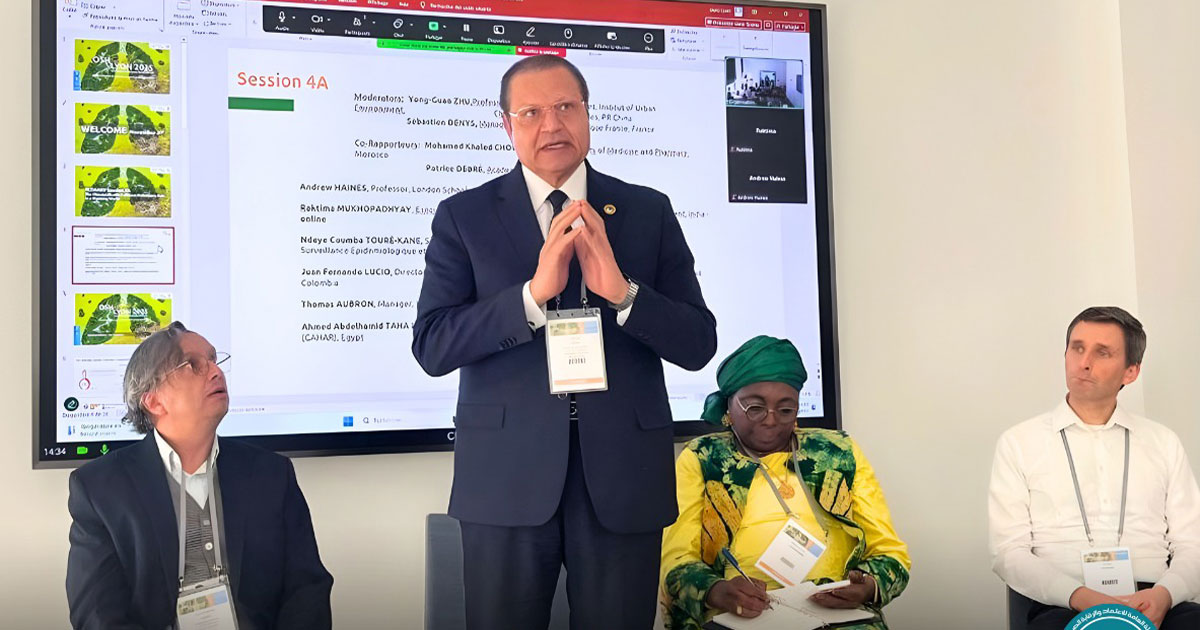
Egypt records a distinguished attendance at the international conference “One Sustainable Health for All”
Dr. Ahmed Taha, President of the General Authority for Health Accreditation and Regulatory (GAHAR), received an invitation to participate in the annual international conference “One Sustainable Health for All,” which was hosted by the French city of Lyon from the French Development Agency (AFD) in the period from 2 to 5 November of this month. An elite group of global health leaders, representatives of international bodies, UN organizations, and decision-makers in the fields of public health, environment, and sustainable development also participated.
Nexus between health, climate and environment
The discussion session addressed the topic “In light ofGlobal warmingGlobal: The impact of pollution on human health in times of climate change (“Climate-Health Collision: Pollution’s Role in a Warming World”). The head of the Health Accreditation and Supervision Authority presented an integrated Egyptian vision on the close interrelationship between health, climate, and the environment.
He also pointed to the effective role played by the General Authority for Health Accreditation and Regulatory (GAHAR) in one of the vital files that the Egyptian government is concerned with to achieve comprehensive and sustainable development by linking it to the health care system, and launching Green Healthcare Facilities Standards, which is one of the first regional standards compatible with the directives of the World Health Organization and the Paris Climate Agreement.

Dr. Ahmed Taha stated that “Jahar” is making unremitting efforts that are not limited to accreditation and quality of health facilities, and is expanding to lead the transformation towards…More resilient and sustainable health systems that can confront environmental and climate risks. It also includes qualifying medical personnel and developing national policies for quality and sustainability. In implementation of Egypt’s Vision 2030 and the directives of President Abdel Fattah El-Sisi.
High-level bilateral meetings
On the sidelines of the conference, Dr. Ahmed Taha held several high-level bilateral meetings with Dr. Benoit Meribel, “President of the French Commission for One Sustainable Health for All,” affiliated with the French Pasteur Institute. They discussed opportunities for cooperation and exchange of experiences in the field of combating climate risks and their impact on human health.
He also held a meeting with Dr. Agnès Soukat, “Director of the Health and Social Security Sector at the French Development Agency,” in which they discussed ways to strengthen the partnership between the agency and “Jahar” in health quality projects.Shifting towards green facilities, and pushing joint projects towards greater integration and influence in supporting Sustainable Development Goals (SDGs).

Discussing ways of cooperation with the World Health Organization Academy
Within the framework of international cooperation in the fields of health education and training, the Chairman of the Authority was keen to visit the World Health Organization Academy in the French city of Lyon, where he learned about its distinguished institutional capabilities, and discussed with its officials ways to activate cooperation with “Jahar” to benefit from its specialized training programs in the quality of health care, patient safety, and environmental sustainability, in a way that contributes to the development of Egyptian health personnel and enhances the competitiveness of the Egyptian health system at the regional and global levels.
The participation of the Chairman of the Health Accreditation and Control Authority in this major international forum reflects Egypt’s presenceActive in the global health arena, and confirms the growing role of “Jahar” as one of the most important national arms in leading the transformation to a health system more capable of facing climate and environmental challenges, based on advanced standards and comprehensive sustainability, in a way that advances the citizen and protects the planet for future generations.
TheThe Earth Guards Foundationencourages the cooperation of countries and international institutions interested in sustainable development and environmental preservation in order to combat environmental and climate changes, and also believes that linking them with the health system is necessary to expand the scope of sustainable development; They come together at one point, and call for more efforts to be made towards achieving a healthier human being and a cleaner environment.


