

Renewable Energy and Sustainable Fuel: New Investment Projects in the Suez Canal Zone

الطاقة المتجددة والوقود المستدام.. مشروعات استثمارية جديدة في منطقة قناة السويس
The economic file receives great attention from the Egyptian government, and therefore it is making expanded efforts to bring about a qualitative shift in the structure of the national economy by shifting towards a green economy and making Egypt a regional center for sustainable energy. Accordingly, it is working to expand green hydrogen projects and producesustainable fuel (SAF) and renewable energy.
إلى جانب التركيز على تحقيق الاستقرار المالي، وتمكين القطاع الخاص وفتح المجال أمامه لقيادة القاطرة التنموية عبر تذليل العقبات البيروقراطية وتقديم حوافز استثمارية غير مسبوقة، مع العمل بالتوازي على تحسين البيئة التشريعية والضريبية لخلق مناخ جاذب للاستثمارات الأجنبية المباشرة.
In light of these sustainable transformations, the Suez Canal Economic Zone is enjoying great momentum represented by its success in attracting investments worth more than $13.5 billion. These investments will be implemented over the coming period through more than 380 projects, and these projects will provide 120,000 new job opportunities.
The first Qatari investment in the Suez Canal Economic Zone
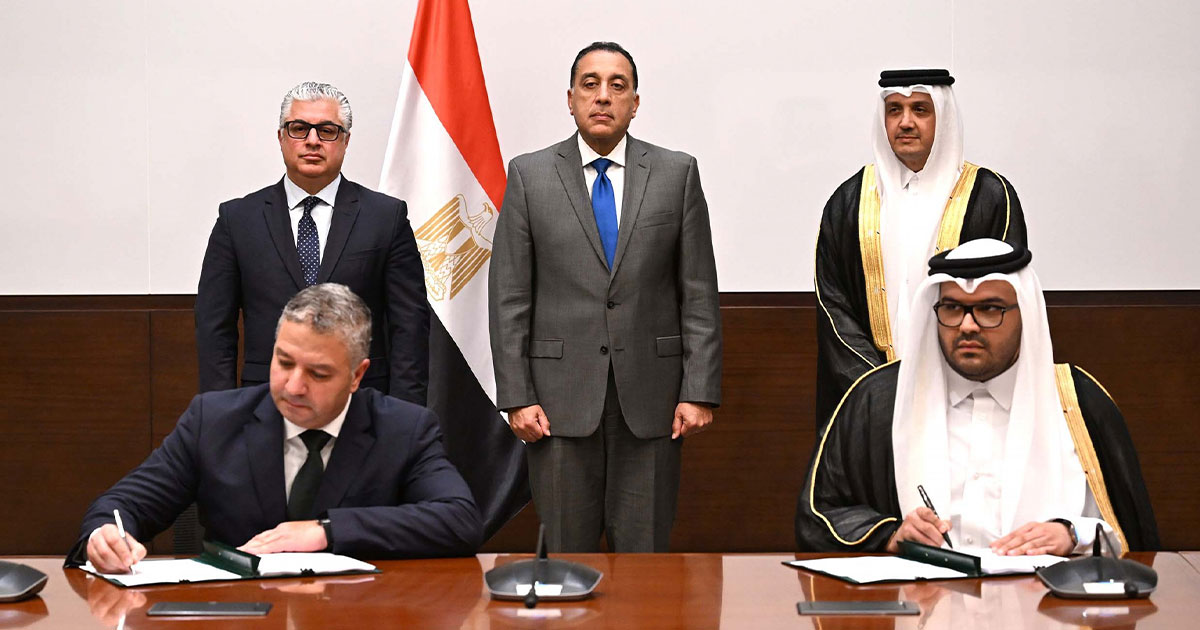
In light of the directives of His Excellency Mr. President Abdel Fattah El-Sisi, President of the Republic, to encourage joint investments and Qatari investments in Egypt, Dr. Mostafa Madbouly, Prime Minister, announced in the weekly government meeting the signing of an agreement to establish the first factory in Egypt to produce sustainable aviation fuel (SAF) in the Suez Canal Economic Zone.
Sustainable fuel (SAF) will be extracted from the process of refining used food oils.باستثمارات من شركة قطرية كبيرة تعمل في هذا المجال، وتضخ في المرحلة الأولى من هذا المشروع 200 مليون دولار لتنفيذ هذه التقنية المتقدمة ويُقام المشروع على مساحة 100 ألف متر مربع.
وقد شهد توقيع اتفاقية إنشاء المشروع معالي رئيس مجلس الوزراء الدكتور مصطفى مدبولي والسيد وليد جمال الدين، رئيس الهيئة العامة للمنطقة الاقتصادية لقناة السويس.

Reducing harmful emissions compared to conventional fuels
ومن جانبه، أكد السيد وليد جمال الدين، رئيس الهيئة العامة للمنطقة الاقتصادية لقناة السويس، أن المصنع الجديد يعد أحد المحاور Home لاستراتيجية الهيئة المتمثلة في جذب صناعات متقدمة صديقة للبيئة، موضحًا أن المشروع يسهم في خفض الانبعاثات الضارة بنسبة تتراوح بين 50 و80% مقارنةً بالوقود التقليدي، ويعزز مكانةThe region will be a regional center for clean energy industries.
The project is based on three phases: تبلغ استثمارات المرحلة الأولى منه 200 مليون دولار، وتصل الطاقة الإنتاجية لهذه المرحلة إلى 200 ألف طن سنويًّا، كما سيسهم في توفير من 300 إلى 500 فرصة عمل مباشرة، وما يزيد على 3000 فرصة عمل غير مباشرة في الأعمال اللوجستية والخدمات وسلاسل الإمداد.
Integrated complex for the production of solar panels
As part of the expansion of renewable energy projects, a new company signed an agreement to establish a new integrated complex for the production of solar panels in the Suez Canal Economic Zone, and it will work side by side with already existing companies.
It will play a major role in reducing dependence on fossil fuels, reducing harmful carbon emissions, and helping to expand dependence on energy.المتجددة النظيفة بأسعار معقولة وهو ما يمثل أحد أهداف التنمية المستدامة الشاملة.
وفي هذا السياق صرح الدكتور مصطفى مدبولي: تم خلال الأسبوع الجاري وضع حجر الأساس للشركة المنتجة للألواح الشمسية، وهو مشروع يحظى بأهمية بالغة يُقام من خلال تحالف “مصري صيني إماراتي بحريني”، بقيمة استثمارات تتجاوز 210 ملايين دولار.
ومما سبق تتحقق أهداف التنمية الشاملة المستدامة اقتصاديًّا عبر تعزيز النمو الاقتصادي وتشجيع الابتكار والهياكل الأساسية، وبيئيًّا من خلال توفير الطاقة النظيفة والوقود المستدام بأسعار معقولة مما يقلل من الانبعاثات الضارة ويحمي الكوكب والموارد الطبيعية.

وفي الختام، تتجلى الإنجازات الوطنية في المنطقة الاقتصادية لقناة السويس في مسيرة مصر نحو الاقتصاد الأخضر وتحقيق التنمية المستدامةComprehensive socially, economically and environmentally. The succession of achievements confirms the great responsibility in resource management and development, especially with the signing of qualitative agreements such as establishing the first factory to produce sustainable aviation fuel (SAF) with Qatari investments, and projects of integrated complexes for the production of solar panels with international agreements.
These projects are clear practical steps to reduce dependence on fossil fuels and reduce carbon emissions, which consolidates Egypt’s effective role at the regional and international levels in promoting reliance on renewable energy and sustainable fuels (SAF).
This strategic direction strengthens the status of the Suez Canal Economic Zone as a real development engine capable of attracting billions of dollars in investments and providing quality job opportunities, which is fully consistent with the comprehensive Sustainable Development Goals (SDGs) called for by the Hama Foundation.Land – Goal (7) clean and affordable energy – and Egypt’s Vision 2030 to achieve prosperity and well-being for current and future generations.


