

The Green Health Shift: How Eco-Friendly Hospitals Protect Both Environment and Patients
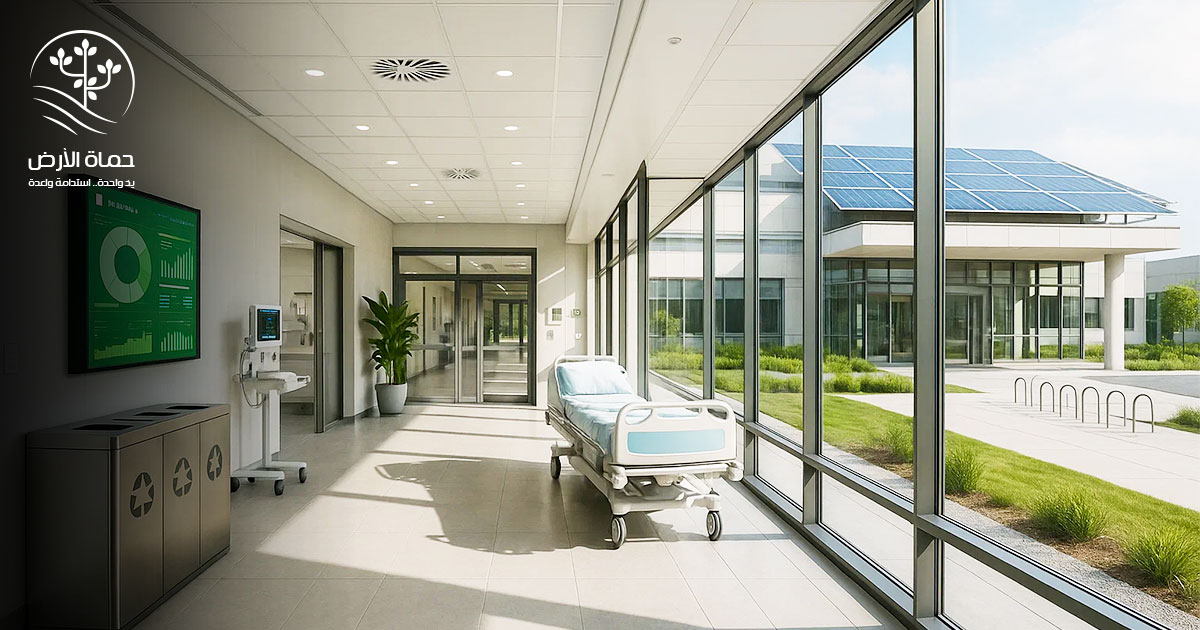

Green transformation in the health sector.. How do green hospitals protect the environment and patients together?
Hospitals carry a noble mission based on treating patients so that they are healthy, and it is illogical for them to deteriorate the health of healthy people with injuries that are sometimes incurable, and in this article we discuss the important aspects of the process of transitioning to green hospitals.
This is based on the role of theSustainable Development Goals (SDGs) – in their three social, economic and environmental dimensions – in preserving the planet, reducing emissions, protecting natural resources, achieving optimal management of medical waste and combating pollution through the environmental dimension; It has become necessary for hospitals to transform into green hospitals that help achieve these goals by achieving a sustainable environment.
Hospitals may negatively impact the environment and the surrounding population, by consuming a large amount of energy and water, and disposing of hazardous medical waste in an incorrect manner that is not consistent with environmental and health standards.
Hence the plan to transform into green hospitals began, and therefore it was necessary to set standards for hospitals through which high-quality health care can be achieved, without causing harm to the surrounding environment or the population, in order to preserve this lofty message.
The Earth Guards Foundation reviews the most important necessary standards set by the General Authority for Health Accreditation and Control that hospitals must follow in order to transform into a leading model of green hospitals.
Green Hospitals
Green hospitals mean providing high-quality health care while reducing impactNegative impact on the environment, by relying on renewable energy sources, reducing the use of environmentally harmful materials, and preserving water resources.
It is also necessary to dispose of medical waste in a safe manner, with a focus on improving the work environment for the facility’s medical staff and reducing the carbon footprint.
Developing the health system and rehabilitating hospitals
In this context, Egypt is taking steady steps towards developing government health facilities and transforming them into green facilities in an effort to achieve the goals of sustainable development in their three dimensions, and one of these steps is the national initiative for green projects adopted by the Ministry of Health, to achieve green transformation in the health sector and transform hospitals into green hospitals by applying environmentally friendly practices, rationalizing the consumption of resources, and raising environmental awareness among workers in health facilities, including…It contributes to improving the work environment and the quality of health services provided to citizens in line with the National Strategy for Sustainable Development and Egypt’s Vision 2030, which reflects the state’s interest in the safety of the environment and citizens along with treating patients. The idea of health safety has expanded to include protecting healthy people before they turn into patients.

This trend comes in light of the global movement towards achieving Sustainable Development Goals (SDGs), especially their environmental dimension, which calls for protecting the Earth from harmful emissions. Therefore, all countries are working to achieve environmentally friendly systems in all sectors, especially the health sector, in an era in which the urgent need for what is known as green health facilities, based on the concepts of sustainability and the green environment in design, operation and management, has been confirmed.
Green transition from design to operation
Achieving sustainability in health care buildings enhances the ability to heal and convalesce. It goes beyond the environmental dimensions and extends towards the relationship of sustainability with humans.
In support of this transformation, hospital management has begun to emphasize the creation of smart and environmentally friendly buildings, by using energy-efficient lighting and cooling systems. It also aims to create designs that allow exposure to daylight and natural ventilation in the place, as improving air quality is an essential element in the design of green hospitals. It also emphasizes exploring effective ways to reduce the air content of toxins and pollutants throughout the building.
Some certified green hospital designs may include systems for monitoring carbon dioxide levels in the atmosphere, the use of wood products and renewable materials in the laboratory building and landscaping, and reducing reliance onHarmful carbon compounds, and the use of local and regional building materials to reduce the burden of transportation.
Some international companies have begun implementing an initiative to use rainwater to irrigate the cultivated areas surrounding the hospital. Collected rainwater is also used to operate the hospital’s cooling towers for the air conditioning system for energy efficiency.
On the operational side, green hospitals have begun to adopt more sustainable methods, including the use of non-toxic cleaning chemicals and microfiber mops, and not using solutions and medical devices that contain mercury.
And the use of paper products made from recycled materials, increasing the establishment of laboratory chemical waste recycling programs for toxic solutions, as well as for waste paper, plastic, light bulbs and batteriesAnd cardboard.
Jahar sets standards to obtain the Gold Certificate for Environmental Excellence
The General Authority for Health Accreditation and Control, headed by Dr. Ahmed Taha, is a key partner in the process of achieving comprehensive sustainable development in the health sector, and based on its important role of setting quality standards for health facilities and their compatibility with Egypt’s Vision 2030, the authority has launched the Gold Certificate for Environmental Excellence for health facilities and has set a set of basic axes for it.

Effective leadership and planning for a sustainable green environment
Support environmental sustainability practices, spread awareness of environmentally friendly practices, and supervise environmental sanitation activity in order to improve air quality and reduce carbon emissions.
Efficiency of useEnergy
Shifting to clean, renewable energy, measuring loads, developing a system and programs to manage electrical, mechanical, and medical assets, and shifting to clean, renewable energy sources such as solar energy, wind energy, biogas (a mixture of methane and carbon dioxide, which is a non-toxic, colorless renewable energy source), and green hydrogen.
Optimal use of water resources
Periodic maintenance to fix leaks, install water-saving equipment (such as sensor-activated faucets), and treat and reuse gray water (from sinks and showers) for non-medical purposes such as irrigation and cleaning. The high quality of water used in sensitive medical procedures must also be ensured through advanced purification systems, with employees trained to rationalize daily consumption to ensure its sustainability and water availability.Clean.
Safe management of chemicals and waste
The health sector is a major consumer of chemicals, including substances that have serious impacts on health and the environment, such as red mercury, which makes it necessary to adopt practices that ensure the safe management of chemicals and hazardous waste effectively in health care facilities.
Promoting sound practices for managing and handling medical waste, and using technology in the treatment process to protect patients, workers and the environment from harmful medical waste resulting from health care provision services.
Proper practices in using healthy food
Follow healthy diets, especially in light of the serious complications that unhealthy diets lead to, such as non-communicable diseases.
Promoting green and ethical purchasing choices
Incorporating environmental and social criteria into purchasing decisions Providing safer and more sustainable products Taking into account consumption standards, this requires evaluating suppliers to ensure they adhere to fair labor practices, and prioritizing chemically safe, energy-efficient products and local food,
Consideration of construction work in health facilities
By using safer, more flexible and sustainable building products and systems, and adopting designs that ensure that environmental systems are not disturbed, and also preserve the local social heritage of the region in order to better integrate buildings with the community and the natural environment, while committing to low-cost designs for periodic maintenance to ensure the sustainability of the facilities.
The shift towards green hospitalsIt has become an inevitable necessity in light of the increasing climate changes to ensure high-quality health care and a world free of harmful carbon emissions. It also confirms that preserving the environment is an integral part of the noble mission of medicine, andThe Earth Guards Foundation calls on all health facilities to follow the necessary health standards to support green transformation and achieve sustainability in the health sector.


