

The Healthcare Authority launches the annual Cardiology Excellence Conference in the presence of international experts
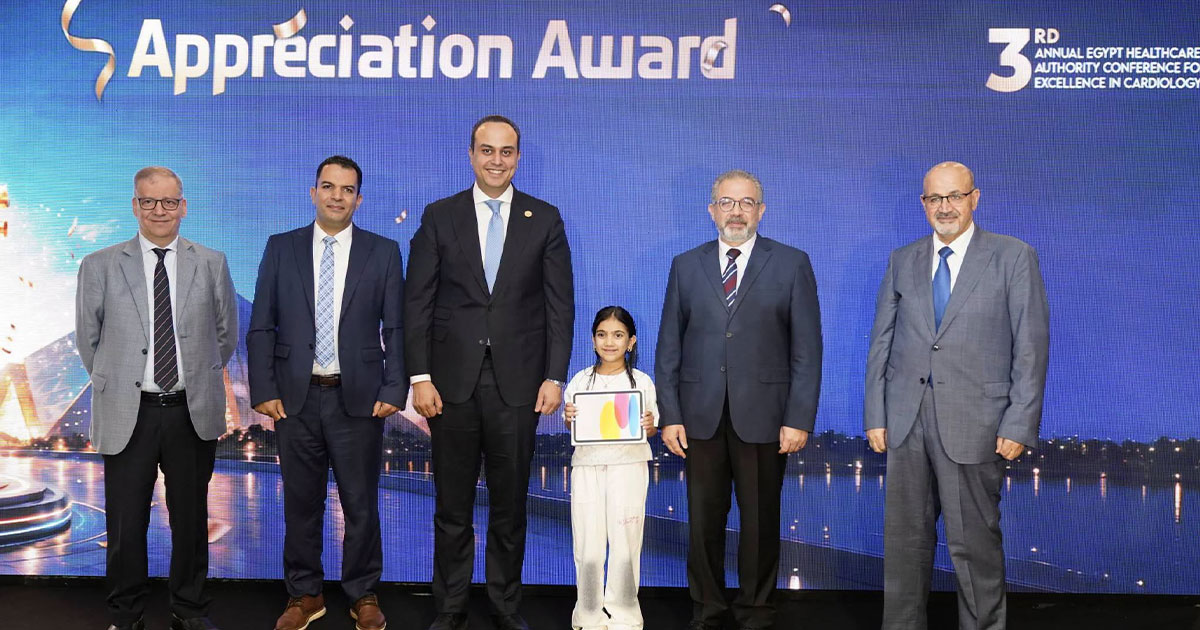

The Healthcare Authority launches the annual conference for excellence in cardiology in the presence of international experts
The healthcare sector in Egypt is witnessing continuous development aimed at improving the quality of medical services and expanding their availability, with an increasing interest in developing the capabilities of health institutions and raising the efficiency of medical personnel, in keeping with the successive developments witnessed in medicine globally.
The treatment and prevention of heart diseases receives special attention in this path, in light of the speed of diagnosis, accuracy of intervention, and integration between various medical specialties. Egypt works to benefit from modern expertise and technologies through cooperation and partnerships with international institutions and expertise, which allows the transfer of the latest medical knowledge and practices, develops the capabilities of national cadres, and supports expanding the scope of interventions. Advanced treatment of heart diseases and reducing the risk factors associated with them.
Advanced care… for every heart… everywhere
Based on this vision, Dr. Ahmed Al-Sabki, President of the General Authority for Health Care, launched the activities of the Authority’s third annual conference for excellence in cardiology, “Cardio Excellence,” under the slogan “Advanced care… for every heart… everywhere,” with the participation of an elite group of senior professors and experts in cardiology and cardiovascular surgery from Egypt and a number of Arab and foreign countries.
The conference witnessed a high-level attendance, which included Dr. Hossam Abdel Ghaffar, the official spokesman for the Ministry of Health and Population, Dr. Tariq Al-Houbi, head of the National Food Safety Authority, and Dr. Nima Abed, representative of the World Health Organization in Egypt, along with a number of leaders. And experts in the health sector.

Integrated partnerships with all concerned parties
Dr. Ahmed Al-Sabki, President of the General Authority for Health Care and General Supervisor of the Comprehensive Health Insurance Project, said in his opening speech at the conference that the third edition of the “Cardio Excellence” conference reflects the continuous development witnessed by the Authority’s heart patient care system, stressing that this development is based on integrated partnerships with the Ministry of Health and Population, the Egyptian Ambulance Authority, the Food Safety Authority, the World Health Organization, Egyptian universities, the private sector, and the Authority’s pharmaceutical company partners. And medical supplies.
This integration between health institutions and international bodies reflects a trend that supports the seventeenth goal of the Sustainable Development Goals: establishing partnerships to achieve Objectives: By unifying experiences, exchanging knowledge, and coordinating efforts to develop health care services.
The latest techniques in treating heart diseases
The head of the authority also added that it has succeeded in building specialized centers of excellence for heart disease care in the governorates affiliated with the comprehensive health insurance system, and providing the latest cardiac and surgical interventions, noting that the total number of open-heart surgeries performed by the authority exceeded 3,000 operations, in addition to expanding a number of advanced technologies in the field of catheterization and cardiovascular interventions, including catheter valve implantation (TAVI) and interventions for chronic obstruction of the coronary arteries (CTO).

Dr. Ahmed Al-Sabki pointed out that making these technologies available within the authority’s facilities represents a practical translation of the principle of providing health care. developed within the comprehensive health insurance system, pointing out that some of these interventions represented a major challenge in terms of making them available and providing the necessary expertise to provide them, while today they are available within the government health care system, and covered by financial coverage according to the system’s rules.
This development extends to the ninth goal of the sustainable development goals, industry, innovation and infrastructure, in light of the expansion of health infrastructure and the availability of advanced medical technologies, which supports the system’s ability to provide more advanced therapeutic interventions.
Developing infrastructure and medical personnel
Dr. Ahmed Al-Sabki stressed that the development of infrastructure and health facilities is not complete without investing in medical personnel, as it is the basic foundation for sustaining development and achieving the goals of the health insurance system. Al-Shamel, pointing to the Authority’s cooperation with an international company to send 21 of the Authority’s doctors to train outside Egypt on the latest techniques of cardiac catheterization and installation of modern heart valves, in Turkey and a number of European countries.
He pointed out that the training program aims to prepare medical cadres capable of providing the latest cardiac interventions within the Authority’s facilities, thus supporting the building of a generation of qualified doctors in accordance with the latest international standards and technologies. He stressed that the Authority aims to graduate specialized cadres capable of performing advanced interventions such as “TAVI” and “CTO,” thus enhancing reliance on national competencies within the comprehensive health insurance system.
Protecting citizens’ health is a shared responsibility
For his part, Dr. Tariq Al-Houbi, Chairman of the National Food Safety Authority, stressed that protecting citizen health is a shared, integrated responsibility. The roles of the various agencies and institutions concerned with the health system, pointing out the importance of raising consumer awareness and enabling them to make the right food choices, in addition to providing tools that help them access the information necessary for decision-making.
He pointed to the efforts of the National Food Safety Authority to enhance consumer awareness, including the “Safety in the Label” campaign, which aims to inform citizens of the importance of reading nutritional information and not just following expiration dates. He pointed out the work to enhance the concept of the “Front Label” to help the consumer choose food products more consciously.
Dr. Tariq Al-Houbi stressed that the integration of efforts between the Ministry of Health and Population, the Health Care Authority, the Egyptian Ambulance Authority, the National Food Safety Authority, the Egyptian Medicines Authority, and others The relevant authorities represent a necessity to ensure the protection of the citizen’s health, stressing that the responsibility for preserving the health of Egyptians cannot be borne by any party alone, but rather requires integration of roles and concerted efforts between various institutions.
Heart disease is one of the biggest health challenges
For his part, Dr. Nima Abed, representative of the World Health Organization in Egypt, stressed that cardiovascular diseases represent one of the greatest health challenges globally, pointing to the World Health Organization’s estimates for the year 2022, which recorded about 19.8 million deaths due to cardiovascular diseases, equivalent to about a third of the total deaths globally, pointing out that the largest percentage of these deaths are related to heart attacks and strokes, and that more than three-quarters of them occur in low- and middle-income countries.
He pointed out that this burden is of particular importance In the Eastern Mediterranean Region, which requires accelerating prevention and treatment efforts and strengthening the cardiac care chain, he praised the “HEARTS” package prepared by the World Health Organization in cooperation with the Centers for Disease Control and Prevention (CDC Atlanta), as an evidence-based framework for controlling high blood pressure and managing heart disease risks within primary health care services.
Efforts to prevent heart disease and develop means of detection and treatment are related to the third goal of the Sustainable Development Goals, good health and well-being, by enhancing prevention and health care and providing appropriate interventions to reduce the impact of heart disease on individuals’ health.
Scientific sessions and advanced applications for treating heart diseases
The conference activities address the latest scientific developments and therapeutic trends in heart diseases, through sessions A specialist discussed the most prominent clinical trials presented during the European Society of Cardiology ESC 2026 conference, management of harmful LDL cholesterol, uncontrolled high blood pressure, early improvement of heart failure treatment, the fifth definition of myocardial infarction, and the intersection between heart and kidney diseases, in addition to quality of care and patient safety.
The conference will also witness applied sessions and live cases from within the catheterization rooms, to review the latest practices and techniques in dealing with complex cardiac cases, discuss the sequence of surgical and catheter treatment, the latest ESC 2026 guidelines in treating heart failure, and the future of heart disease in light of health policies, innovation and digital transformation.
The conference devotes an important aspect to heart surgery and related specialties, through a discussion session entitled: “Beyond the Cath Lab: The Other Pillar of the Heart Team,” with the participation of An elite group of professors and consultants in cardiac surgery, discussing the latest trends in minimally invasive heart surgery, sustainable heart surgery programs, vascular interventions, the comparison between open surgeries and catheter interventions, and coronary artery bypass surgery techniques.
In conclusion, the path of developing heart disease care in Egypt is moving toward building an integrated capacity for prevention, diagnosis, intervention, and treatment, supported by advanced technologies and cadres receiving training in the latest international practices. The value of this development increases when the experiences gained through partnerships and training are transformed into capabilities available within health facilities, making medical progress a continuous extension of the care system.
For its part, The Earth Guards Foundation appreciates the efforts made to develop the health care sector in Egypt, as access to Advanced care “for every heart… everywhere” is linked to the system’s ability to make the latest medical advances part of the service the citizen receives, in parallel with prevention, early detection, quality of care, and patient safety. Confronting heart disease becomes an integrated path that begins before the disease and does not stop with therapeutic intervention.


