

Electricity without consumption… How are networks unable to absorb the renewable energy boom?

Electricity without consumption.. How are networks unable to absorb the renewable energy boom?
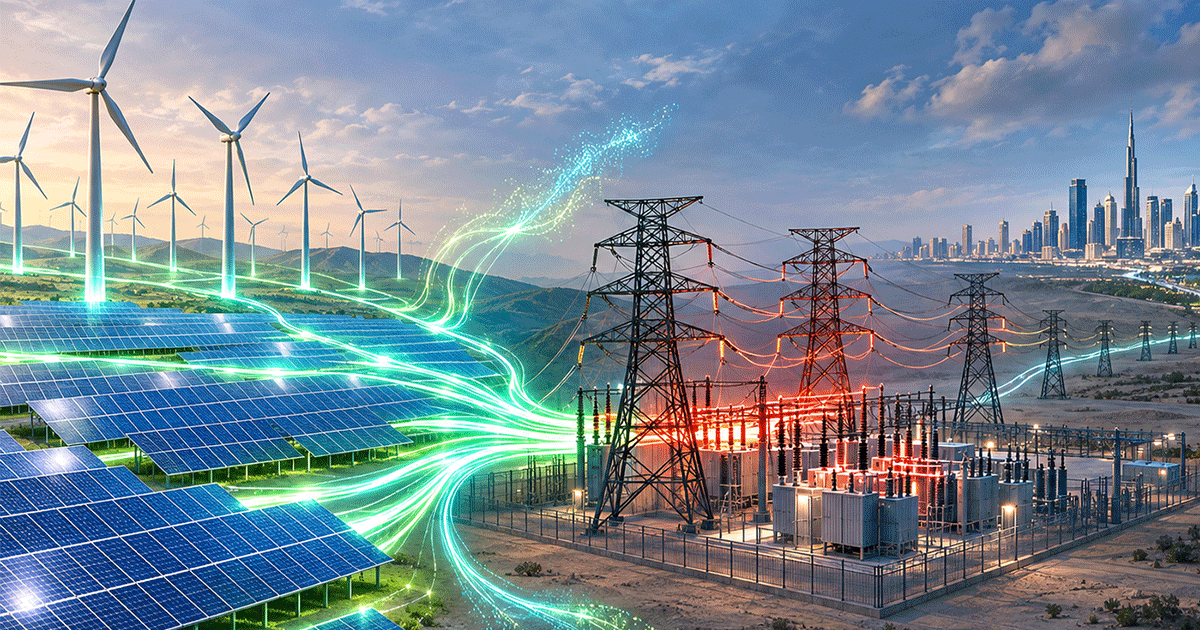
Global investment in renewable energy is accelerating, with solar and wind projects expanding in many countries, but this rapid growth has revealed a new challenge: some markets no longer have electricity grids. Able to absorb all the clean energy that is produced. The result is that part of the electricity produced does not reach consumers at all.
China appears at the heart of this problem, after its networks rejected huge amounts of clean electricity during the first half of 2026. Australia, Japan, and India also recorded an increase in the same phenomenon, which indicates that the expansion of electricity production Cleaning needs parallel development in transportation and storage networks.
Electricity without consumers
Solar and wind plants produce electricity according to the availability of sunlight and wind speed, but the electricity grid needs to maintain a constant balance between what is produced and what can be transmitted and consumed.
When the production of renewable energy becomes greater than the network’s ability to absorb it at a certain moment, the operating authorities are forced to reduce the production of some stations or reject part of the electricity produced to avoid pressure on the network.
This measure is known as reducing renewable energy production, or Curtailment, which practically means that a station capable of producing clean electricity is forced to reduce its production because the infrastructure cannot transmit everything it produces to consumers.
With increasing reliance on the sun and wind, this phenomenon has become a growing challenge to fully benefiting from the investments being made in clean energy projects.
China takes the lead
China’s numbers clearly show the scale of the problem. According to a report issued by the Global Energy Observatory and the Energy and Clean Air Research Center, Chinese networks did not absorb about 360 terawatt-hours of clean electricity during the period from January to June 2026, an increase of 49% compared to the same period of the previous year.
This amount is approximately enough to supply a country the size of Mexico with electricity for a year, which reveals the amount of renewable energy that can be produced without finding sufficient space within the grid.
China is the largest It is a solar energy producer in the world, but in some areas the speed of building new stations has exceeded the ability of transmission networks to expand at the same pace.
Why does waste occur?
The problem is largely related to infrastructure. Solar and wind stations may be located in areas far from cities and industrial centers that consume the bulk of electricity, which requires strong transmission lines capable of moving energy over long distances.
When these networks lag behind keeping pace with production growth, amounts of renewable energy become available in the wrong place or at the wrong time relative to the needs of the electrical system.
The analyzes also point to another factor in China, which is the presence of contracts guaranteeing the operation of newly built coal plants, which leaves less space within the network to receive electricity coming from Renewable sources.
In this context, analysts believe that the problem has become structural in nature, meaning that its solution requires changes in networks, planning, and the operating system of power plants, and not just addressing a temporary bottleneck.
Various estimates
There is also a clear gap between official estimates and those of research institutions regarding the amount of electricity production that has been reduced. The Chinese National Energy Administration said that about 8.6% of solar energy production and 9.1% of wind energy were subject to reduction during the first half of 2026.
In contrast, GEM and CREA estimated that China did not benefit from about 26.1% of its total solar and wind production during the same period, based on data adjusted for weather conditions to compensate for the shortfall in published data.
This difference highlights the difficulty of accurately measuring the scale of the problem, but it does not change the general trend of increasing pressure on the ability of grids to accommodate renewable energy growth.
Investment is affected
The problem began to move from the operation of the networks to the decisions of the investors themselves. As the possibilities of reducing electricity production increase, the process of calculating the expected return from new projects becomes more difficult, because the investor does not know precisely what percentage he will be able to sell out of the total electricity that the project can produce.
This coincided in China with a new policy that abolished the guaranteed fixed price for renewable electricity, which, along with further production cuts, contributed to a decline in new solar energy installations by 66% during the year.

Meanwhile, Part of the investments is directed towards projects that combine solar plants and electricity storage systems with batteries, with the aim of preserving excess energy and using it later instead of losing it.
This intersects with the seventh goal of the Sustainable Development Goals concerned with providing clean energy at reasonable prices, especially goal 7.2 related to increasing the share of renewable energy globally, as benefiting from the expansion of production depends on the ability of the electricity system itself to absorb it.
The problem is expanding globally
China is not the only case. In Australia’s national electricity market, the amount of electricity generated from the sun and wind, which was reduced, rose by 37% during the first half of 2026, reaching 2.93 terawatt-hours, equivalent to about 7% of the exporters’ production.
And in Japan, The grid rejected about 2.35 TWh, an increase of 34%, representing approximately 4% of renewable electricity production.

As for India, the third largest global producer of solar energy, it reduced about 8.13 terawatt-hours of solar electricity during the quarter ending in June, equivalent to approximately 14% of its solar production during this period. These cases demonstrate that the growth of renewable energy has become faster in some countries than the ability of electricity networks to develop.
Batteries enter the solution
Electricity storage systems represent one of the most prominent solutions proposed. Instead of reducing the production of a solar station when the amount of electricity is large, part of the energy can be stored inside batteries and then returned to the grid at a time when demand is high or when the production of sun and wind decreases.
Chile provides an example of this The trend, after adding about 4 gigawatt-hours of batteries during 2025, which led to more than doubling its storage capacity, and most of these systems were established next to solar plants, which helped reduce the loss of the electricity produced.

In this context, the role of the ninth goal of the Sustainable Development Goals regarding building flexible infrastructure also stands out, because the success of the transition towards clean electricity depends on developing transportation and storage networks in parallel with the construction of new stations.
A network that keeps pace with transformation
The crisis reveals that increasing the number of solar panels and wind turbines represents only one aspect of the transformation in the energy sector. If renewable energy production expands faster than grids can transmit and store it, countries may find themselves with increasing amounts of unused clean electricity, as The need for fossil fuel plants to ensure stable supplies.
The Earth Guards Foundation believes that building a more sustainable energy system requires looking at production, networks and storage as interconnected parts of the same system, so that investment in infrastructure keeps pace with the rapid expansion of clean sources. The next challenge is related to the world’s ability to ensure that this electricity reaches the consumer when he needs it.


