An Egyptian strategic agenda at the Arab-Brazilian Forum to enhance economic partnership

Egyptian strategic agenda at the Arab-Brazilian Forum to Strengthen Economic Partnership
The global economy is going through rapid fluctuations that force countries to reconsider joint cooperation tools and paths to strengthen economic partnership, with the increasing importance of diversifying markets, enhancing the flexibility of supply chains and opening new areas for investment.
In this context, cross-regional economic partnership is gaining increasing importance as a means of expanding growth opportunities and linking production capabilities to markets with promising potential.
International economic relations are increasingly moving towards more integrated models, combining trade, investment, technology, energy and logistics, allowing countries to build common interests that go beyond traditional frameworks of exchange.Commercial. This trend enhances opportunities for establishing long-term partnerships based on complementary resources and competitive advantages, and supports the ability of economies to deal with global changes and transform them into opportunities for growth and development.
Axes of a new economic agenda
To embody this vision, Dr. Ahmed Rostom, Minister of Planning and Economic Development, presented the axes of a “new economic agenda” to strengthen the economic partnership between Arab countries and Brazil, stressing Egypt’s ability to play the role of the strategic axis and logistical bridge linking Latin America to the Arab and African markets.
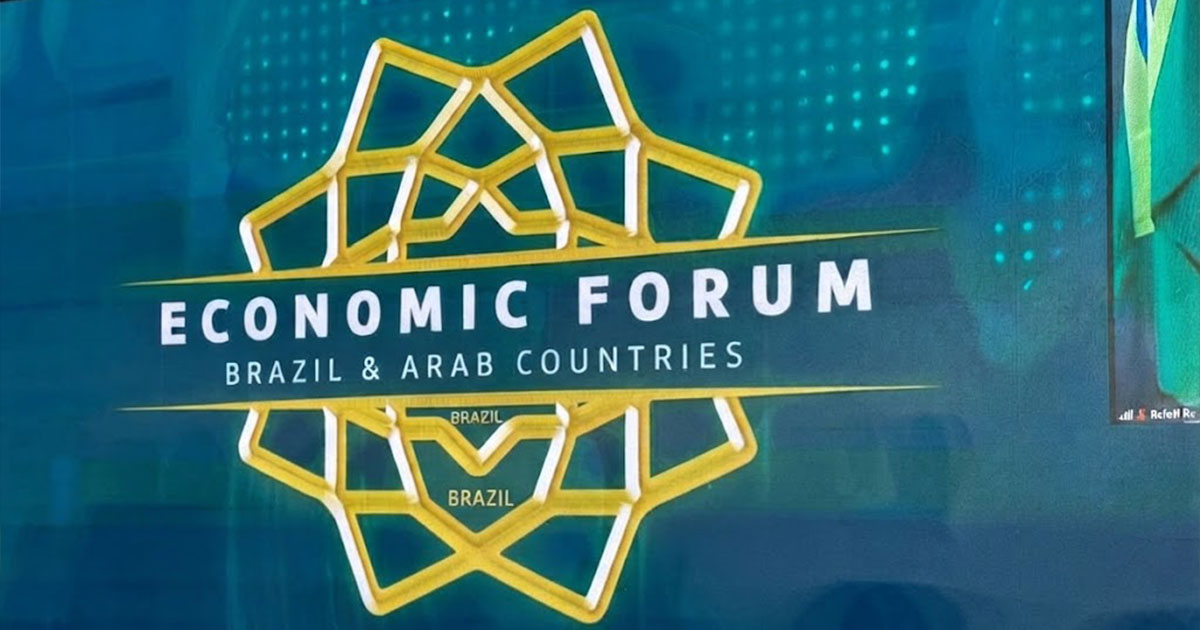
This came during his keynote speech recorded at the activities of the fifth session of the Arab-Brazilian Economic Forum, held in the city of Sao Paulo, under the slogan “The global economy is in a phase of transformation.”

Dr. Ahmed Rostom explained that the global economy is going through complex transformations that are reshaping energy markets and supply chains, which requires focusing on four common axes:
- Logistics Development
- Enhancing financial stability
- Supporting the transition towards clean energy
- Securing supply chains
Economic partnership and enhancing food security
The Minister of Planning and Economic Development pointed out that the integration between Brazilian agricultural expertise and technology, and Egypt’s logistical capabilities, strategic location, and regional trade agreements, opens the way for building a more integrated system to support agricultural production and trade, and enhance the flow of food commodities.To the Arab and African markets, which contributes to consolidating the foundations of common food security, in line with the second goal of the Sustainable Development Goals (SDGs): eliminating hunger and raising the ability of supply chains to confront global changes.
The Suez Canal and the transition to a green economy
Dr. Ahmed Rostom reviewed the state’s efforts within “Egypt Vision 2030” to develop infrastructure, stressing that the huge investments in the Suez Canal Economic Zone and modern transportation networks support the Egyptian-Brazilian economic partnership by providing an advanced platform for companies to manufacture and distribute products efficiently, in support of achieving the ninth goal: industry, innovation, and infrastructure, and building an infrastructure more capable of serving the movement of trade and investment.
He also pointed to Egypt’s expansion in green hydrogen and energy projectsSolar, calling for the establishment of joint projects that support reducing emissions and securing clean energy, in a way that enhances the trend towards the seventh goal: clean and affordable energy, and supports the path of transition to a more sustainable energy system.

The Minister of Planning and Economic Development concluded his speech by emphasizing that governments set strategic visions, but the private sector remains the foundation engine for real economic transformation.
He also called for removing trade barriers and providing innovative financing that supports value-added projects, stressing Egypt’s commitment to supporting all initiatives that transform the forum’s vision into tangible economic results for future generations.
In conclusion, in light of these transformations, the economic partnership between Egypt and Brazil goes beyond the idea of expanding trade exchange to building an integrated path.Logistics intersects with production, energy with investment, and food security with the stability of supply chains.
Egypt’s possession of a strategic location and advanced infrastructure, in addition to Brazil’s agricultural expertise and technology, allows for the establishment of a model of cooperation based on the integration of advantages, not just the exchange of products, and gives the Arab and African markets an extension more closely linked to the productive capabilities in Latin America.
The real value of this agenda is determined by its ability to move from vision to projects capable of withstanding geoeconomic transformations, which makes the role of the private sector and innovative financing crucial factors in transforming available capabilities into sustainable added value. The Suez Canal becomes more than a trade corridor. It can become a fulcrum for a partnership that brings together manufacturing, clean energy and distribution, thus enhancing…The flexibility of the economy opens new spaces for growth.
Hence, The Earth Guards Foundation confirms that through that broader perspective, the Egyptian-Brazilian economic partnership gains greater ability to transform the challenges of the global economy into opportunities to build common interests that work to achieve comprehensive sustainable development whose effects extend to future generations.