

Davos 2026: India-Europe Deal Set to Redraw Global Trade map
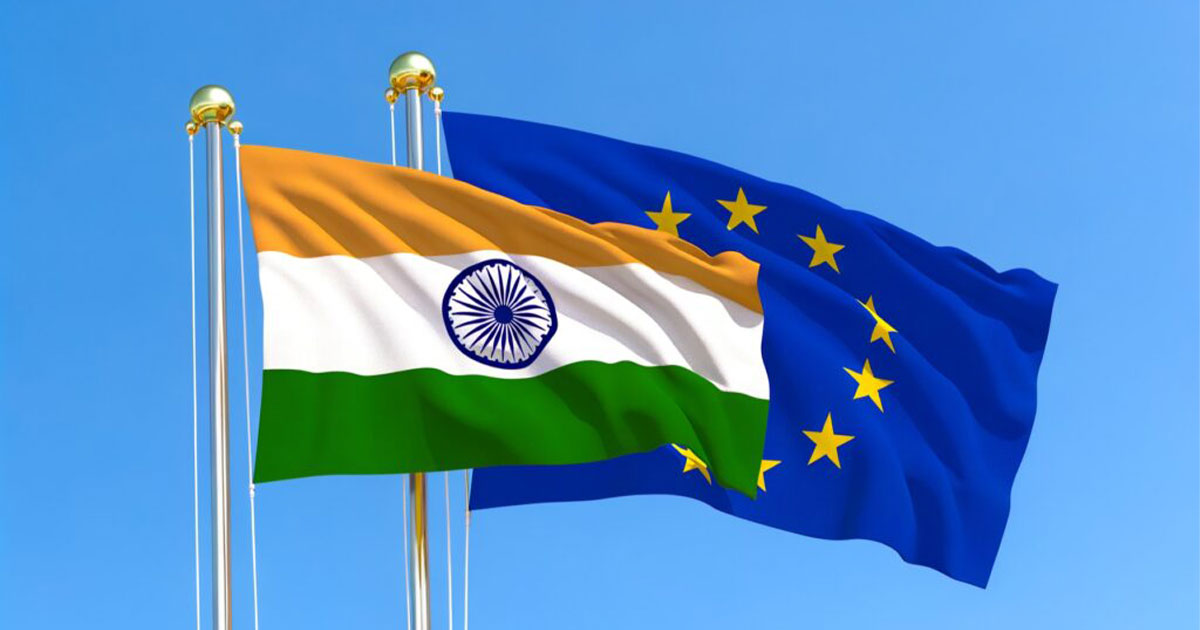

Davos 2026: An Indo-European agreement reshapes the features of global trade
In the past few hours, the Davos 2026 Conference confirmed its prominent presence as it is one of the most important international platforms discussing global economic transformations, and this is at a stage characterized by increasing geopolitical turmoil, restructuring supply chains, and an escalating need for more stable economic partnerships.
In this context, European statements revealed the approaching conclusion of a broad trade agreement between India and the European Union, and this is a clear indication of a growing trend towards building major economic alliances that respond to changes in the global trading system and seek to create more diverse and flexible markets.
Historic deal at the table in Davos 2026
On the sidelines of the meetings of theWorld Economic Forum World Economic Forum, Ursula von der Leyen, President of the European Commission, announced that India and the European Union are standing on the cusp of a historic free trade agreement that would create a market that includes nearly two billion people, and represents about a quarter of the global gross domestic product.
In this context, Von der Leyen described the upcoming agreement as “the mother of all deals,” referring to its size and potential impact, stressing that this step gives the European Union the advantage of early action with one of the most developed and vibrant global regions in terms of population, growth rates, and the extent of expansion of consumer markets.
European motives in a changing global context
Von der Leyen also explained during her speech at Davos 2026, thatEurope seeks to expand its network of economic partnerships with global growth centers, from Latin America to the Indo-Pacific region, within the framework of a vision aimed at reducing dependence on limited trade paths.
Then the President of the European Commission indicated that the successive geopolitical shocks force the European continent – in addition to the fluctuations in international trade policies – to build a new pattern of economic independence, a pattern based on the diversification of partners, and seeks to enhance the ability to adapt to rapid changes in the global environment.

Figures that reflect the weight of the partnership
To realize the importance of this international cooperation, we must know that India is the largest trading partner of the European Union. The volume of trade in goods between them reached about 135One billion dollars during the years 2023 and 2024. It is expected that this agreement, which will be signed later this year, will contribute to expanding the volume of trade and investment between the two sides, by reducing customs barriers and facilitating the flow of goods and services.
This comes at a time when many countries are focusing on reducing the risks associated with international trade, in light of the turmoil that the global trading system has witnessed in recent years. In this context, the agreement negotiations resumed in 2022 after a hiatus that lasted nearly a decade, and their pace accelerated during the past months due to the shifts that occurred in economic policies, as well as the uncertainty in global markets.
From trade to wider cooperation
The outcomes of the upcoming summit between India and the European Union are not limited to the trade agreement alone; The discussions are heading towards expansionThe scope of cooperation includes a partnership in the fields of security and defense; With the aim of enhancing defense industrial cooperation between the two sides. It is also expected to reach an agreement that will facilitate the movement of Indian workers and professionals in European markets, in a way that supports the exchange of experiences.
European Council President Antonio Costa is scheduled to visit India – along with Ursula von der Leyen – during the period from January 25 to 27; In order to participate in a high-level summit with Narendra Modi, Prime Minister of India, where an official announcement of the conclusion of the agreement negotiations is expected.
European autonomy and investment in capabilities
In a broader context, von der Leyen stressed that the ongoing changes in the international system represent an opportunity to rebuild long-term European independence in areas extending from energy and raw materials to defense and the economy.Digital. She pointed out that Europe has a strong industrial base, which includes world-leading companies in wind energy, advanced batteries, aviation, and heavy industries, in addition to accelerating adoption of artificial intelligence technologies.

The European leadership believes that these capabilities constitute a foundation that can be built upon to benefit from the major agreements being discussed in Davos 2026, and turn them into engines of sustainable growth. These developments reflect how Davos 2026 has turned into a practical platform that goes beyond theoretical discussions, becoming a real space for formulating major economic agreements that affect the course of the global economy.
From the perspective ofThe Earth Guards Foundation, the upcoming Indo-European agreement is a structural shift in how to redistribute the centers of global economic gravity. While Europe seeks to fortify…Independence Through diversification of partnerships, India emerges as a country capable of combining population density, industrial growth, and geopolitical ambition. Therefore, it can achieve sustainable development, specifically: the goal of industry, innovation and infrastructure, and the goal of establishing partnerships to achieve the goals.


