

United in a Promising Partnership for a Sustainable Future
وزارة الشباب والرياضة وEarth Guards Foundation توقعان بروتوكول تعاون
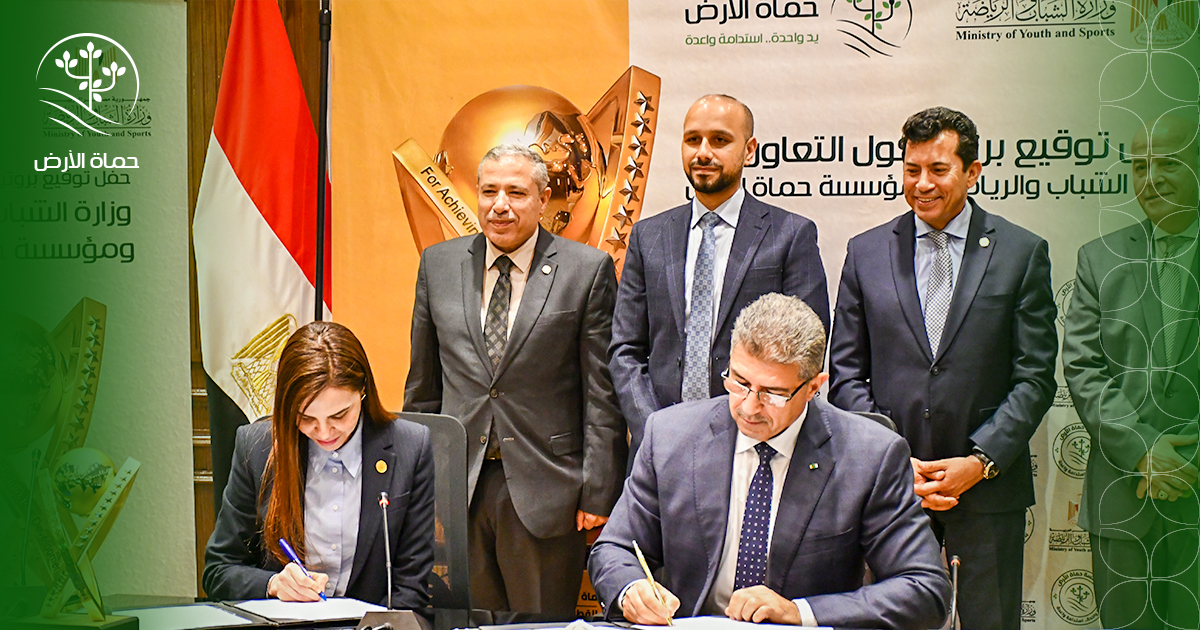

One hand and a promising partnership towards a sustainable future
Cairo – As part of the celebration of World Environment Day, Dr. Ashraf Sobhi, “Minister of Youth and Sports,” today witnessed the signing ceremony of a strategic cooperation protocol with The Earth Guards Foundation, with the aim of enhancing sustainable development efforts and empowering young people to face environmental and climate challenges.
This protocol comes as a culmination of continuous efforts by the Ministry of Youth and Sports, as the body concerned with developing youth capabilities and directing their positive energies, and theThe Earth Guards Foundation, which was established on basic pillars for achieving sustainable development. These pillars include involving all individuals in this transformation, ensuring continuity of efforts, and building strong partnerships between various institutions and sectors of society.
A shared vision towards a better future
Dr. Muhammad Zeyada, “Chairman of the Board of Trustees of The Earth Guards Foundation,” confirmed that the protocol represents a qualitative leap in expanding the circle of community environmental work, especially through the efforts of young people and youth, praising the Ministry’s confidence in civil society cadres. He added that cooperation will contribute to supporting public policies related to sustainable development efforts and achieving the desired goals on the ground.
For his part, Dr. Ashraf Sobhi praised the importance of this cooperation, stressing that the environment is a national issue that requires concerted efforts, and that the Ministry is working to integrate the concepts of sustainability into its activities and programs. Based onEgypt Vision 2030. He expressed his desire to establish a youth entity under the title “Earth Guards Youth Entity.” To manage real activities at the country level, which was welcomed by Dr.Muhammad Ziadeh.
Protocol objectives and areas of cooperation
The protocol aims to enhance interaction between youth and the environment, develop their life skills, and encourage their international and regional participation in sustainable development efforts. This includes:
- Youth Empowerment: Supporting environmental youth initiatives, and providing training and qualification opportunities for young leaders in the field of sustainability.
- Sustainable Sports: Strengthening the role of clubs and youth centers in achieving Sustainable Development Goals (SDGs), through many initiatives, the most important of which is the “Earth Guards Shield for the Sustainability of the Sports Sector.”
- Environmental Awareness: Expanding the scope of environmental awareness in society, and implementing programsEducational on climate and sustainability issues.
- Competitions and Initiatives: Launching environmental competitions and initiatives for youth, such as the “Environmental Essay Competition for Youth”; To stimulate creativity and innovation in this field.
Promising youth participation
During the ceremony, representatives of the National Committee for Youth and Climate expressed their pride in the new partnership, stressing that the signing of the protocol reflects the country’s commitment to empowering youth – as an active element in addressing environmental challenges – and building a generation aware of climate and sustainability issues. They also praised the Ministry’s role in supporting youth participation in international events, such as the Conference of the Parties (COP).
Signature of the protocol
The protocol was signed between Dr. Reham Farouk”Secretary General of The Earth Guards Foundation” and Mr. Undersecretary/ Ihab Bashir, “Permanent Undersecretary of the Ministry of Youth and Sports”, and in the presence of the Ministry’s leaders and representatives of The Earth Guards Foundation.
Therefore, this protocol represents a strong starting point towards a more sustainable and prosperous future with the participation of Egypt’s youth; Earth Guards and the heart of sustainable development, an expression of a shared vision; In order to bring about a positive change in society, and to preserve the environment for future generations.


