

Water Resources and Irrigation Minister Attends Opening of World Water Congress
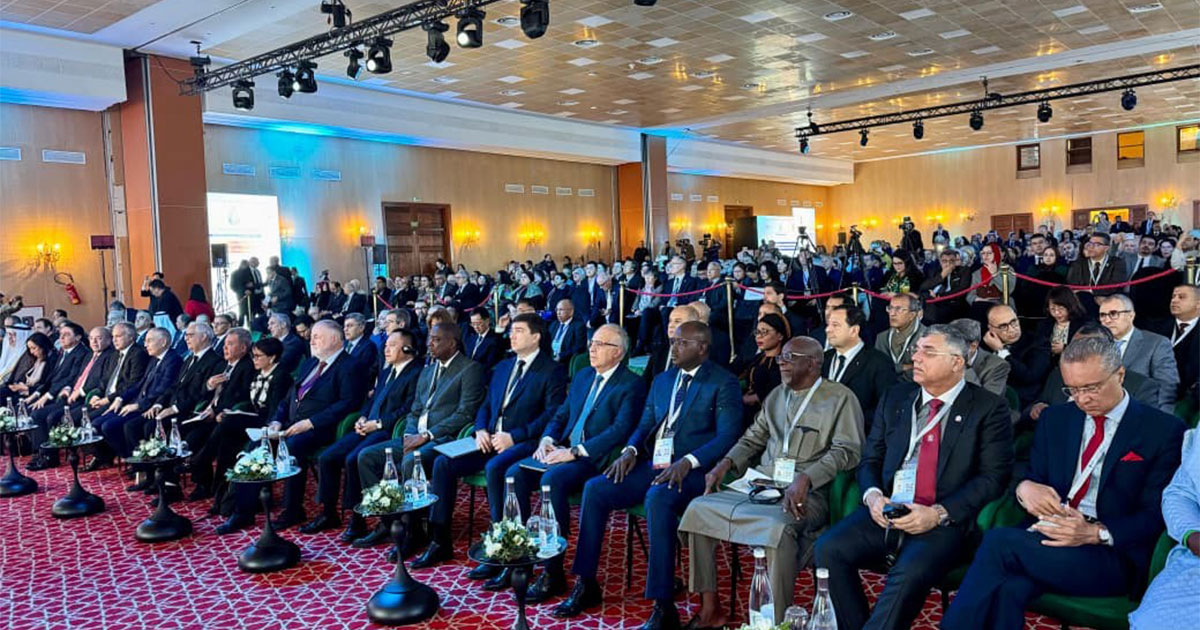

The Minister of Water Resources and Irrigation witnesses the opening activities of the World Water Congress
In light of the current water challenges, every drop of water must be managed accurately, efficiently and innovatively in line with the goals of sustainable development, and Egypt is making great efforts to confront water challenges in a way that supports the social, economic and environmental dimensions of sustainable development in all sectors, especially the management sectorWater Resources because of the great importance it represents that affects Egyptian national security.
Based on Egypt’s pioneering role in this file, Dr. Hani Sweilem, Minister of Water Resources and Irrigation, witnessed the opening activities of the “Nineteenth World Water Congress” in the Moroccan capital, Marrakesh, which was organized by the “International Water Resources Association (IWRA)” in partnership with the Ministry of Equipment and Water in the Kingdom.Moroccan newspaper under the title: “Water in a Changing World: Innovation and Adaptation.”
Water resources file in light of the current challenges
The water resources sector around the world is witnessing many challenges in a changing world that is witnessing a large population increase and increasing climate changes that are negatively affecting it. This is not limited to a specific country, as all countries of the world suffer from it, whether through floods or severe droughts in addition to rising temperatures, which is reflected in increased water consumption.
Therefore, this conference discusses a number of important files and issues concerned with preserving water resources and combating the changes and threats facing this vital sector.

Integrating modern technology into the irrigation system
Dr. Hani confirmedSwailem said that the Ministry follows the latest technological means in all of the Ministry’s work under the umbrella of the second generation of the Egyptian Irrigation System 2.0, which contributes to raising the efficiency of water resources management nationwide, by relying on modern technological techniques in follow-up, monitoring and decision-making. It is also interested in training the Ministry’s human cadres to benefit from modern technologies in water management.
In addition to moving towards digital transformation which includes digitizing data on canals, drains, and water facilities, preparing databases for operations to monitor canals and drains, creating applications for farmers to know shift schedules, and using drones to monitor waterways and crop structure.
In addition to using satellites to predict rain and calculate agricultural crop yields, and using specialized digital platforms to follow up on coastal protection work.Egyptian.
A bilateral meeting with the United Nations envoy for water affairs
Minister Hani Sweilem was keen to hold a bilateral meeting with Ms. Retno Marsudi, the United Nations Secretary-General’s Special Envoy for Water Affairs.
He stressed during the meeting that Egypt was one of the first countries to call for the appointment of a special United Nations envoy concerned with water issues, noting the great importance of the role played by the United Nations water envoy in enhancing international cooperation and providing support to African countries to preserve water resources.
Cooperation between UN-Water and the Council of African Ministers of Water
With regard to the African water resources file, Dr. Hani Sweilem stressed the need to strengthen cooperation with the United Nations Water Envoy and the Council of African Ministers of Water (AMCAW), whichIt is currently chaired by Senegal, to contribute to supporting water issues and moving them forward.
He also pointed out the need to provide effective financing mechanisms that enable African countries to implement projects in the field of water and adaptation to climate change in a way that contributes to achieving comprehensive Sustainable Development Goals (SDGs).
Activating international initiatives through concrete actions on the ground
Dr. Hani Sweilem pointed out that the previous climate conferences (COP27 – COP28 – COP29) witnessed the launch of many important initiatives in the field of water and climate, and that the current stage requires focusing on activating these initiatives through concrete measures on the ground.
He also expressed the need to follow up on the actual implementation of the recommendations issued by those conferences, and stressed the importance of preparing a clear implementation plan for these recommendations before announcing any new initiatives, which isWhat was met with full agreement by the United Nations Water Envoy.

The meeting also discussed the preparation situation for the 2026 United Nations Water Conference, and the ongoing preparations for the interactive dialogues included within the conference’s activities, while reviewing Egyptian interests and priorities in this regard
Dr. Hani Sweilem thanked the Kingdom of Morocco for its success in organizing this important conference, stressing Egypt’s keenness to enhance cooperation and exchange experiences with countries of the world, especially Arab and African countries.
In conclusion, the current global water challenges require concerted efforts at all levels to achieve effective and sustainable management of water resources, as no country can face these challenges alone, which confirms the necessity of international and societal cooperation.
In this context, the The Earth Guards Foundation plays a pivotal role in achieving the Sustainable Development Goals (SDGs). It also focuses on spreading awareness of its issues, especially the water issue, by highlighting the sixth goal of the Sustainable Development Goals (SDGs) related to clean water and sanitation, and stresses that water conservation is a shared societal responsibility towards a sustainable water future for generations. Next.


