

Great people in the history of science… lice, hormones, and shared resources created sustainable scientific discoveries

Great people in the history of science… lice, hormones and shared resources created sustainable scientific discoveries
The history of science is full of a large number of greats in many fields between different time periods, and here we highlight with you three of the most prominent scientists who made pioneering and sustainable achievements in science.
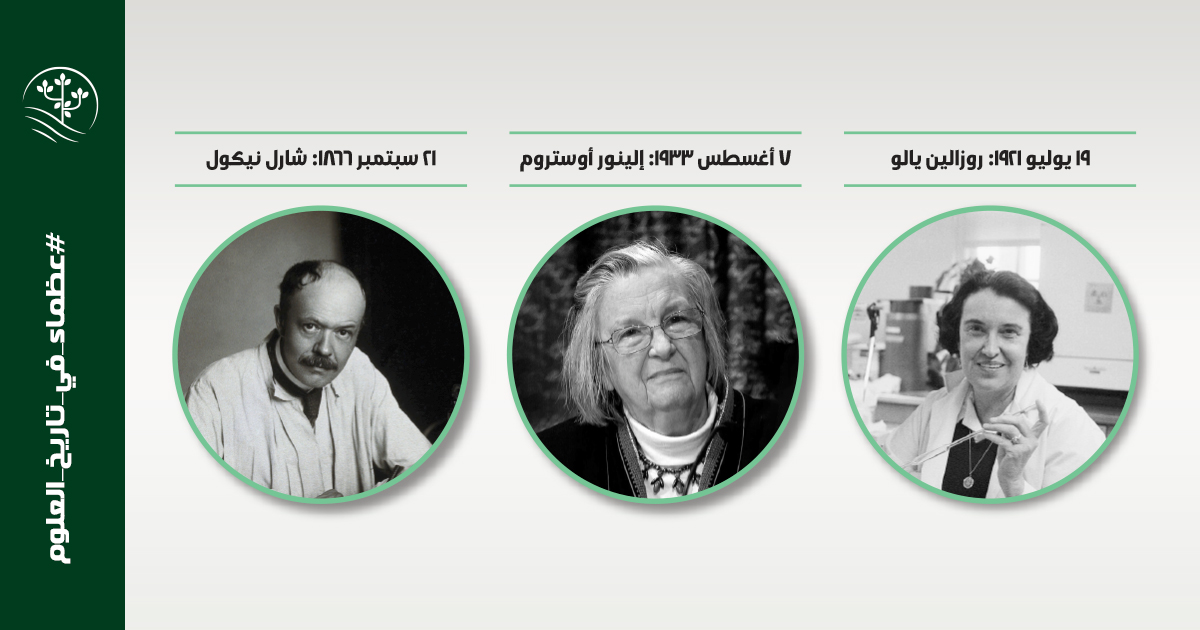
July 19, 1921: Rosalyn Yallow
New York City witnessed the birth of Rosalyn Yalow, a physicist who changed the face of modern medical diagnosis, after she contributed with her scientific career to developing precise techniques based on radioactive isotopes to measure biological materials inside the human body.
Yalo – in cooperation with Dr. Solomon Pearson – was able to invent a technology… Radioimmunoassay “, which allowed for the first time in the history of science to measure very small amounts of hormones and vital substances in the blood, such as insulin.
This innovation has brought about a qualitative leap in the diagnosis and follow-up of endocrine diseases and diabetes, and has become an essential tool in medical laboratories around the world to this day. Therefore, Yalo won the Nobel Prize in Medicine in 1977, becoming the first American woman to win this award.
August 7, 1933: Elinor Ostrom
In economics comes the birth of the American “Eleanor Ostrom,” a political economist, who reshaped the global understanding of how to manage shared resources, through her focus on how local communities deal with shared natural resources, such as water, forests, And fisheries.
Ostrom proved through her extensive field research that local communities are able to manage their shared resources efficiently and without depleting them, through rules and customs that they set themselves, far from the prevailing hypothesis that said these resources would inevitably be depleted unless the state intervened. In recognition of these sustainable contributions, Ostrom received the Nobel Prize in Economics in 2009, making her the first woman in the world to win this award.
September 21, 1866: Charles Nicoll
Charles Nicole was born in France, and became one of the most prominent bacteriologists, who contributed to saving millions of lives from deadly epidemics. Because his efforts were focused on studying how infectious diseases are transmitted between humans.
Hence, Nicole was able to get through His work at the Pasteur Institute stems from the discovery that lice are the main vector of epidemic typhus. This discovery allowed for the development of effective preventive measures that significantly limited the spread of the disease, especially during World War I and World War II. In recognition of the importance of this discovery and the extent of its role in achieving good health for all peoples of the world, Charles Nicole was awarded the Nobel Prize in Medicine in 1928.
In conclusion, these sustained scientific contributions to the history of science reveal that the greatest transformations in human life may sometimes begin from questions that seem very specialized; Because measuring tiny particles in the blood led to improved medical diagnosis, studying the behavior of societies towards their shared resources reconsidered ways to manage them, and research into a small insect such as lice contributed to revealing the path of transmission of a disease that threatened the lives of thousands.
The impact of these contributions extends To be translated today into tangible results that directly serve the goals of sustainable development. This is what we see in the “Yallo” technology, which uses hormones to diagnose endocrine diseases, and likewise the “Nicole” discovery, which established a preventive methodology applied to confront diseases transmitted by insect vectors.
We will also find that Ostrom’s frameworks for managing shared resources have become a reference for modern policies for managing water, forests and fisheries in a sustainable manner, in service of Goal 12, on responsible production and consumption.
From the perspective of The Earth Guards Foundation, these models confirm that the sustainability of scientific progress is achieved by the ability of societies to transform knowledge into a public benefit, a benefit that preserves human health, safeguards its resources, and limits risks before they escalate. Therefore, the research is supported Scientific education, education, and access to knowledge are one of the conditions that make the sustainable development goals achievable on the ground.


