

Gaza, Egyptian youth, and Alzheimer’s patients form a humanitarian triad on the Ministry of Social Solidarity’s agenda
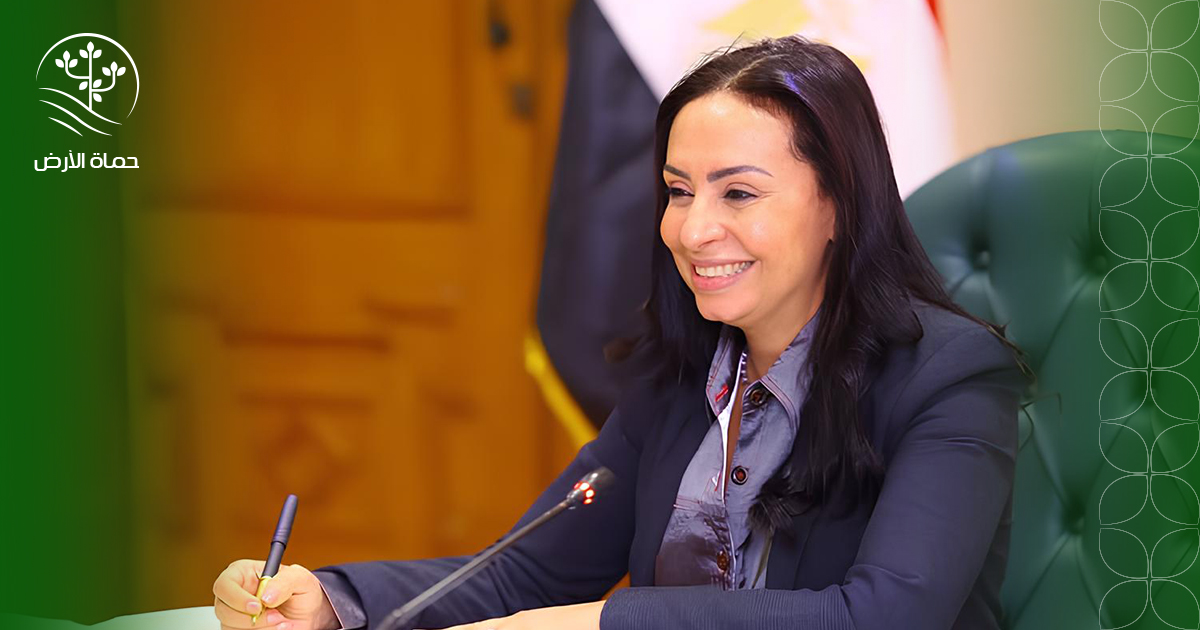
Gaza, Egypt’s youth, and Alzheimer’s patients are a humanitarian trilogy on the agenda of the Ministry of Social Solidarity
Since she assumed ministerial responsibility, the Minister of Social Solidarity, Dr. Maya Morsi, has been working to transform national endeavors into actual efforts that affect the lives of Egyptians in many areas. It does not display rigid numbers and empty slogans, but rather draws the features of a human map and the story of a society that redefines the meaning of social solidarity.
Therefore, the last days witnessed a series of important events and visits, in which Dr. Maya Morsi participated, as these efforts were evidence of the major role played by the Ministry of Social Solidarity between cross-border humanitarian work and integrated community care within Egypt, in line withDevelopment goalsSustainable and the axes of “Egypt Vision 2030”.
In this article, I will explore with youThe Earth Guards Foundationthe most prominent of these efforts undertaken by Dr. Maya Morsi, and how the Ministry of Social Solidarity, under her wise leadership, contributes to advancing humanitarian work day after day; So keep reading.
International praise for the Red Crescent’s efforts
Earlier this weekThe Egyptian Red Crescent received Mr. Tharman Shanmugaratnam, President of the Republic of Singapore, and his wife, Mrs. Jane Yumiko Atogi, on a historic visit to the General Center of the Red Crescent Society, in the presence of the Minister of Social Solidarity – Vice President of the Egyptian Red Crescent – Dr. Maya Morsi.

There, the Singaporean President praised Egypt’s efforts in supporting the Palestinian people, stressing his country’s keenness to strengthen cooperation between the Singapore Red Cross and the Egyptian Red Crescent. In order to provide more humanitarian aid to the residents of the Gaza Strip.
Hence, the Minister of Social Solidarity confirmed that the Egyptian Red Crescent represents the national mechanism that relies on the strength of more than 35 thousand male and female volunteers who have been working for more than 700 continuous days to provide aid. Therefore, the Egyptian experience in this field is a global model to be emulated in managing humanitarian crises.
In detail, Dr. Amal Imam, Executive Director of the Egyptian Red Crescent, revealed that more than 916 relief planes and 599 aid shipments were received in coordination with 59 countries, in addition to the entry of ambulances, medical equipment, and hospitals.Field service to serve the people of Gaza.
The Executive Director of the Egyptian Red Crescent also referred to the fruitful cooperation with Singapore, which resulted in sending huge food and medical shipments, and agreements to support mobile education for Palestinian children.

Developing Alzheimer’s care services
In conjunction with World Alzheimer’s DayAlzheimer’s (a disease that affects the memory and cognitive abilities of the elderly), Dr. Maya Morsi – Minister of Social Solidarity – inaugurated a project to develop and raise the efficiency of the “My Father” and “My Mother” homes at the Baqiyat Al-Saleh Association for the Care of the Elderly and Alzheimer’s Patients.
The Minister praised the advanced level of services, stressing that the association provides a pioneering model for health and social care. Which reflects the spiritEffective partnership between state bodies and civil society institutions.
In the same context, the Minister – Dr. Maya Morsi – inspected the work of equipping Abla Al-Kahlawi Hospital for Alzheimer’s and the Elderly, which is scheduled to open – soon – as the first hospital of its kind in Egypt, the Arab world and Africa, in accordance with the latest international standards.
In this visit, the Minister noted that the new hospital is a qualitative addition to the health system in Egypt, and reflects the commitment of the state and civil society together to care for the most vulnerable groups, especially Alzheimer’s patients and the elderly.

Social Solidarity and Youth
Within the framework of interest in empowering youth, the Minister of Social Solidarity held an extensive meeting with the Minister of Youth and Sports, Dr. Ashraf Sobhi, and the Human Rights Committee.Humanity and Solidarity in the Senate Simulation Model.
The Minister confirmed in this meeting that recent years have witnessed the building of a strong social safety network through cash and in-kind support programmes, most notably the “Solidarity and Dignity” programme, whose new budget reached 54 billion pounds.
Dr. Maya Morsi also clarified that the Ministry of Social Solidarity is not satisfied with financial support only, but rather invests in human capital through education, health, financial inclusion, and economic empowerment.
For his part, the Minister of Youth and Sports – Dr. Ashraf Sobhi – praised the role of the Ministry of Social Solidarity in promoting social justice, stressing that cooperation between the two ministries opens broad horizons for young people to participate in decision-making and formulate development initiatives.

In conclusion, whatThe Earth Guards Foundation discussed in the previous lines reveals a comprehensive strategic vision led by the Ministry of Social Solidarity, a vision that combines responding to urgent humanitarian crises and building a sustainable social protection system, in clear integration with the dimensions of sustainable development, and in a way that enhances Egypt’s presence and position at the regional levels. And international.


