Industrial development opens paths for African cooperation through the quality and standardization system
Investigation Industrial development begins where many do not pay attention; From a precisely written specification, a strictly applied standard, and technical competence that gives the product a pass to the market; An industry searching for a foothold in the global economy is only sufficient for an integrated system that makes quality part of its structure and transforms technical knowledge into sustainable competitive ability.
From this standpoint, Egypt is working with an ambitious national vision to support industrial development and achieve integration between it and neighboring African countries in the areas of standardization, specifications and quality, considering that this is a significant step in a broader path to building African capabilities, bringing technical systems closer together, and creating a more open environment forTrade and industry between the countries of the continent.
These efforts come at a time when there is an urgent need for African systems of similar specifications and quality, provided that these systems can deal with the requirements of global markets and reduce the technical obstacles that may hinder the movement of goods between countries.
The reason for this is that the difference in technical standards and regulatory procedures is a technical challenge in the field of industrial development that may turn into an additional cost for the product, a barrier to its access to markets, and an obstacle to African economies benefiting from their productive and commercial potential. These capabilities are called for to be stimulated by the Sustainable Development Goals (SDGs), especially Goal No. (8). That is, decent work and economic growth.
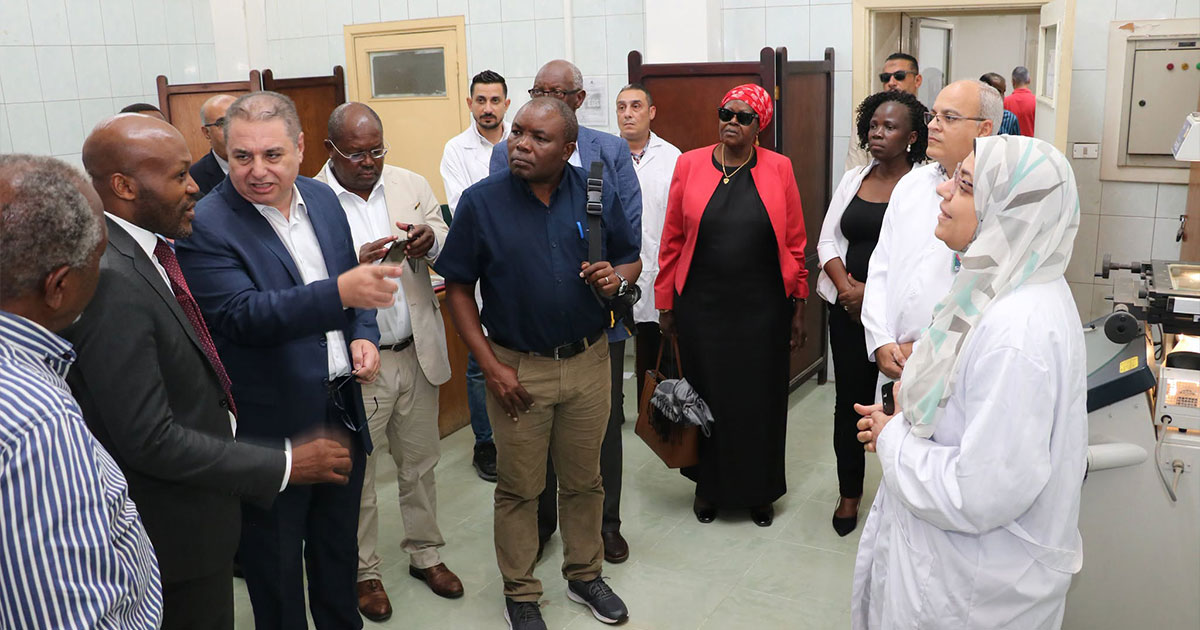
According to this visionNational: The Egyptian General Authority for Standardization and Quality hosted a high-level delegation from the Ugandan Standards Authority, as part of a specialized international program, which dealt with the foundations of infrastructure for international standardization activities and ways to overcome difficulties facing global trade. This was headed by Dr. Khaled Sofi, “Chairman of the Board of Directors of the Egyptian General Authority for Standardization and Quality, and President of the International Organization for Standardization.”
The program came within the framework of the trend towards deepening cooperation with the Nile Basin countries, through exchanging experiences in the fields of specifications, quality and standardization, in a way that supports building institutional capabilities capable of keeping pace with the transformations taking place in the industry and international markets.
In this context, Dr. Khaled Sufi stressed that training and capacity building come at the heart of Egyptian-African cooperation, by relying on specificationsInternational standards and guidelines issued by the International Organization for Standardization and other regional and national references; In order to achieve the seventeenth goal of the Sustainable Development Goals (SDGs): establishing partnerships to achieve the goals.
Integrated framework
In detail, the program discussed, over five consecutive days, a number of topics, including topics related to the standardization infrastructure at the international, continental, regional and national levels, in addition to introducing standard specifications and mechanisms for preparing strategies, policies and technical rules, and ways to spread the culture of standardization, and involving various parties in preparing and implementing specifications.
All of these axes reveal the nature of the challenge faced by countries wishing to promote industrial development. Because industrial competitivenessProductivity often begins with technical details that the consumer may not see.
These regional efforts are directly related to the ninth goal of the Sustainable Development Goals (SDGs), on industry, innovation and infrastructure; Developing the standardization and quality system represents one of the components that helps build an industrial structure that is more efficient and capable of resilience and development.
According to this training program and that African cooperation, The Earth Guards Foundation views the path of measurements and quality as a dimension of sustainable development, which goes beyond abstract economic indicators to building capabilities whose effects continue in the long term.
Hence the cooperation betweenEgypt and Uganda in the field of standardization and industrial development could be the nucleus of a broader path in which technical partnerships expand between the countries of the continent, especially since building a more integrated African market requires a common language in quality and specifications as much as it needs roads, ports, and transportation networks.
This is because the closer the standards become, the more competencies develop, and the easier matching procedures become; African industry has become more capable of moving from the borders of local markets to a broader regional and international space. So that quality becomes a bridge for trade, standardization is a lever for industrial development, and technical cooperation is one of the keys to African integration.