

The efforts of the Ministry of Military Production to transfer technology and localize industries to support comprehensive development
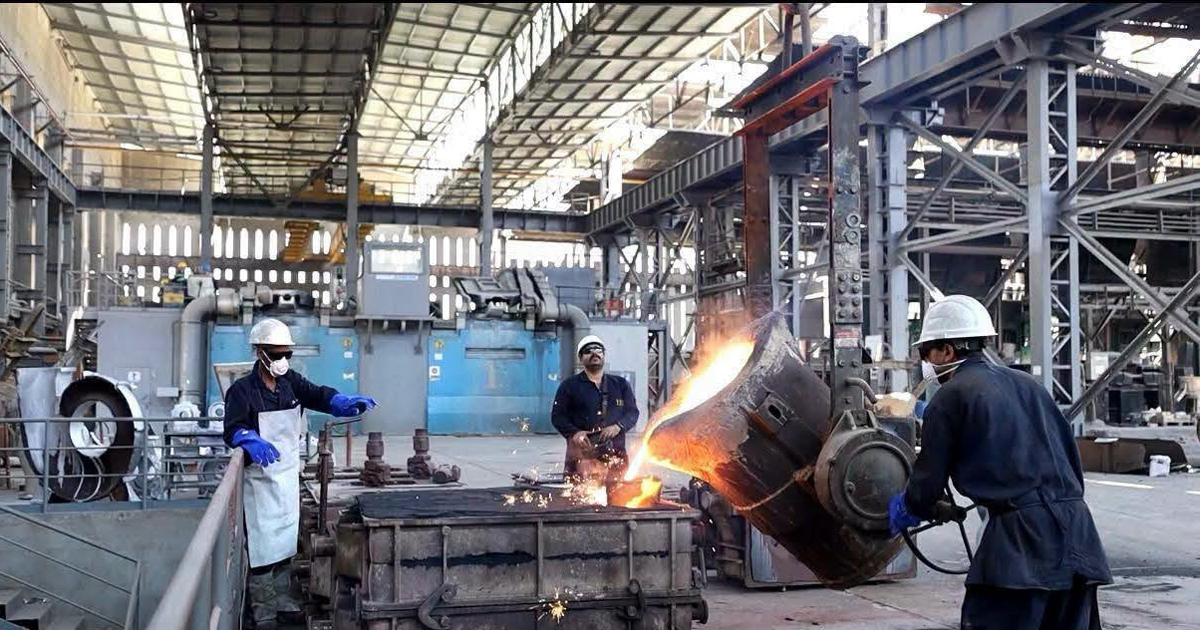

The Ministry of Military Production’s efforts to transfer technology and localize industries to support comprehensive development
The Egyptian state is witnessing during the current stage a state of institutional integration and combined efforts among its various agencies, which reflects organized work that is moving with the heart of one man towards achieving the comprehensive goals ofdevelopment. Efforts to localize industries and reduce dependence on imports are the top priorities of this movement, as they are an essential pillar for enhancing national productive capabilities and building a more competitive and sustainable economy.
In this context, efforts are continuing in full swing within the various sectors of the state to expand the local manufacturing base, transfer modern technology, and maximize the use of available resources and capabilities, which contributes to reducing the import bill and supports the state’s directions towards achieving sustainable development.Comprehensive, based on production, knowledge, and enhancing the added value of the national economy.
National and development projects
In addition to its role in developing military industries, the Ministry of Military Production continues to support civilian industries and development projects, in cooperation with various ministries and concerned authorities in the state, by benefiting from surplus production capacities and accumulated expertise within its subsidiaries, in a way that enhances the state’s efforts in localizing industries to achieve comprehensive sustainable development.
Perhaps one of the most prominent of these development projects is the presidential initiative “A Decent Life,” which works to provide basic services to citizens in several governorates, in line with the comprehensive Sustainable Development Goals (SDGs), especially Goal (1) eradicate poverty, Goal (2) complete elimination of hunger, Goal (3) good health and well-being, Goal (4) education.The good.
The Ministry of Military Production places “Decent Life” projects at its top priority, based on its national responsibility as a major partner in implementing various national projects to improve the living conditions of citizens and support sustainable development efforts in the country.

Supporting the water and sanitation system
In another context, last year witnessed the opening of a factory to produce submersible pumps with different capacities within Qaha Chemical Industries Company (Military Factory 270), where the manufacture of submersible pumps was approved by the Drinking Water and Sanitation Authority to meet the needs of water and sanitation companies, the private sector, and the Ministry of Water Resources and Irrigation. These pumps are strategic products that are used in the operation of lifting stations and wastewater treatment plants, which contributes to supporting the efficiency of the water and sewage system.Health.
This trend enhances the contribution to achieving the sixth goal of the Sustainable Development Goals (SDGs) regarding clean water and sanitation, by supporting water-related infrastructure and raising the efficiency of operating treatment plants, which is reflected in improving the quality of services provided to citizens. The project also contributes to reducing the import bill and increasing the added value of the national economy.
Developing health care services
The Ministry did not neglect developing health services and contributing to presidential initiatives, as the Specialized Medical Center for Military Production witnessed a remarkable development in the level of health services provided to citizens, through the provision of modern medical devices and the expansion of the capacity of medical facilities, including the implementation of a project to expand the dialysis unit to include (50) machines instead of (30), to become one of the largest dialysis units.renal function at the republic level, in addition to the opening of a high-pressure oxygen therapy unit to serve a wide segment of patients.
Also, during the past year, a number of (324) citizens were treated within the framework of the presidential initiative to end waiting lists, which aims to accelerate the performance of critical surgical operations such as heart, tumors, eyes and bones, through integrating efforts between government and private hospitals and employing technology in registering and following up on cases, which contributes to improving the quality of health services and reducing waiting periods, which is consistent with the third goal of the Sustainable Development Goals (SDGs): good health and well-being.
The Egyptian Academy and Qualification of Scientific Cadres
At the level of qualification and training, the Egyptian Academy of Engineering and Advanced Technology affiliated with the Ministry of Military Production continues its role in preparing and qualifying capable engineering cadres.To meet the needs of the labor market and keep pace with global technological developments, thus enhancing its role as one of the pillars supporting the localization of industries.
A communications laboratory and another for artificial intelligence have been established to support the educational process and provide an advanced academic environment for students, to achieve advanced scientific and research achievements, in line with the fourth goal of the Sustainable Development Goals (SDGs) of quality education.
Empowering women and youth and promoting inclusion
Within the framework of promoting inclusion and equal opportunities, expanded efforts have been implemented to empower women, youth, and people of determination by providing greater opportunities for appointment, qualification, and assuming leadership positions, in addition to preparing the second row of leaders.
These efforts contribute to establishing a more just and sustainable work environment, in line with Goal 5 of the Sustainable Development Goals (SDGs), which calls forAchieving gender equality, and also supports the tenth goal of reducing inequalities.
In conclusion, in light of the projects and programs implemented by the Ministry of Military Production during the recent period, a qualitative shift in the philosophy of industrial work is evident, based on going beyond the limits of traditional production to building a more comprehensive system based on the localization of industries, supporting technology, deepening the local component, and linking industry to development needs at various levels.
TheThe Earth Guards Foundation appreciates the efforts made by the Ministry of Military Production, which reveal the expansion of its development role, by contributing to infrastructure projects and vital services, most notably water, health, and education, in addition to supporting industries related to the circular economy and technological transformation.
At the same time,It is clear that investing in the human element, through training, qualification, and empowerment of women, youth, and people of determination, represents a parallel pillar that is no less important than industrial development itself, which enhances the sustainability of these efforts and their ability to continue and develop.


