

Sponsored by Earth Guards, the ‘I Am a Volunteer’ program shines at the Cairo International Book Fair
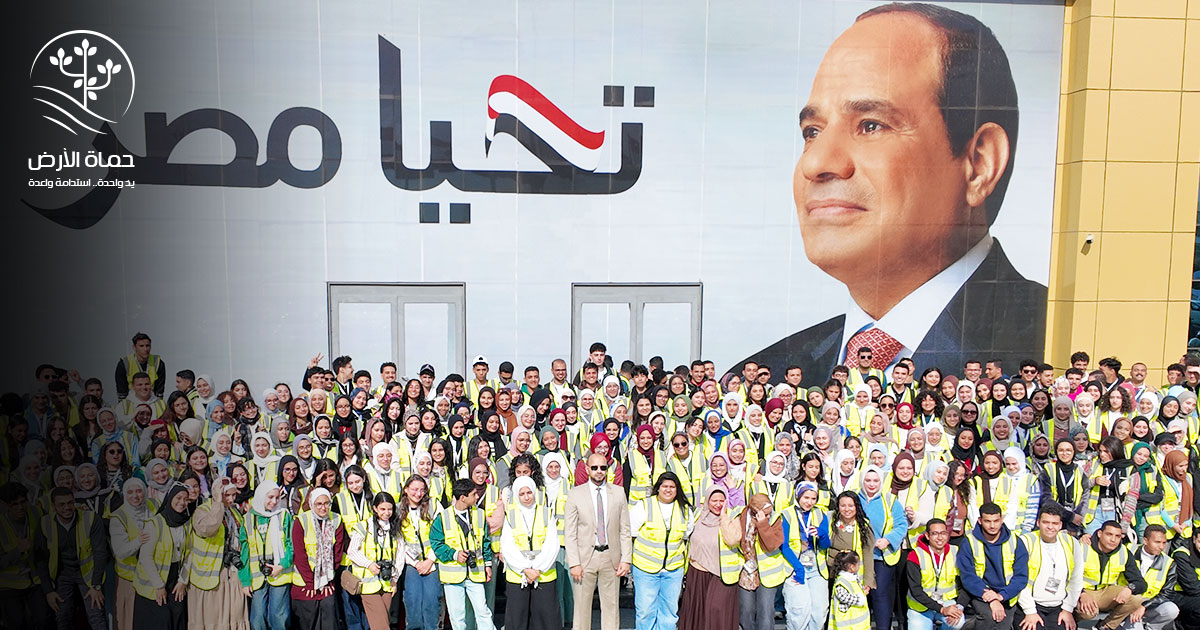

Sponsored by Earth Guards.. The I Am a Volunteer program is one of the bright images at the Cairo Book Fair
In recent years, volunteer work has emerged as a sublime value and a social phenomenon that embodies the civilized behavior of societies. It is also considered one of the basic pillars of achieving comprehensivesustainable development; It is based on the individual allocating part of his time and effort to serve the community for free, and thus works to enhance citizens’ participation in their community’s issues, especially in light of the increasing challenges that require concerted efforts between various parties.
Hence comes the role of civil society institutions, which play a pivotal role in adopting and supporting youth initiatives that enhance the culture of participation and social responsibility, which is embodied in The Earth Guards Foundation’s support for the “I am a Volunteer” initiative, in a step that reflects an integrated approach towards…Empowering young people and transforming their energies into a positive force that contributes to achieving the Sustainable Development Goals (SDGs).
Consolidating the concepts of sustainable development
The Earth Guards Foundation seeks to consolidate the concepts of sustainable development by working to spread awareness of its issues and its social, economic and environmental dimensions. This article highlights one of the ways to achieve social goals by supporting initiatives aimed at empowering youth and enhancing their role in facing various challenges. The Foundation adopts an approach based on building effective partnerships and providing platforms that allow individuals to express their abilities and contribute to making a tangible positive impact within their communities.
In this context, the I am a Volunteer initiative comes as one of the shining models launched by the Ministry of Youth and Sports, sponsored by The Earth Guards Foundation, to maximize the benefit from the Cairo International Book Fair experience, believingAmong them is the importance of supporting and enhancing youth awareness of initiatives that encourage young people to engage in community activities and develop their spirit of responsibility, by providing real opportunities to participate in initiatives that serve the community and enhance the values of cooperation and teamwork.
The Earth Guards Foundation’s sponsorship of the “I am a Volunteer” initiative during the Cairo International Book Fair in its fifty-seventh session is also an extension of its societal role in achieving the goals of sustainable development and spreading awareness of its issues. The initiative represents a practical translation of the goals that the Foundation is working to achieve, especially empowering youth and strengthening community partnerships, in line with the Sustainable Development Goals (SDGs), especially Goal (17) on establishing partnerships, Goal (11) sustainable cities and local communities, and Goal (16) peace, justice, and strong institutions.
I am a Volunteer Initiative
The I am a Volunteer initiative isThe official volunteer program for the Cairo International Book Fair, which was launched by the Ministry of Youth and Sports in 2018, with the aim of making the Cairo International Book Fair experience an exceptional experience that is rooted in the minds through a set of goals, most important of which is active participation in a number of community events, the most prominent of which was the activities of the Cairo International Book Fair in its fifty-seventh edition, where the initiative turned into a real space for young people to interact with the public and introduce them to the culture of volunteer work and its importance in building society and promoting the spirit of sustainability.
During the exhibition, volunteers affiliated with the initiative contributed to organizing the movement of visitors, providing guidance support within the corridors of events, in addition to spreading awareness of the importance of community participation and teamwork, and it extended to include direct interaction with the public by clarifying the concept of volunteering and its impact on development, which contributed to enhancing the presence of the idea among various groups.age, especially youth, and linking them in a practical way to the concept of effective participation in society.
The importance of volunteer work in managing major events
The participation of the I am a Volunteer initiative in the Cairo International Book Fair showed that volunteer work has become an essential element in the management of major cultural events, as volunteers contributed to enhancing the visitors’ experience and improving the quality of the organization, which reflects their abilities to assume responsibility and work within organized teams.
This experience also contributed to consolidating the idea that young people are able to be part of a system of positive change within society, through participation and direct influence in others’ awareness of the value of volunteering and its importance in supporting sustainable development, whether on the cultural or social level.
The Earth Guards Foundation’s participation reflected a clear international dimension, and this was under its official sponsorship.For the “I am a Volunteer” program inside the exhibition, in cooperation with UNICEF, the program focused on supporting the culture of volunteerism among young people, and enhancing their participation in community issues and sustainable development.
BookFairGo app
In order to promote digital transformation and facilitate the patrons of the Cairo International Book Fair, the initiative launched the BookFairGo application to help them reach publishing houses and events. It can also be used in emergency situations. The application did not neglect to help people of determination, as the application provided support and assistance to them, such as an audio guidance service to help the blind.
The BookFairGo application was an essential tool in organizing the visitors’ experience, from helping hundreds of thousands of users, to receiving reports of missing children, and facilitating security and ambulance requests, which were estimated at hundreds, and this is considered an embodiment of achieving the comprehensive Sustainable Development Goals (SDGs), most notably:Goal 10: Reduced inequalities, Goal 11: Sustainable cities and communities, Goal 16: Peace, justice and strong institutions.
In this context, The Earth Guards Foundation’s support for the initiative during the Cairo International Book Fair acquires a deeper dimension that extends to reflect a clear vision based on investing in the energies of youth and directing them towards more effective paths, in line with the goals of sustainable development, and enhancing the building of a more aware and cohesive society and the ability to respond to future challenges.
In conclusion, the sponsorship ofThe Earth Guards Foundation for the “I am a Volunteer” program represented a step that embodies the power of joint action. It also expressed the Foundation’s firm belief that empowering youth is the cornerstone of the path of sustainable development, and that youth are the real driving force towards an advanced and sustainable society.


