

In just 15 minutes, sustainable cities can support their residents
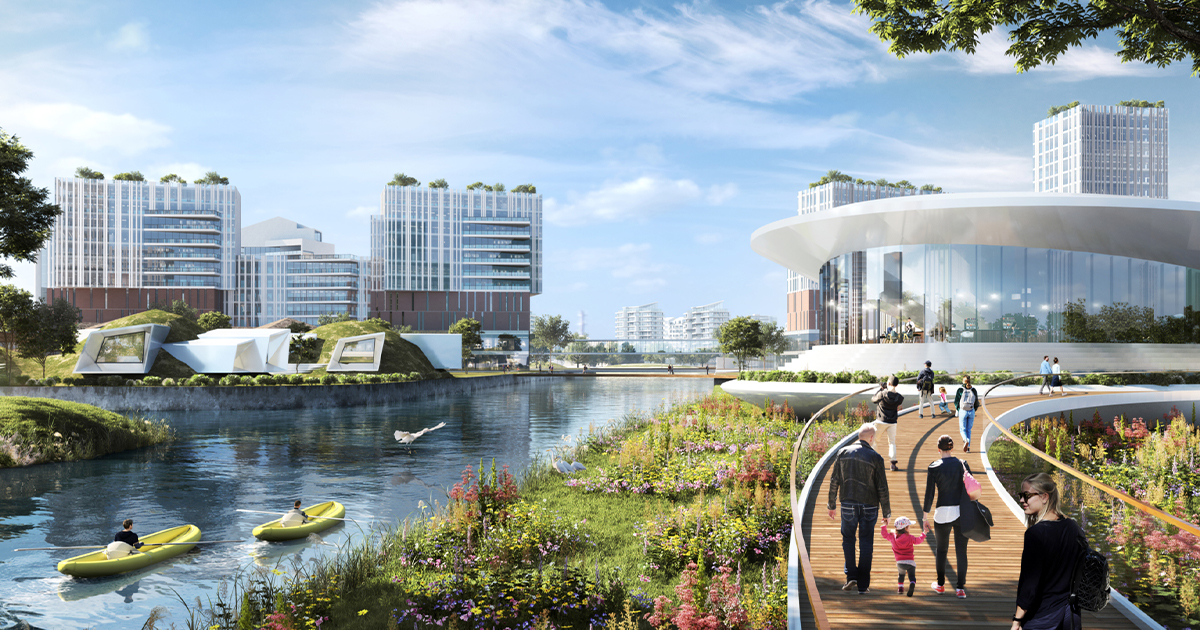

Only 15 minutes… Sustainable cities help their residents
Before talking about sustainable cities and their most prominent developments, we must realize that the world has become, unfortunately, closer to the possibility of exceeding the temperature stipulated in the Paris Agreement, with expectations of a rise that may reach 2.7 degrees Celsius by the end of the century, due to climate disasters such as storms and sea level rise.
We cannot ignore – in addition to the above – that more than 55% ofthe world’s population live in urban cities, and it is expected that this percentage – according to data from the United Nations Human Settlements Program – will reach 68% by 2050; Which makes urban areas pivotal to the global economy.
At the same time, these urban cities are responsible for 60% of…global emissions; They release carbon oxides and other harmful pollutants into the atmosphere, in addition to the high energy consumption of these cities – abouttwo-thirds of global energy– in the transportation, construction, and manufacturing sectors located in the cities.
Based on the above,Earth Guardsin this article will discuss a model of sustainable cities; As a contribution to addressing the problems of congestion and environmental pollution, and achieving the goals of sustainable development; So continue reading the article.
The Fifteen Minute City
TheGlobal Energy Investment report – issued by the International Energy Agency in 2024 – indicates that investments in buildings, transportation and industry are the most widespreadAmong all sustainable development efforts, and within this framework comes the latest model of sustainable cities, which is represented by the term “The 15-Minute City”, where sustainability and its standards can be achieved within cities. This allows residents to go to work and jobs, buy their daily needs, access health centers and schools, and enjoy green spaces, all within 15 minutes.
The idea of the “15-minute city” is not entirely new, as it has gained widespread momentum thanks to the efforts made by Professor Carlos Moreno, who developed this concept in 2016, to later become the focus of intense interest in urban planning policies, especially after the Corona pandemic that struck the world a few years ago.
This has become a reality in a European country such as the Netherlands, where its city “Utrecht” won the “City of the 15” award.Minute”, after adopting this sustainable urban philosophy. In its future vision, the city – the city of Utrecht – seeks to become the “10-minute city” by the year 2040.
To understand the nature of this idea, we must take a closer look at the infrastructure of current cities, as they are completely dependent on cars and traditional public transportation, as people spend long hours moving between work, home, and entertainment and shopping places.
As for the “15-minute city,” it overturns this traditional image and redistributes urban functions in a more balanced way, so that neighborhoods become with multiple urban functions, with all basic services available, including stores, schools, health centers, and entertainment areas, all with the streets turning into spaces for walking and cycling, instead of being lanes crowded with vehicles.Environmental pollution.

Sustainable cities achieve well-being
In transitioning to this model of sustainable cities, the environment and its cleanliness are not the only focus of attention, as it is comprehensive urban growth and broad urban development, and it is also a plan that aims to achieve the highest levels of well-being among the city’s residents, while contributing to supporting the economy on the basis of digitalization and governance in all sectors.
This is because the “15-minute city” provides – from an economic standpoint – opportunities for local economic activity to flourish, and then the most innovative supply chains and logistics gain greater spread and expansion, which supports local brands that help grow economic returns, especially since short travel between places of purchase, services and jobs increases…Purchasing power of the population.
From a societal perspective, this model helps support the concept of sustainable cities, which all countries seek in light of the noticeable movement towards achieving Sustainable Development Goals (SDGs). Because such cities – cities with short distances – allow their residents to spend a long time inside their homes, where stronger social bonds are created between them, which enhances belonging and supports the stability of communities.
Urban Planning First
We should know that the world’s cities receive less than 20% of the funding needed to transform them towards sustainability. They struggle to attract appropriate climate financing, especially in small local projects, and this was confirmed by the report “The World’s Cities 2024”; Therefore, the “15-minute city” is an opportunity through which societies can make more and more progress towards sustainability, and this does not prevent thatThere are a number of challenges that could prevent us from achieving the Sustainable Development Goals (SDGs).
One of the most prominent challenges in this field is how to redesign existing cities – so that they suit the vision of sustainable cities – in addition to the financial cost, which could be a major obstacle to the shift of developing countries towards the field of sustainable cities in general. It may be difficult to convince governments and the private sector to finance huge projects to rehabilitate streets, develop traditional means of transportation, and convert buildings into multi-use facilities. Perhaps this is the reason behind the decline in funding provided to cities, as we mentioned before.
In this sense,Earth Guardscontinues its commitment to spreading awareness about such issues; To mobilize efforts and advance the transformation process towards greening all sectors. To help make the worldA better place to live, where man and the environment are in perfect harmony.


