

Innovation in China attracts the world… field trips worth thousands of dollars to understand the secrets of manufacturing

Innovation in China attracts the world… field trips worth thousands of dollars to understand the secrets of manufacturing
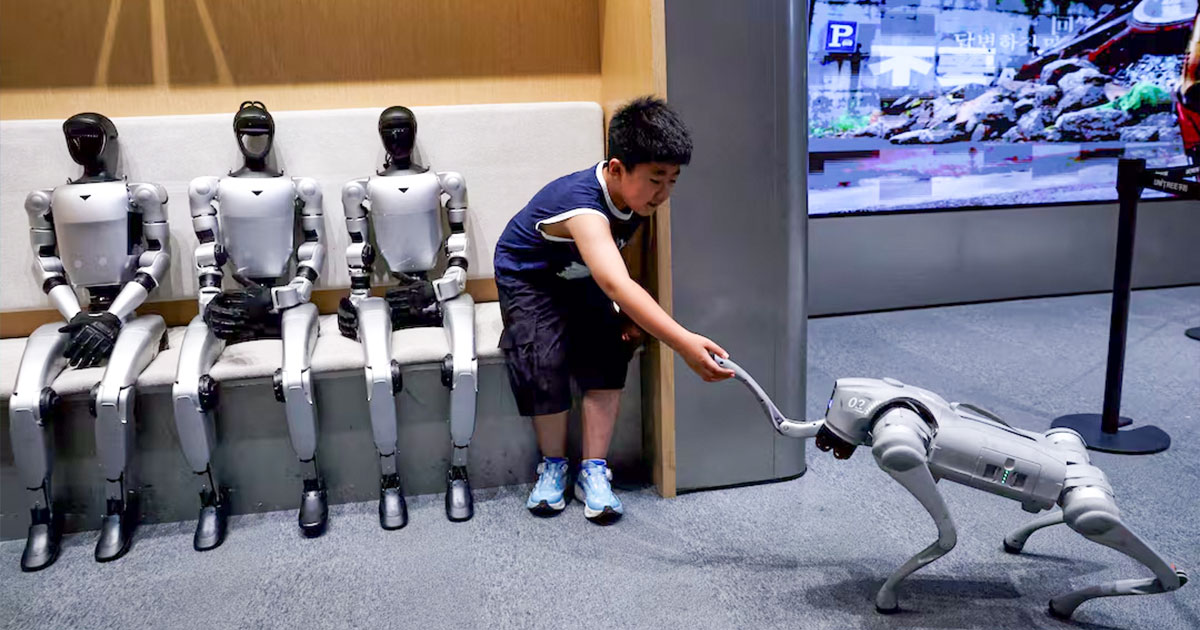
Innovation in China is turning into a new destination for investors, entrepreneurs and executives from around the world, with an increasing number of trips aiming to enter Chinese factories and see humanoid robots, electric cars and artificial intelligence technologies in action.
Some participants pay thousands of dollars for tours that give them direct access to factories and technology companies, in an attempt to understand the speed with which China is moving in the fields of advanced manufacturing, and the extent to which its companies are able to compete globally.
This demand reflects growing fears within the boards of directors of Western companies about a new wave of competition.Chinese, with the expansion of local companies in robotics, batteries, electric cars, and artificial intelligence, and China’s transformation from a vast production base to an environment where others go to learn and study its industrial models.
Thousands of dollars to enter factories
Robert Wu, CEO of Baiguan Research in Shanghai, organizes five-day tours for investors, entrepreneurs and executives, costing up to $15,000 per participant.
So far, Robert has organized two tours in which more than twenty people participated, about half of whom came from Southeast Asian countries.
He points out that seeing China as a place to study and learn represents a clear shift from what it was like a few years ago.
During these tours, visitors look for an opportunityTo see China’s innovation ecosystem firsthand, and understand how new technologies are transformed into production lines and products that can reach the market quickly.
The list of well-known visitors included American investment companies such as Dimension, Capital Group and Thrive Capital, as well as figures working in the technology and media sectors.

China is a learning destination
For some investors, access to Chinese factories has become part of the verification process that precedes investment decisions.
Roy Ma, founder of Tech Buzz China, believes that visiting China allows the investor to understand the local companies that he may encounter in the future as competitors, partners, suppliers, or investment opportunities in different markets around the world.
These tour itineraries include cities such as Beijing, Shenzhen, Shanghai, Hangzhou and Hefei, which are key centers in the boom in electric cars, batteries, artificial intelligence and robotics.
Bertrand Chen, CEO of Global Shipping Business Network, explains that understanding the scale, speed and practicality of Chinese innovation becomes clearer when standing inside the factory and watching production first hand.

Why do investors travel to China?
The motives for these visits are multiple, the most prominent of which are:
- Watching the speed of industrialization and expansion on the ground.
- Understand how supply chains work and access components.
- Identifying companies that may become competitorsOr partners or suppliers.
- Study of the method of state support for investment in technology and its widespread dissemination.
These motives transform technical tours from a tourist experience into a tool for understanding manufacturing and innovation in China and their future trends.
In this context, this expansion of innovation in China intersects with the ninth goal of the Sustainable Development Goals (SDGs) on industry, innovation and infrastructure, as the ability of countries to develop advanced industrial bases and link research with application represents an important element in enhancing productivity and economic competitiveness.
Industrial tourism in billions
Interest in Chinese factories extends to a broader sector of industrial tourism, which generated about $17.8 billion during the past year, according to data reported by media outlets.According to Chinese official media, the value of the sector is expected to exceed 300 billion yuan, or about 44.6 billion dollars, by 2029.
The GloPen agency, which specializes in technical tours in Shanghai, recorded a 50% increase in inquiries during 2026, especially from European and Singaporean clients, and now organizes more than 100 tours for companies every month.
Beijing also announced its support for expanding industrial tourism, and identified more than 140 official sites to be models for this type of visit.
The Xiaomi electric car factory in Beijing stands out as one example, having received more than 250,000 visitors since March 2024, with demand for entry so high that some reservations awarded by lottery are being resold for up to 2,000 yuan, or about $300.

Europe fears delay
This type of visit is of particular interest to European managers who face a slowdown in productivity growth and fears of a widening gap in the areas of artificial intelligence and robotics.
Alex Xingyun Lu, an artificial intelligence consultant at Praxis Advisory in Shanghai, has led seven delegations since late 2025, some of which included up to 50 corporate visitors.
Xingyun points out that European delegations arrive with two basic questions in mind: What can be learned from Chinese companies? How does the state manage its technology investments on a large scale?
Managers are also seeking to understand how to coordinate the deployment of artificial intelligence between Chinese provinces, and what this experience can transfer to their markets.
This rivalry is relatedThe eighth goal of the Sustainable Development Goals (SDGs) on decent work and economic growth, as productivity, technology, and the ability to develop high-value industries have become essential factors in determining the ability of economies to grow and maintain their competitiveness.
Shenzhen in the heart of transformation
Shenzhen represents one of the most prominent examples of China’s innovation shift from low-cost manufacturing to an ecosystem that brings together robotics, artificial intelligence, device manufacturing, and advanced supply chains.
The number of foreign visitors to the city increased by 70% last year, then by more than 30% in the first quarter of this year, while the number of entries exceeded five million until August 2026.
The city is also preparing to host the Asia Economic Cooperation ForumAPEC in November, amid efforts to boost its image as a showcase for Chinese technology.
It featured work and residence spaces similar to what is known in Silicon Valley as “hacker houses,” hosting foreign entrepreneurs working in robots and artificial intelligence devices.
There are also WeChat groups of hundreds of people who travel between Silicon Valley and Shenzhen, exchanging information about factories for batteries, displays and various components.
Some founders arrive in the city during the ten-day visa-free period, searching for factories capable of turning their ideas into prototypes.
To learn about another aspect of the development of the robotics sector in China, read also: OlympiadChinese humanoid robots showcase technological capabilities.
Is China really ahead?
Despite the growing interest in the Chinese experience, some observers warn against overestimating the extent of its superiority.
Roy Ma points out that non-Chinese companies still occupy the largest share of global markets in many technological sectors, and also possess many advanced intellectual property rights and achieve greater profits.
Some visitors also arrive in China with perceptions that need to be revised. Robert Wu cites an example of this in the self-driving taxi sector, where some visitors believe China is ahead of the United States, while cautious domestic policies linked to fears of job losses are slowing the spread of…This technology.
This balance gives a more accurate picture of the future of innovation in China; Chinese power is clearly evident in the speed of industrialization and expansion, while global competition in research, intellectual property, profits, and advanced technologies continues.

From the factory to global competition
The wave of tech tours reveals a shift in the way investors view China. Factories previously associated with low-cost production became, for many visitors, places to study the speed of product development, the integration of supply chains, and the ability of technology to move into everyday use.
Innovation in China highlights here as a system that brings togetherResearch, manufacturing, investment and markets, which explains the interest of investors in understanding the experience directly from inside factories and industrial cities.
To learn about another aspect of China’s industrial expansion and its ability to transform investment into actual projects, read also : China invests in clean industry as American momentum declines .
In this context, Earth Defenders Foundation points out that the ability of economies to transform knowledge into large-scale products and industries has become a key element in global competition. The wave of visitors heading to Chinese factories shows how has transformed innovation in China To an experience that investors and entrepreneurs seek to study from within, especially with the growing role of robots, artificial intelligence, and electric cars in shaping the features of the industry in the coming years.


