

The Ebola virus recorded more than 5,000 infections in Congo.. Why did containment efforts falter?
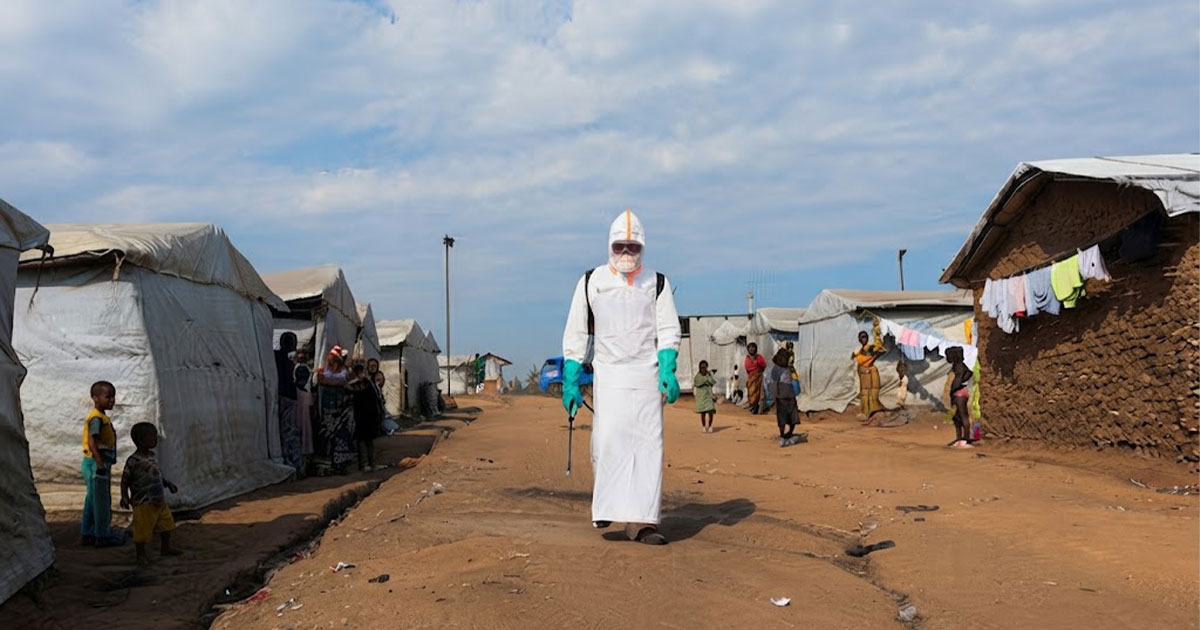

The Ebola virus recorded more than 5,000 infections in the Congo.. Why did containment efforts falter?
The Ebola virus continues to expand its scope in the Democratic Republic of the Congo, in an extension of a crisis that began months ago and whose numbers are still rising at an alarming rate. After successive waves of infections and deaths, the number of confirmed cases exceeded 5,000, which reflects the continued difficulty of containing the outbreak despite some time having passed since the start of the health response.
The country has so far recorded 5,021 confirmed cases and 2,378 deaths, making the current outbreak the largest in Congo’s history in terms of the number of infections, and the second worst global outbreak after the West African epidemic between 2014 and 2016. These numbers reveal that the crisis has entered a more complex stage, with continuing pressures on the health system and factors hindering effortsDisease control.
The seventeenth epidemic
The current outbreak represents the 17th Ebola epidemic in Congo, officially beginning on May 15, 2026, before the pace of infections accelerated over the following weeks.
By late July, the number of recorded cases had exceeded all previous Ebola waves within the country, while the number of deaths during August had surpassed the toll of the 2018-2020 outbreak, which until recently was considered the worst in Congo’s history.
These numbers reveal that the country’s long experience in dealing with the disease was not sufficient this time to prevent its spread.

A strain without an approved vaccine
The current outbreak is linked to the “Bundibugyo” variant“From Ebola virus, a strain for which there are not yet approved vaccines or treatments according to available data.
This also increases the difficulty of the response, as controlling the spread of infection becomes more dependent on the speed of discovering cases, isolating the infected, tracing contacts, and providing appropriate health care.
As the number of cases increases, any delay in response becomes more impactful, especially in areas that already suffer from weak or difficult to access health services.
Why did the response falter?
The data identifies several factors that have contributed to increasing the difficulty of containing the epidemic, the most important of which is the weakness of the health infrastructure. Responding to highly contagious diseases such as Ebola requires a continuous ability to monitor cases, conduct tests, isolate patients, and protect…Health sector workers, tasks that become more complex when health facilities operate with limited resources. Response efforts have also faced resistance within some communities, which can slow case detection and contact tracing.
To this was added instability in some areas, in addition to protests organized by workers involved in efforts to confront the disease, which increased pressure on the response system.

Health system under pressure
The spread of Ebola on this scale reveals that containing epidemics depends as much on the strength of the health system as on the medical tools themselves.
The weaker the ability to reach patients or detect cases early, the greater the chance of transmission of infection to other people, while the pressure on health workers and facilities leads to…Slow down the response at a stage that requires great speed.
This is linked to the third goal of the Sustainable Development Goals (SDGs) on good health and well-being, which includes strengthening countries’ capacity for early warning, managing health risks, and confronting epidemics.
The Congolese experience shows that investing in health infrastructure and preparing for crises becomes an essential part of protecting the population, especially in countries that frequently face infectious diseases.
The second worst global outbreak
With the number of cases reaching more than 5,000, the current outbreak has become the second largest Ebola wave recorded globally in terms of infections and deaths.
The West African epidemic between 2014 and 2016 still maintains first place, but Congo’s surpassing the numbers of all its previous waves reflects the seriousness of the current situation.
This also presents health authorities with an increasing challenge, which is to stop the growth of infections before the scope of the crisis expands further.
In conclusion, the current Ebola crisis shows that previous experience in dealing with the disease remains linked to the presence of a health infrastructure capable of implementing response measures quickly and efficiently.
The current outbreak combines a strain without a vaccine or approved treatment, a health system under pressure, and social and security challenges that affect access to and follow-up of cases.
The Earth Guards Foundation confirms that confronting epidemics requires health systems capable of working in difficult circumstances, while supporting workers, enhancing the confidence of communities, and improving the ability to detect diseases early.
In the Congo, they became numbersInfections and deaths are a clear indication that controlling the epidemic depends on the ability of the health system and society to transform this knowledge into a rapid and effective response.


