

The October War of 1973, the Egyptian epic that opened the door to peace and justice and restored the land
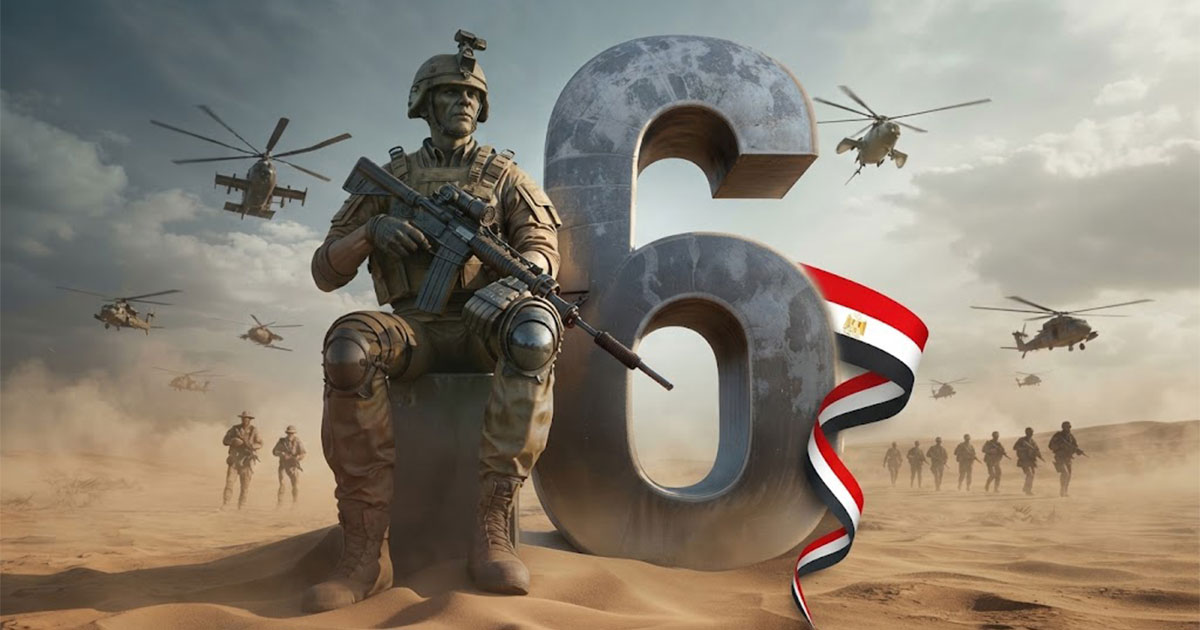

The October War of 1973, the Egyptian epic that opened the door to peace and justice and restored the land
The October 1973 War will remain a symbol of the ability of the Egyptian will to plan and manage resources and all of society’s capabilities and wealth, until it has become a lesson studied by the world to achieve sustainability protected by peace and justice, and preserved by the right to a safe society that enjoys its rights.
From here, The Earth Guards Foundation In this article – on the occasion of the fifty-third anniversary of the glorious October victories – a reading links the October 1973 War to the goals of sustainable development, especially the goal concerned with achieving peace, justice and strong institutions; So keep reading.
What is a war story The real October?
Perhaps the question that comes to the mind of current generations is: When was the October War? The October War began on October 6, 1973 (the 10th of Ramadan 1393 AH), with a surprise Egyptian attack – signaled by the late President Mohamed Anwar Sadat, the hero of war and peace – on the Israeli forces stationed in Sinai.

Five minutes after the Egyptian planes crossed on October 6 at 2 p.m., artillery began bombarding the Israeli fortifications east of the canal, paving the way for the Second and Third Armies to cross the greatest water barrier in modern history. Suez Canal.
At the same time, members of the Corps of Engineers and soldiers from the Saiqa Forces infiltrated the eastern shore of the Suez Canal; from Yes, they close all the pipes that pump the flammable liquid (napalm) to the surface of the canal water.

Why was October chosen?
The Egyptian army took into account natural factors, including:
- Tidal status
- Channel current speed
- Calm weather
Water cannons destroy Bar Lev
The earthen berm – the Bar Lev Line – that was built on the eastern bank of the canal was tens of meters high, and at that time engineer Baqi Zaki Youssef, “head of the Vehicles Branch of the Third Field Army during the October War,” suggested using high-pressure water pumps; To bulldoze it instead of relying on explosives.
Indeed, the water opened gaps for the crossings in a few hours, and this is an early example of achieving Goal 9 (industry, innovation, and infrastructure); It is a simple engineering solution from available resources to a problem that seemed impossible at the time!
Encrypted Communications
On the other hand, several accounts indicate that the Nuba people used their language in military communications. Which made it difficult for the enemy to monitor and intercept the Egyptian army’s communications. It is a clear example of involving all components of society. In implementation of Goal 10 of the Sustainable Development Goals: Reducing inequalities.
As for the internal front, the heroism of Egyptian women – nurses, paramedics, and others – played an indispensable role in supporting the Egyptian army in its epic to liberate the land and restore… Right, which also achieves the tenth goal, concerned with reducing inequalities among members of the same society.

Who won the October War?
Egypt was able to achieve its strategic goal, breaking the illusion of the “invincible army,” and regaining a large part of its land, after it succeeded in crossing and destroying the enemy’s defenses, in a crossing plan that is still being studied by international military academies.
Then the recovery of Sinai was completed with the Israeli withdrawal on April 25, 1982, and Taba was returned in March 1989 through international arbitration; This means that military victory was the beginning of a long path of diplomacy and law, and that peace was maintained by strong institutions, such as that of the great Egyptian army.

Post-War: The Battle for Development
If we go back in time, we will know that after 1967 Sinai remained occupied, and the Suez Canal was closed to navigation until June 1975, when diplomatic initiatives faltered, including Sadat’s initiative in 1971, which called for reopening the canal, but the political and military situation at that time became more stagnant.
The cost of occupied land
After 1967, Egypt lost access to the canal, the Sinai oil fields, and part of tourism, and bore the burdens of rebuilding the army, and the canal cities were idle. That is, the failure of the eighth goal (decent work and economic growth), as well as the eleventh goal (sustainable cities and communities). Liberating the land became an essential condition for achieving development.
New cities and Sinai development
Then, in 1974, the Egyptian vision for economic transformation after the war was announced, and the Suez Canal was reopened for navigation in June 1975, and the reconstruction of Port Said, Ismailia, and Suez began after the displaced people returned.
Today, we are witnessing the sustainable cities that Egypt has created, such as the 10th of Ramadan and the 6th of October. Sinai’s development projects later turned into a major axis, represented by roads linking it to the Delta, new cities, an economic zone for the Suez Canal, and other development projects that the new republic is witnessing during the era of President Abdel Fattah El-Sisi.

So, the October War of 1973 was a connected page in Egyptian history, and it was a moment that rearranged the relationship between power and right, and between regaining land and the ability to Building the future; Because the military crossing ended a stage of stagnation, and regained usurped land by force, negotiation, and law. This clearly reveals that protecting peace is longer lasting than battle, and that establishing rights requires institutions capable of transforming political and military achievement into a stable reality.
Perhaps the meaning that is worth saying here The Earth Guards Foundation for the current and new coming generations, is that nations are protected by transforming the lessons of their past into a continuous ability to work, build institutions, preserve resources, and expand opportunities for a decent life, in a comprehensive vision based on sustainability.


