

Who answers: man or machine? How artificial intelligence is changing university education

Who answers: man or machine? How artificial intelligence is changing university education
تخيَّل طالبًا جامعيًّا يجلس أمام مسألة رياضية معقدة، باحثًا عن طريق لحلها. Trial and error and discussion with colleagues were essential stages in his journey towards the answer, but today, he can use an artificial intelligence system to obtain the answer and explain the steps of the solution within moments. But a more important question remains: Did he gain the knowledge that the matter was supposed to lead him to?
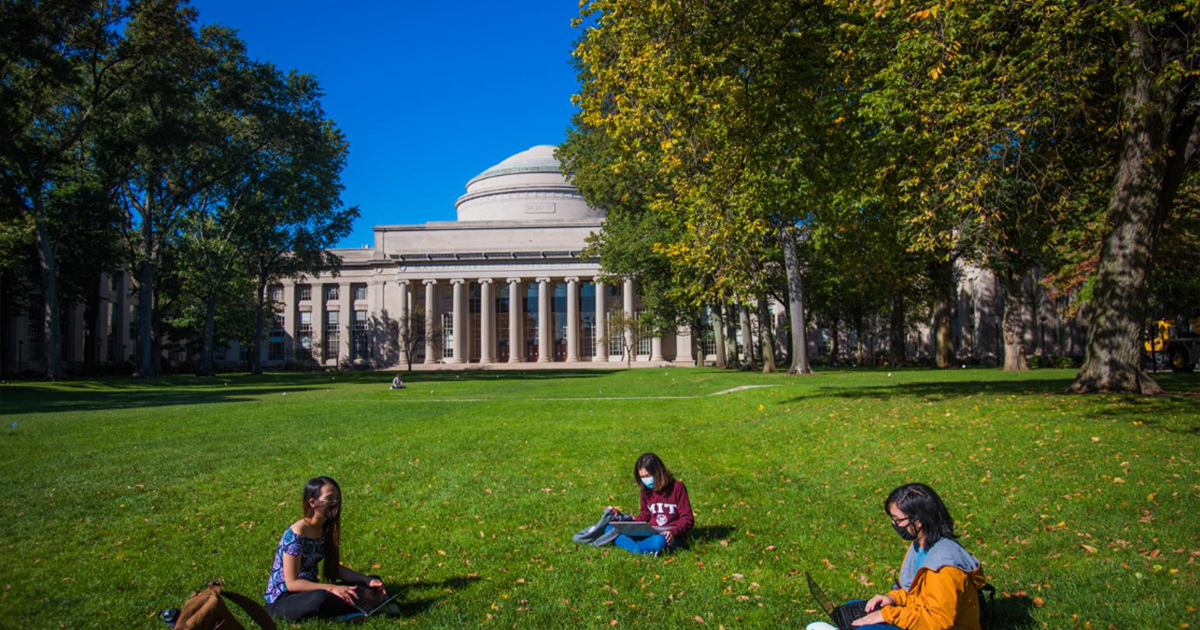
This question found its echo within one of the most prominent scientific institutions in the world. so A report issued by Massachusetts Institute of Technology (MIT) Artificial intelligence is reshaping the foundations of university education, and calls for a review of teaching methods, tests, and the nature of human relations on campus.
Perhaps ironically, technology that gives students unprecedented access to information may make measuring their true understanding more difficult. Between the growing potential of these tools and the fears of over-reliance on them, an issue arises related to the future of development: How do we prepare generations capable of thinking and innovating in a world where machines can provide many of the answers?
Duties are in question
In January 2026, MIT formed a special committee to study the use of artificial intelligence in teaching, learning, and research training, co-chaired by professors Eric Kloepfer and Samuel Madden.
The committee's mission was to evaluate students' and professors' use of these tools, explore new methods for teaching and assessment, and propose policies regulating their use. But its final report, which the institute announced in August, delved into broader questions related to the nature of the university experience itself.
According to the committee, generative artificial intelligence systems have become able to provide convincing answers and solutions to most types of undergraduate writing assignments, including essays, scientific and mathematical problems, and writing code.

This development puts home tests and traditional assignments in doubt. The correct answer alone has become insufficient to judge the extent of the student’s understanding and understanding of the scientific material and his ability to solve problems on his own.
While students may benefit from tools that explain concepts and help them explore new ideas, the report's authors fear that overreliance on them will undermine skill acquisition and confidence in the ability to solve problems.
What is the value of an answer without a research trip?
One of the most striking ideas in the report is its call to reconsider what students should learn, before worrying about how to prevent the use of artificial intelligence in exams.
If the goal of the mathematical problem is to train the student to think logically, then having the solution ready may prevent him from practicing the same skill. If a more complex project is to be developed, conscious use of smart tools may become part of the learning.
That is why the committee called for designing assessments that focus on real understanding, such as oral discussions, portfolios that include the stages of student work and modifications throughout the semester, and applied projects accompanied by live discussion.

She also stressed the importance of maintaining space for experimentation, stumbling, and review. The difficulties that a student faces while learning may be a necessary part of building his knowledge.
Here a different development question arises: How do we build education capable of preparing people for the future, if success is reduced to the speed of obtaining the answer?
This idea helps us understand the importance Target 4.4 of Sustainable Development Goal 4, on quality education, which focuses on increasing the number of youth and adults who possess the appropriate skills for work and entrepreneurship.
Preparing for a world in which artificial intelligence technologies are expanding requires skills in using digital tools, in addition to critical thinking and the ability to solve problems and evaluate results.
Beyond the classroom
The committee's warnings did not stop at assignments and tests; It also addressed the impact of artificial intelligence on the everyday relationships that shape the university experience.
Study groups, the hours that professors allocate to help students, and joint research projects are all spaces where students learn from dialogue, cooperation, and exchange of ideas.
With the ease of resorting to a digital assistant that answers questions at any time, the report expressed fears that some of these interactions will decline, with the possibility of increasing isolation and weakening of connections within the university community.

He also pointed to tensions in trust between students and professors, given the difficulty of distinguishing between works completed independently and those produced with significant assistance from smart systems.
Here lies another paradox: technology may give the student an answer in moments, but the knowledge that is born from dialogue, exchanging ideas, and learning with others remains a human experience that has its own value.
Therefore, the committee recommended strengthening practical and group education, and providing spaces that encourage direct meeting, discussion, and experiments carried out by students themselves.
In the context of sustainable development, this trend carries an important social dimension. Good education contributes to building societies capable of cooperation and exchange of knowledge, and the formation of skills that go beyond dealing with devices and platforms.
Clear rules instead of blanket bans
If AI tools have become a part of students' lives, is banning them the best solution?
The MIT report took a more flexible path; He recommended developing a clear policy in every course that specifies when the use of artificial intelligence is permitted, when it is prohibited, and when it is a required part of the educational process, and stressed the need to explain the reasons for these rules to students, and link them to the educational objectives of each subject.
A course that aims to train students to write programs themselves may need controls that differ from a course that examines how to use smart systems to develop innovative solutions.
Following the issuance of the report, the Institute provided faculty members with guidance models to help them determine the appropriate level of use, emphasizing that these recommendations had not then turned into a unified, mandatory policy for all courses.

This approach reflects a realization that Responsible use of AI begins with understanding its purpose, not simply allowing or prohibiting it.
It also opens up another question about educational equity: Do all students have the same tools and skills to take advantage of these technologies?
Digital transformation in education requires appropriate infrastructure, qualification of teachers and students, and controls that reduce the gaps between those who have the capabilities and those who lack them.
Innovation starts with people
The report carried a message related to the essence of university education. What is required is that technology supports human capabilities for discovery and innovation, and that the educational experience remains based on developing these capabilities.
In a message accompanying the publication of the report, the institute’s president, Sally Kornbluth, stressed that artificial intelligence represents a major transformative moment for higher education, requiring a reconsideration of assessment methods, practical learning, and the culture of dealing with technology within the university.
This call acquires additional importance when read in light Target 9.5 of SDG 9, on industry, innovation and infrastructure, which calls for strengthening scientific research and technological capabilities.
Universities that teach their students how to test ideas, verify results, and use technologies responsibly contribute to preparing researchers and innovators capable of directing technology toward the needs of society.
This issue intersects with what I discussed The Earth Guards Foundation in its file on artificial intelligence and the path to sustainable development, which discusses opportunities to benefit from these technologies in multiple fields, in addition to their human and environmental challenges.
The need to teach the critical and ethical use of AI therefore seems linked to the future of innovation itself; The true value of technology is also determined by the goals towards which humans choose to direct it.
Who teaches future generations to think?
MIT's recommendations reveal that the future of college education needs more than introducing smart tools into classrooms; It requires reviewing what we want students to learn, how we ensure they acquire knowledge, and what human relations should remain at the heart of the educational experience.
From these questions the importance of what it calls for becomes clear The Earth Guards Foundation By employing technological progress to serve humanity, in a way that preserves the value of knowledge, supports equal opportunities, and makes innovation a means of building societies more capable of facing the challenges of the future.
A machine may be able to write a perfect answer or solve a complex problem within seconds, but the task of education remains deeper than producing answers. It is developing a mind that knows how to ask questions, distinguish between what is true and what is misleading, and takes responsibility for what it does with knowledge.
In a world where the capabilities of artificial intelligence are accelerating, perhaps the greatest thing a university can offer its students is to teach them when to use a machine and when to rely on their minds..


