

Death boats pursue the Rohingya…more than 500 people face an unknown fate
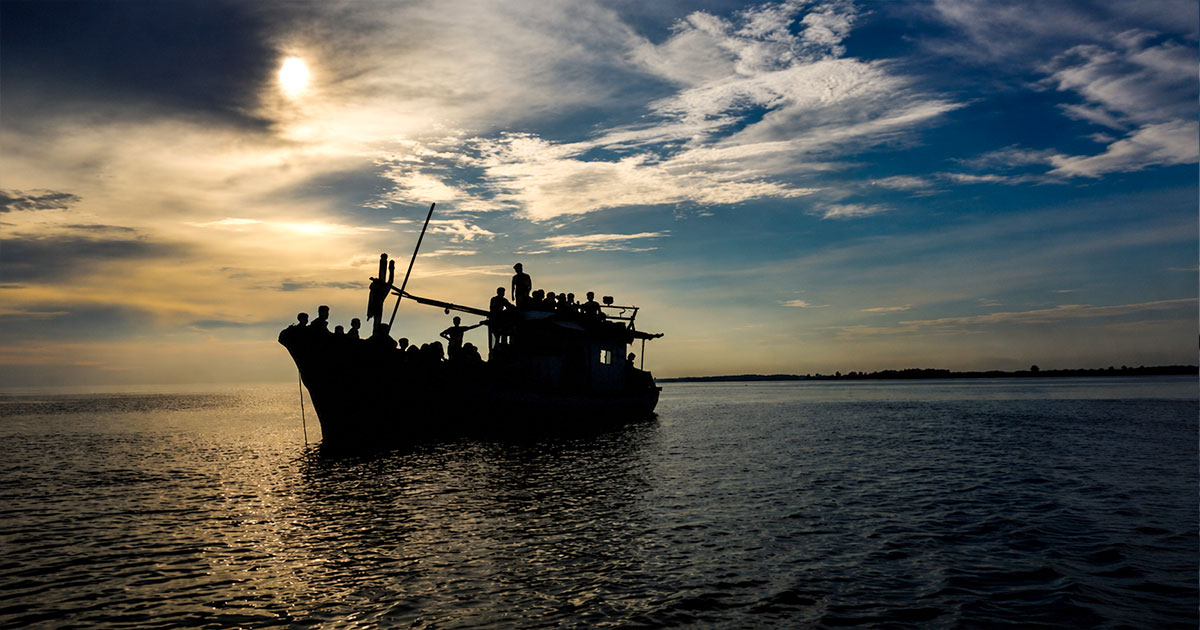

Death boats pursue the Rohingya.. More than 500 people face an unknown fate
They left the coast in search of a safer place, each carrying what he could gather before the trip, in two boats carrying nearly hundreds of people beyond their capacity, and they took them towards the sea that seemed like the only available way. Contact with one of the boats was lost several days later, and another is believed to have sunk off the coast of Myanmar, leaving more than 500 Rohingya refugees missing and fearing death.
Behind this number are faces whose names did not make it to the news, and families who may still be waiting for a call that will not come. However, the tragedy is broader than two drowning incidents. It is an extension of a long conflict and displacement, which has placed Rohingya refugees facing all harsh choices: to remain amidst violence and deteriorating humanitarian conditions, orLiving in crowded camps that lack opportunities, or boarding a rickety boat in the hope of reaching safer land.
More than 500 people disappear at sea
The International Organization for Migration and the United Nations High Commissioner for Refugees expressed grave concern over reports that two boats carrying more than 500 people may have capsized off the coast of Myanmar since late June 2026.
Preliminary information indicates that the two boats left Rakhine State, which is suffering from escalating conflict and deteriorating humanitarian situation, and that most of their passengers were from the Rohingya Muslim minority. It was also reported that some of them came from the Cox’s Bazar camps in Bangladesh, where more than a million refugees live in harsh conditions.
The first boat was carrying about 250 people.Before losing contact with him shortly after he left. The second boat, believed to have been carrying about 280 people, is feared to have sunk off the Irrawaddy coast on July 8.
Until now, the two incidents or the numbers of victims have not been officially confirmed, but the lack of confirmation does not alleviate the extent of concern. When a crowded boat disappears in the middle of the sea, and its passengers remain without contact or rescue, the distance between loss and death becomes very narrow.
A journey that begins when land becomes unsafe
Rohingya refugees do not choose the sea because they are ignorant of its dangers. Many of them know that boats may sink, that smuggling networks may abandon passengers, and that reaching a destination is not guaranteed. However, the journeys are repeated year after year, because the fear that awaits them on land may seem greater than the fear that the sea holds.
In the stateIn Rakhine, escalating conflict and a worsening humanitarian crisis are driving increasing numbers to leave. In Bangladeshi camps, refugee lives collide with limited aid, job opportunities, and education, in addition to the absence of a clear horizon for safe return or permanent stability.
Between the two places, a long state of waiting forms. Years pass inside the camps, and generations grow up without knowing when a more stable life will begin. Then the boat, despite its fragility, becomes a last possibility; A narrow door out of a suspended life, even if this door is open to the waves.
This closed circle reveals part of the social sustainability crisis faced by Rohingya refugees. The lack of legal protection, diminished educational and employment opportunities, and persistent disparities in access to basic rights are all factors that push the most vulnerable groups towards riskier choices. This intersects with the tenth goalAmong the Sustainable Development Goals (SDGs), concerned with reducing inequalities, and Goal 16, which calls for building safe and just societies that provide protection for all.

A dangerous season that waits for no one
Both voyages were made more dangerous because they occurred outside the normal sailing season, when sea conditions become more turbulent. The two United Nations agencies explained that the heavy rains and floods that struck the region raised the level of risks associated with these maritime movements.
In such conditions, a high wave or a sudden storm is enough to capsize an ill-equipped boat. The danger increases with boats being overloaded with numbers exceeding their capacity, the absence of effective means of communication, and the lack of life jackets and trained crews.
But the sea does not know the number of children or families on board, and it does not differentiateBetween those who went out in search of work and those who went out to escape fear. In a few minutes, the journey can turn into a wide area of silence, and then into numbers added to the lists of the missing.
Smuggling networks trade in hope
Many Rohingya refugee journeys are managed through human smuggling and trafficking networks that capitalize on their desperation to leave. These networks offer promises of access to safer places, then put passengers on rickety boats on extremely dangerous sea routes.
The search for protection turns into a business measured in the number of people who can fit on the boat. Every extra space means a new passenger and more money, while passenger safety remains a factor.
The impact of these networks extends beyond the dangers of drowning, as they expose refugees to multiple forms ofExtortion, exploitation and human trafficking. Hence, confronting this phenomenon is linked to the eighth goal of the Sustainable Development Goals (SDGs), which includes combating forced labor, modern slavery, and human trafficking, because providing a decent life and safe transportation paths reduces the space in which these networks move.
The International Organization for Migration and the UNHCR have warned that these networks continue to exploit people seeking safety. When legal and safe routes are absent, the smuggler steps forward to occupy the space left by international solutions, and the boat owner becomes the one who determines the time and price of the trip and the fate of its passengers.
The sea keeps a growing list
If the two sinkings are confirmed, they will join about 300 people reported missing or dead in the Andaman Sea and Bay of Bengal since the beginning of 2026, including Rohingya refugees and local citizens.From Bangladesh.
In 2025 alone, nearly 900 Rohingya refugees were reported missing or dead in the northern Indian Ocean, out of more than 6,500 people who attempted these dangerous sea journeys. Although this indicates that what is happening is not a passing accident caused by bad weather conditions.
The boats change, and the dates of the trips vary, but the reasons remain present: a prolonged conflict, camps with limited resources, semi-closed legal routes, and smuggling networks that know how to exploit in the absence of alternatives.
Therefore, every new tragedy becomes a possibility that could have been anticipated, and perhaps avoided, if the affected communities had found solutions that would give them a real measure of safety and stability.

A displacement crisis searching for a sustainable solution
The two agencies stressedThe two international organizations stressed that the two incidents reveal the devastating impact of prolonged conflict and displacement, in addition to the continued absence of sustainable solutions for Rohingya communities.
Keeping hundreds of thousands in temporary conditions for many years does not create stability. The decline in aid and limited opportunities push some refugees to search for other ways, no matter how high the risks.
The United Nations praised Bangladesh’s role in hosting Rohingya refugees for years, but stressed the need for refugees and host communities for continued international support. The host country, in turn, faces accumulated economic and social burdens, while the decline in international interest in the crisis leads to increased pressure inside the camps.
A sustainable response requires addressing the causes that drive people to become displaced, improving living conditions in camps, expanding education and employment opportunities,Providing safe paths for protection and resettlement, in addition to working to create conditions that allow for safe and voluntary returns.
Rescue begins before the boat reaches the sea
The International Organization for Migration and UNHCR called for strengthening search and rescue operations, ensuring access to asylum and protection, and taking tougher action against smuggling and human trafficking networks.
These measures remain necessary to save those at sea now, but they require another path to prevent subsequent boats from launching. Resorting to boats is not the beginning of the tragedy; The real beginning comes when a person feels that survival is no longer possible, and that a weak boat in the rainy season gives him a greater chance than where he lives.
This crisis places Rohingya refugees at the heart of the concept of social sustainability, which…It is based on protecting the most vulnerable groups, reducing inequalities, and building societies in which peace and justice prevail. This relates to Goal 10 of the Sustainable Development Goals (SDGs), on reducing inequalities, and Goal 16, on peace, justice and strong institutions.
From this standpoint, The Earth Guards Foundation confirms that sustainability goes beyond protecting resources and the environment, to include protecting humans and their right to live in safety and dignity. The sea will not stop receiving new boats as long as the land is unable to give Rohingya refugees a clear path to a stable life.


