

Istanbul floods claim 4 lives… Heavy rains reveal the challenges of major cities

Istanbul floods claim 4 lives… Heavy rains reveal the challenges of major cities
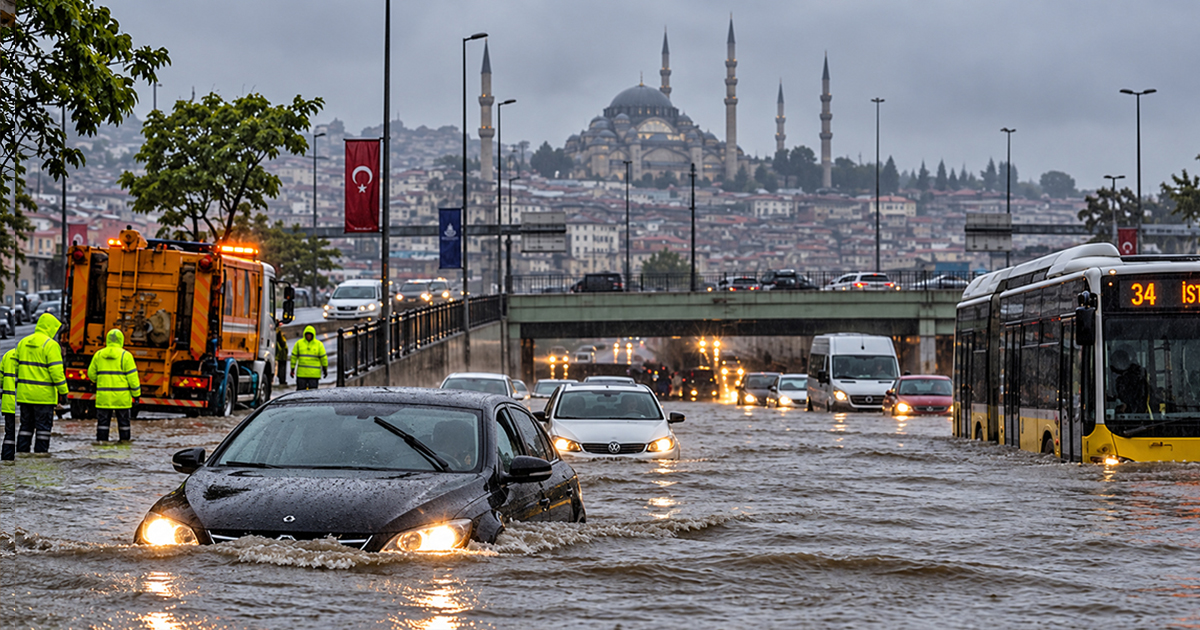
Water swept cars down the slopes, submerging homes, shops and roads, after the Turkish city of Istanbul was exposed to exceptional rains that left four dead and extensive damage. In a city inhabited by about 16 million people, Istanbul's floods swept the streets within hours, turning them into paths for torrents, while emergency teams were busy removing the effects of the disaster and helping residents.
The authorities described these floods as the worst since 1942, after the amount of rain that fell within 48 hours exceeded the historical averages for the months of September and October combined, according to what was reported by the Turkish Anatolia Agency.
But the disaster raised questions that go beyond the intensity of the rain itself, to include the impact of construction near waterways, the ability of infrastructure to absorb heavy rainfall, and the extent of the preparedness of major cities to confront extreme weather phenomena, weeks before Türkiye hosts the United Nations Climate Change Conference. COP31.
Istanbul floods are the worst since 1942
Istanbul witnessed heavy rains on the evening of Wednesday, October 14, 2026, which led to the submergence of areas of streets, parks, and residential areas, and the sweeping away of cars, some of which piled up at the bottom of the slopes, amid extensive efforts to deal with the damage.
The death toll rose to four people after the body of a 66-year-old man was found on Friday under a bridge in the Sariyer area, north of the city. This came in the wake of the deaths of three people who died earlier, including a teenager who died as a result of electrocution during the storm.
During his visit to the Ayazaga neighborhood, one of the affected areas in Sariyer, Turkish Interior Minister Mustafa Çifçi said that the country is facing the largest flood disaster that Istanbul has witnessed since 1942.
According to the minister, the authorities received 9,850 reports of damage and problems related to the floods, while about 46,000 individuals participated in removing waste, helping those affected, and dealing with the effects of the rain.

The toll from the Istanbul floods demonstrates the importance of… Target 11.5 of Sustainable Development Goal 11, on sustainable cities and communities, which aims to reduce deaths, the number of affected people, and direct economic losses resulting from disasters, including water-related disasters. These numbers reflect the severity of the rain and the extent of the burdens that the disaster can impose on the population and public services.
Chivchi had announced that there were four missing people before the body was found on Friday, so this tally does not necessarily represent the final number of missing people.
Concerns continued with the General Directorate of Meteorology warning of heavy and severe rains in Istanbul and four neighboring provinces over the weekend, which placed response teams facing the possibility of continued pressure on the affected areas.
Construction near waterways
She repeated Istanbul floods Highlighting the relationship of urban planning to disaster risks, especially after raising concerns about the expansion of construction near waterways.
During an inspection of the affected areas, the Turkish Minister of Environment, Urban Planning and Climate Change, Murat Kurum, stressed the importance of addressing the problem of construction near sewers, in reference to one of the challenges facing cities when heavy rains fall.
The possibility of rainwater collecting increases when roads, buildings, and concrete surfaces expand at the expense of land capable of absorbing it. In natural areas, some of the water seeps into the soil, while more of it flows over impermeable surfaces toward streets and low-lying areas.
If this flow coincides with limited capacity of drainage networks or the presence of buildings in the water's paths, the risks of flooding and damage to property and infrastructure may increase.
But this general relationship does not mean that urban expansion was the proven cause of all the damage that resulted from the Istanbul floods. Determining the contribution of construction, drainage networks, and terrain to the disaster requires detailed technical studies.
Ways to reduce these risks include preserving natural areas that allow water seepage, allocating areas to retain rainwater, and developing infrastructure commensurate with the nature of neighborhoods exposed to flooding.
Where does climate change play a role?
Minister Murat Kurum linked the floods to the effects of climate change, stressing the need to confront it, at a time of increasing international interest in the relationship between rising temperatures and extreme weather events.
Scientifically, warmer air can hold more water vapor, which can create conditions for more intense rainfall when the weather conditions are right. However, the impact of global warming on rainfall varies depending on regions, seasons and climate systems.
Therefore, it cannot be confirmed that climate change directly caused Istanbul floods Depending on the amount of rain or officials' statements alone; Determining its role in a specific event requires scientific analysis that compares the probability of the event occurring and its severity in different climatic conditions.
It stands out here Target 13.1 of Goal 13 of the Sustainable Development Goals, on climate action, related to enhancing resilience to climate-related hazards and natural disasters. Even though the causes of floods vary from one event to another, cities can reduce their effects through early warning systems, emergency plans, and developing basic services.
We are weeks away from COP31
The disaster takes on an additional international dimension as Türkiye prepares to host the United Nations Climate Change Conference COP31 In Antalya, from 9 to 20 November 2026, headed by Environment Minister Murat Kurum.
The conference comes weeks after the floods that swept through the country's largest cities, at a time that highlights the gap that may separate the discussion of climate dangers at the international level and practical preparation for them within the neighborhoods and streets.

Hosting a climate conference does not mean that a country can prevent natural disasters, but it does put issues of adaptation and loss reduction into greater focus, especially in cities with high population densities.
And she explains Istanbul floods Protecting residents from exceptional rainfall requires measures extending from weather monitoring and early warning to land use management and infrastructure maintenance.
How are cities preparing?
Protecting cities from floods begins with identifying areas most vulnerable to water accumulation, updating hazard maps, and reviewing building patterns near waterways and natural depressions.
Important measures also include maintaining rainwater drainage networks, removing obstacles that limit the flow of water, providing early warning systems that reach residents in a timely manner, and defining clear evacuation routes for areas highly exposed to danger.
Remote sensing technologies and geographic information systems provide tools for accurately mapping flood risks and monitoring changes in water spread, which supports planning and early response decisions.
This is what was addressed in a research published by The Earth Guards Foundation entitled: Using remote sensing technology and geographic information systems to assess the risk of floods in the south of the Arab Republic of Egypt.
Managing the response after a disaster is no less important than preventing it. The rapid arrival of rescue teams, the continuity of electricity, water and communications services, and the provision of accurate information to the population are all factors that may limit losses when rain exceeds the infrastructure’s capacity to absorb.
In conclusion, the Istanbul disaster raises a development issue of concern The Earth Guards Foundation In its coverage of sustainable cities and climate action; Protecting residents depends on cities' ability to combine urban planning, risk management, and effective emergency response.
The exceptional rains revealed the extent of the damage that can befall a major city in a short time, but the most important lesson extends to before the next storm. Every decision regarding a building site, water route, or drainage network can affect a city's ability to withstand, and determine the extent of losses when rains fall again.


