

The Ministry of Agriculture reviews the strategy for achieving food security before the House of Representatives
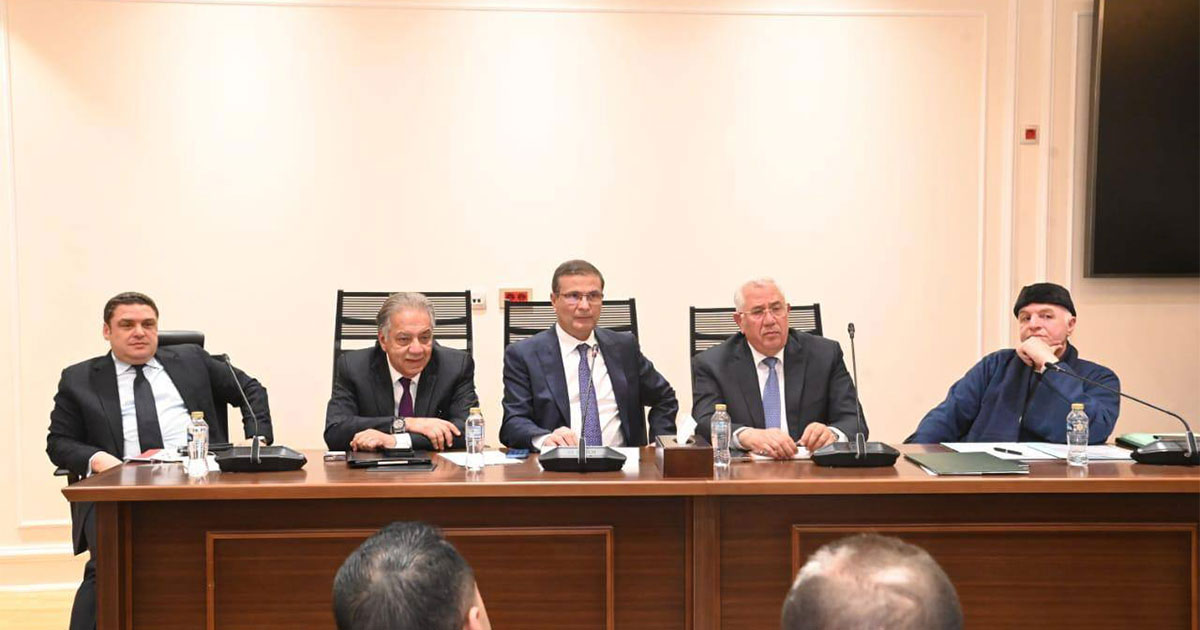

The Ministry of Agriculture reviews the strategy for achieving food security before the House of Representatives
The world has recently witnessed a set of global fluctuations that negatively affect the movement of trade and the availability of basic goods, which poses a major challenge to all countries, represented in their ability to provide basic needs for goods and reduce dependence on foreign imports, in a way that works to achieve food security and alleviate pressures on foreign currency consumption.
Hence, the Ministry of Agriculture is working to continuously develop its strategy regarding food security and supporting farmers and small breeders, which reflects a clear trend towards supporting local production and raising the efficiency of the agricultural system, to achieve greater stability and meet market needs.
Enhancing production and supporting farmers
In the same context, the Minister of Agriculture andLand Reclamation, Mr. Alaa Farouk, reviewed the ministry’s strategy for developing the agricultural sector before the Agriculture, Irrigation, Food Security and Livestock Committee of the House of Representatives, stressing the Egyptian state’s commitment to implementing giant national projects aimed at achieving food security, and also contributing to achieving the Sustainable Development Goals (SDGs), especially (Goal 2) the complete elimination of hunger.
The minister pointed out that the fair pricing policy for the wheat crop this season contributed to motivating farmers, as the cultivated area reached about 3.7 million acres, with a target to supply about 5 million tons, in addition to expanding the contract farming system that covers 700 thousand acres at remunerative prices to ensure the stability of farmers’ income.
The Minister also stressed that the Egyptian farmer is the basic pillar for achieving food security, stressing that the Ministry will spare no effort in providing support and assistance, overcoming obstacles, and working to improve the standard of living and increase profitability through stimulating agricultural policies and ensuring that the support reaches those who actually deserve it.

Facing global challenges and developing mechanization
The Minister explained that the current global challenges, and the pressures they have imposed on supply chains and transportation costs and their direct impact on import operations, impose a reality that requires the utmost levels of coordination, stressing that getting through this stage requires close solidarity between state institutions, regulatory agencies, and citizens alike; To ensure the stability of the agricultural system, and to transform challenges into real opportunities to increase reliance on local production and secure the needs of the national market.
The Minister of Agriculture revealed efforts to develop agricultural mechanization, as the sector was provided with about 5,000 modern equipment, to support farmers, and expand mechanized agriculture, with its positive results in saving time and effort, and the efficiency of agricultural operations, while applying water-conserving practices on an area of 2.8 million acres, which contributes to increasing productivity by 20%, and thus increasing farmers’ incomes, especially with the optimal exploitation of land and water units.
Organic fertilizers and protecting crops from pests
The Minister praised the efforts of the Ministry of Agriculture in monitoring the distribution of subsidized fertilizers and ensuring that they reach those who deserve them, pointing out that fertilizer maps have been prepared to determine the optimal fertilizer needs for different crops, and their preparation has been completed for a number of governorates.
In addition to supporting the expansion of the use of organic and biofertilizers, as about 143 local organic products were registered, in addition to the operation of 13 organic farms, as well as implementing awareness campaigns for farmers to produce and use organic fertilizers from agricultural waste. These initiatives support the Sustainable Development Goals (SDGs) related to responsible production and consumption (Goal 12) and climate action (Goal 13), which contributes to improving food security and reducing the environmental impact of agriculture. Traditional
The Minister said: The Ministry is keen to protect agricultural production from the dangers of pests, through a strict system for registering pesticides, implementing inspection and control campaigns for violating pesticides, and taking samples to monitor pesticide residues. Inspection campaigns and inspections of 16,608 shops selling pesticides during the year 2025 resulted in issuing 390 reports, while 2,769 shops were inspected during the first quarter of this year, issuing 69. Reported.
Livestock development to support food security
With regard to livestock and poultry wealth, the Minister of Agriculture focused on the Ministry’s efforts in developing livestock and poultry wealth – due to its major role in supporting food security – including livestock vaccination campaigns that roam villages in all governorates to support breeders, in addition to genetic improvement and breed development programs to enhance meat and dairy productivity.
He pointed out that current poultry production reaches 1.6 billion birds and 16 billion eggs, which reflects the great support that the state provides to breeders. He also reviewed national initiatives to develop the poultry industry, which aim to enhance local production, meet market needs, and contribute to achieving food security.

In conclusion, the ongoing efforts made by the Ministry of Agriculture in Egypt reflect the extent of its keenness to build an integrated agricultural system to achieve food security, combining support for farmers, improving local production, and adopting modern technologies and sustainable practices. Incentive policies for agriculture, the development of livestock and poultry, in addition to expanding contract farming and the use of organic fertilizers, are all factors that guarantee the stability of production and meet the needs of the national market.
TheThe Earth Guards Foundation confirms that these strategic measures reflect the state’s ability to transform external pressures into opportunities to enhance reliance on local production and achieve food security. Also, linking these efforts to Sustainable Development Goals (SDGs), such as completely eliminating hunger and achieving sustainable agricultural production.


