

The development of the solar sector in Africa is reshaping global growth centers
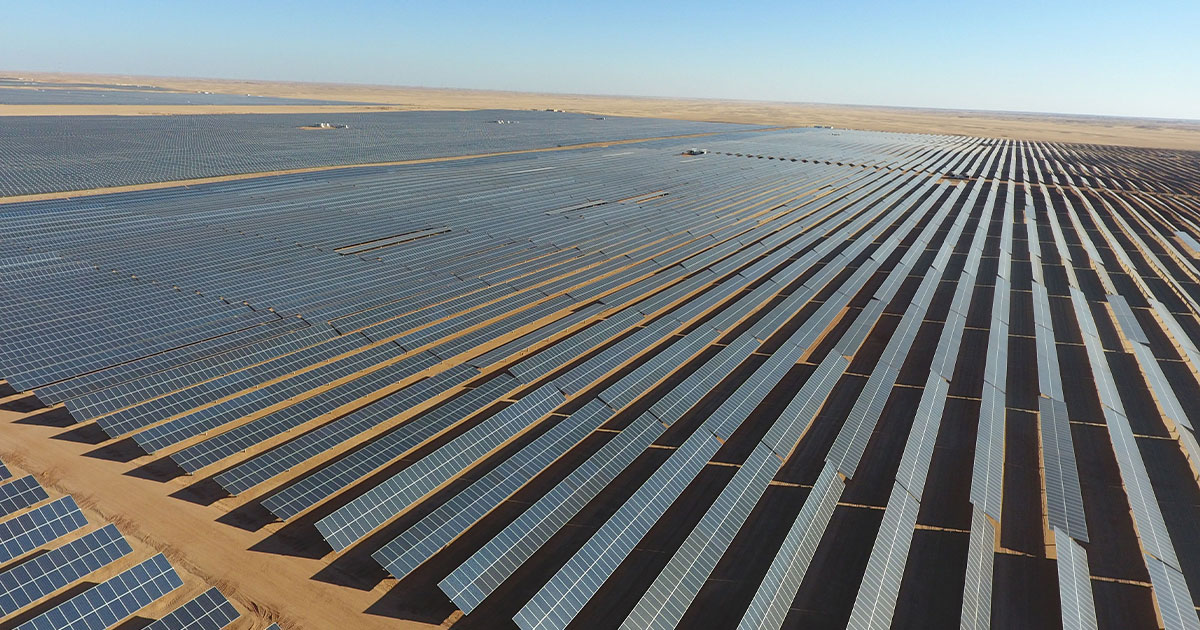

The evolution of the solar energy sector in Africa is reshaping global growth centers
The solar energy sector is witnessing an accelerated repositioning into growth centers, with interest shifting from saturated traditional markets to areas with greater expansion potential. As the costs of clean technologies decline and the need to enhance security of supply increases, renewable energy sources are moving forward to occupy a central position in development strategies.
Within this context, the African continent is entering a new phase in the transformation process, as the attention of investors and decision makers turns to solar energy as a pillar for expanding supplies and improving electricity security in line with the Sustainable Development Goals (SDGs) concerned with providing clean energy at affordable prices and ensuring its availability for current and future generations.
African countries added new solar power plants during 2025 with a production capacity of up to 4.5 gigawatts, equivalent to 4,500 megawatts of electricity when fully operational, an increase of 54% compared to 2024, according to data fromGlobal Solar Energy Council.
.
This growth comes at a time when some developed markets are witnessing a relative slowdown after years of rapid expansion, which strengthens the continent’s position as a potential driver of the next wave of growth. However, this transformation is not related to numbers alone, it is based on a set of economic, regulatory and structural drivers that are reshaping the energy landscape on the continent.
A record boom in solar energy in Africa and Egypt
The expansion of solar energy over the past year reflects the expansion of the geographic base for growth, as eight African countries were able to add more than 100 megawatts each. This expansion indicates the movement of activity from concentration in a limited number of markets to a broader spread across the continent, which enhances the competitiveness of solar energy as a major source of new supplies.
South Africa leads the scene with a total capacity estimated at more than 10 gigawatts after adding 1.6 new gigawatts in 2025, driven by government plans to increase installed capacity in the coming years. In the north of the continent, Egypt, Morocco, Algeria, and Tunisia have emerged as fast-growing markets, with total additions exceeding 1.1 gigawatts in one year, benefiting from levels of solar radiation that are among the highest in the world, in addition to large unexploited areas. Sectoral data indicate that Egypt alone has about 5.5 gigawatts of projects under construction, in addition to 13 gigawatts in the pre-implementation stages, which reflects the depth of future expansion plans.

Activity was not limited to major economies, as Nigeria recorded a record installation of 803 megawatts in 2025, while countries such as Zimbabwe, Zambia, Ghana and Ivory Coast are witnessing the implementation of large-scale projects under construction. This geographically diverse expansion is redrawing the map of solar energy in Africa and preparing the continent to move from a phase of limited experimentation to a phase of large-scale structural growth. However, this expansion was not a coincidence, but rather was driven by a more supportive political and economic framework.
Politics and economics are drivers of growth
The expansion of solar energy is linked to natural factors and abundant light, as well as a more supportive regulatory environment and policies aimed at stimulating domestic demand. Nigeria, one of the continent’s fastest-growing economies, has passed net metering laws that allow households and companies to deduct the production of solar rooftop systems from their electricity bills, enhancing the economic viability of small and medium enterprises.
In Kenya, new design requirements were imposed requiring the allocation of space in buildings for the installation of panels, in addition to exempting aluminum mounting systems from customs duties, which reduced the cost of expanding solar energy at the residential and commercial levels.
South Africa has also developed an integrated plan to add about 10 new gigawatts of solar capacity by 2030, in addition to 8.5 gigawatts of storage systems and approximately 5 gigawatts of distributed energy, within a planning framework aimed at addressing supply imbalances.
In the east of the continent, Ethiopia received funding to modernize its electrical networks with the aim of accommodating more renewable energy projects, while countries such as Botswana, Tanzania and Zimbabwe adopted new rules to regulate local energy markets, thus enhancing the attractiveness of investment in solar energy and reducing the risks of developers.
Storage and infrastructure: a requirement for sustainability
The expansion of solar energy on the continent is accompanied by a noticeable increase in imports ofBattery Energy Storage Systems (BESS),indicating a growing awareness that the expansion of production requires a supportive structure that guarantees continuity and stability. As installed capacity increases, storage becomes a critical element to enable networks to absorb the surplus during solar peak hours and re-pump it in the evening, reducing reliance on expensive or polluting traditional sources.

However, this progress faces structural challenges related to the ability of transmission and distribution networks to absorb new additions. In South Africa, for example, network bottlenecks and poor investment in distribution infrastructure remain an obstacle for some project developers, despite the high pace of installation. Many countries also need to modernize electrical interconnection systems and enhance the flexibility of networks to avoid losses and make the most of solar energy capabilities.
Hence, sustainable growth does not stop at installing panels only, but is linked to building an integrated system that includes storage, improving load management, and developing smarter and more efficient networks. As infrastructure improves, investors become more confident in the ability of solar projects to deliver stable, long-term returns, establishing the continent as a structural growth market rather than a temporary boom.
Africa is a new global growth arena
With some European markets reaching near saturation levels after years of rapid growth, global companies and component manufacturers are turning to Africa as a promising arena for solar energy expansion during the remainder of the current decade. This shift reflects a reallocation of investments towards markets with higher growth margins and increasing demand for electricity, driven by population growth and industrial expansion.
If supportive policies continue and investments in storage and infrastructure expand, the continent may become a major lever for the global transition towards clean energy, through building local value chains, providing job opportunities related to the development and maintenance of solar energy projects, and enhancing the independence of energy systems in many countries.
In conclusion, the rise of solar energy in Africa has become an inevitable necessity. Countries’ needs for increasing amounts of electricity, and it also reflects a deeper shift in the continent’s position within the global energy map. Accelerating expansion, supported by more mature policies and geographical diversity in production centres, reveals Africa’s transition from the role of a technology-receiving market to a space in which growth models themselves are being reshaped.

The Earth Guards Foundation believes that this path bears clear compatibility with the essence of the Sustainable Development Goals (SDGs), with regard to the seventh goal on clean energy, as well as its intersecting effects with the goals of eradicating poverty, decent work, building resilient infrastructure, and promoting climate action. The expansion of solar energy, if combined with the localization of value chains and the development of networks and storage systems, could turn into a comprehensive development lever that addresses structural imbalances in the economy and energy together.


