Egypt and Switzerland sign an agreement aimed at enhancing sustainable e-waste management
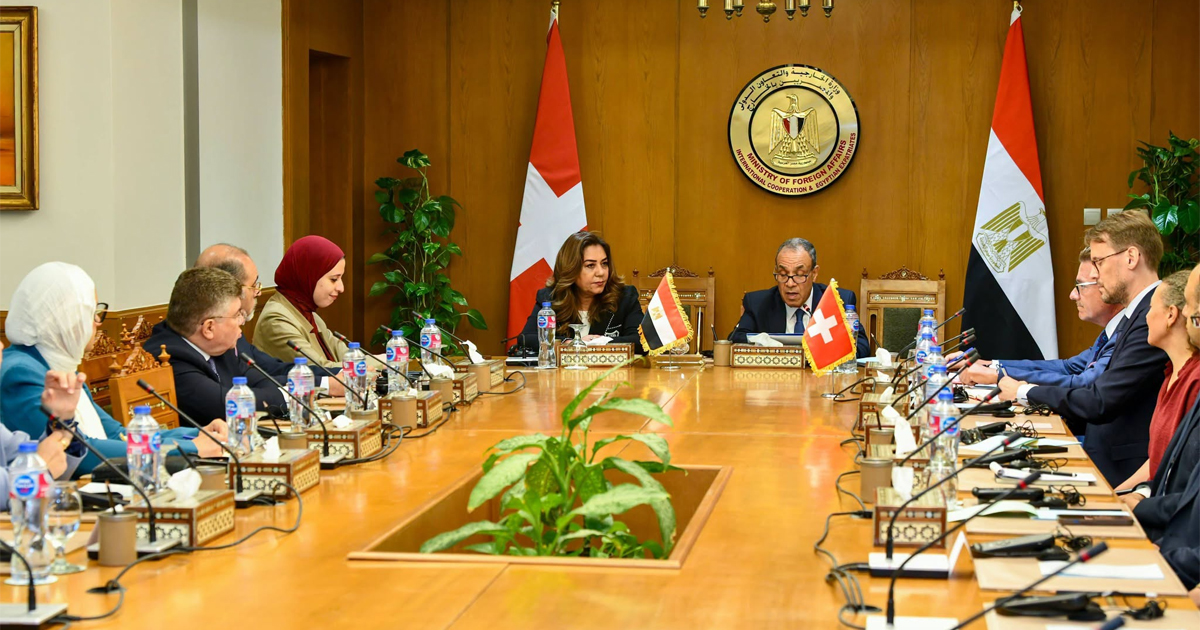

Egypt and Switzerland sign an agreement aimed at enhancing sustainable e-waste management
With the environmental and health risks that this waste represents if mismanaged, the need is increasing to adopt more efficient models of reuse and recycling, which contributes to reducing pressure on natural resources and reducing emissions associated with production and waste disposal processes, within a framework consistent with the goals of sustainable development.
In this context, joint international initiatives are one of the main drivers of supportShifting towards a circular economy, through developing legislative and institutional frameworks and enhancing technical and financial cooperation between countries. Egyptian efforts in this field reflect an increasing trend towards building an integrated system for managing electronic waste, which extends to rethinking the life cycle of electronic products from the design stage to reuse and recycling, in a way that enhances resource efficiency and supports the path of sustainable development.
Circular Electronics Initiative
Within this approach, the Ministry of Foreign Affairs, International Cooperation and Egyptians Abroad hosted the signing ceremony of the grant agreement for the “Circular Electronics Initiative in Egypt” project.
The signing ceremony was attended by Dr. Badr Abdel Aty, Minister of Foreign Affairs, International Cooperation, and Egyptians Abroad, Dr. Manal Awad, Minister of Local Development and Environment, and Dr. AndreasBaum, Swiss Ambassador to Egypt.
The agreement stipulates the provision of a grant of more than one million Swiss francs from the Swiss State Secretariat for Economic Affairs (SECO) to the Ministry of Local Development and Environment, represented by the Waste Management Regulatory Authority, within the framework of existing development cooperation between the two countries.

Developing institutional and regulatory frameworks
The Circular Electronics Initiative (CEI) project is an extension of what was achieved by the Sustainable Recycling Industries (SRI) project, which was implemented during the period from 2016 to 2025, and aims to create the necessary legislative, institutional and regulatory environment to implement an integrated system for the sustainable reuse and recycling of electrical and electronic waste, in accordance with international best practices.
The project is based on fourMain dimensions include:
- Developing legislative frameworks, policies and institutions regulating the sector.
- And establish regulatory requirements and effective oversight and compliance mechanisms.
- Create a professional system for collecting, treating, reusing and recycling electronic waste.
- In addition to developing statistics, monitoring and follow-up systems, while adopting the principle of Extended Producer Responsibility (EPR) as the governing framework for project implementation.
These axes contribute to raising the efficiency of resource management and reducing the environmental impacts of electronic waste, in order to achieve the environmental axis of sustainable development, thus enhancing the achievement of the twelfth goal of the Sustainable Development Goals (SDGs) concerned with responsible consumption and production, by encouraging reuse, recycling and raisingEfficient resource management and reducing waste resulting from the life cycle of electronic products.

Steering Committee for Strategic Oversight
Under the agreement, the Ministry of Local Development and Environment, through the Waste Management Regulatory Authority (WMRA), will lead the implementation of the project at the national level, in coordination with the Ministry of Planning, Economic Development and International Cooperation, and in cooperation with the World Resources Forum Association (WRFA) as the implementing body for the project activities in Egypt, while the Office of International Cooperation at the Embassy of Switzerland (OIC) is following up on the implementation of the project on behalf of the Swiss government.
The agreement also stipulated the formation of the Steering Committee (NSC) to be the body responsible for strategic supervision of the project, approving work plans and budgets, following up on performance indicators, and ensuring the achievement of goals.Development of the initiative through coordination between all national and international partners.
Strengthening development partnership
For his part, the Minister of Foreign Affairs indicated that Egyptian-Swiss relations are based on more than ninety years of diplomatic relations and more than 45 years of fruitful development cooperation, pointing out that Switzerland is a reliable development partner for Egypt, as joint cooperation programs have contributed to supporting many priority development sectors.
Adding that the launch of the “Fourth Swiss Cooperation Program in Egypt” during the year 2025 constituted a new step to strengthen the development partnership between the two countries, reflecting the depth of bilateral relations and the common desire to advance them to broader horizons.
This initiative comes at a very important time, in light of the increasing interest that the Egyptian state pays to issuesSustainable waste management, especially electronic waste, as it is one of the fastest growing types of waste in the world, and the environmental and health challenges it represents, and the promising economic opportunities it provides within the framework of the transition towards a circular economy.
The project also embodies a practical model for the seventeenth goal, which calls for establishing partnerships to achieve the goals, by employing financing, technical expertise, and institutional coordination to support sustainable development.
In conclusion, the initiative for sustainable management of electronic waste reveals a shift in the philosophy of dealing with it from simply dealing with its environmental impacts to adopting an integrated approach that repurposes it within a more efficient and sustainable production cycle, thus consolidating the concept of the circular economy as one of the paths supporting modern development.
And they started to confirmHama FoundationEarthThis initiative is a model for international partnerships based on transferring expertise and capacity building in addition to financing, which enhances Egypt’s ability to develop a more efficient national system for managing electronic waste, keeping pace with global trends towards the rational use of resources and enhancing the competitiveness of the national economy in the long term.