Japan earthquake victims rise to 17 as water and heat crisis worsens
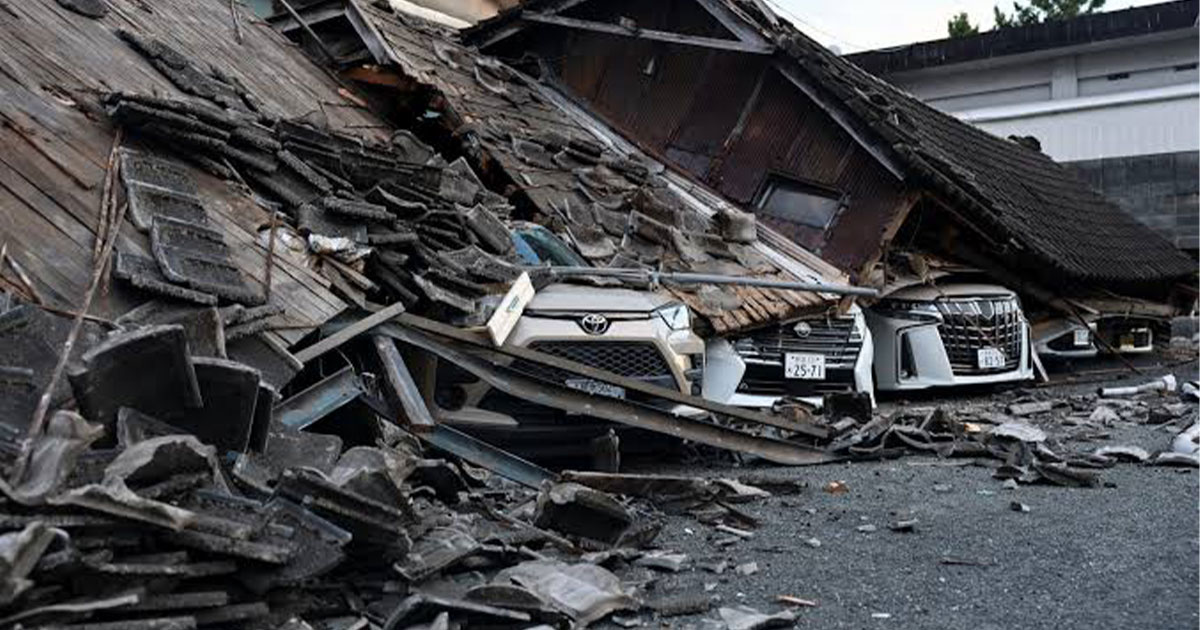
The earthquake in Japan that struck the southern Kumamoto prefecture with a magnitude of 7.1 left thousands of residents facing a crisis that goes beyond collapsed homes and cracked roads. Two days after the earthquake, large numbers of about 58,000 families in the city of Yatsushiro remained without running water or electricity, coinciding with harsh summer heat and high humidity.
Local officials fear that the invisible damage to the water and energy networks will turn into a direct threat to the health of residents, especially with the lack of clarity over the period required to repair the main water lines. The process can take days, weeks or even months, while survivors need water for drinking, hygiene and running sanitation.
With temperatures reaching about 35 degrees Celsius, and the toilets inside the municipal building not working, the authorities were forced to install emergency toilets over the drainage holes outside. This scene reveals how the disruption of basic services after disasters can double the suffering, even in a country with extensive experience in dealing with earthquakes.
The number of confirmed deaths as a result of the Japan earthquake has risen to 17, according to the Kumamoto Prefectural Government. The majority of the victims occurred inside a factory belonging to the “Nippon Paper Industries” Company, which suffered major structural damage, and in a shopping center belonging to the “ION” Company, where an explosion occurred, possibly linked to a gas leak.
The authorities also announced that 6 people were in a state of cardiac and respiratory arrest. When calculating the deaths that the competent authorities are still investigating to what extent they are linked to the earthquake, the toll arrivesTo 30 cases.
Among the victims was a newly married Vietnamese worker, who left behind his wife and 7-month-old child. The wife said that their last video call was the night before the earthquake, and she did not expect it to become their last conversation.
This story adds a human dimension to the numbers, and shows how a disaster that lasts a few seconds can change the lives of entire families, including foreign workers who came to Japan in search of a job opportunity and a more stable life.
Thirst and heat surround the survivors
Japan Self-Defense Forces trucks moved in immediately after the Japan earthquake to transport water tanks to schools and community centers around Yatsushiro, before returning to the municipal headquarters to fill them from emergency tanks located under the building.
However, the size of the demand prompted the authorities to limit each person’s share to only about 5 liters, which is a limited quantity in light of the high temperatures and the need for drinking, cooking, and personal hygiene.
Residents were forced to stand in queues to obtain water and basic necessities, while the few stores that continued to operate were crowded. Long lines of cars also formed in front of gas stations, with families trying to secure what they need during a period whose end date is difficult to determine.
In this context, the repercussions of the Japan earthquake reveal a direct link to the sixth goal of the Sustainable Development Goals (SDGs) on clean water and sanitation, especially goal 6.1, which aims to ensure everyone’s access to safe and affordable drinking water, and which indicator 6.1.1 measures through the proportion of the population using safely managed drinking water services.
Setting the per capita quota at about 5 liters and relying on emergency tanks reflects the disruption of regular access to water when needed, which is one of the basic elements in this indicator.
The crisis is also linked to target 6.2 on providing sanitation and hygiene services for all, which indicator 6.2.1 tracks by measuring the use of safely managed sanitation services and the availability of hand-washing facilities with soap and water.
The risks increase with temperatures expected to approach 40 degrees Celsius over the weekend. The authorities have warned of the possibility of heatstroke, especially among the elderly, children, the sick, and those residing in shelters.
The Self-Defense Forces began installing about 300 air conditioning units in evacuation centers and key locations within Kumamoto, in an attempt to reduce health risks resulting from simultaneous outages.Electricity and water in very hot weather.
Factories and supply chains affected
The effects of the earthquake extended to industrial activity in Kumamoto and other parts of the Kyushu region, which in recent years has become an important center for the automobile and semiconductor industries.
The earthquake forced companies such as Toyota, Honda, Nissan, Aisin, and Sony to stop some production operations. The Taiwanese company TSMC also evacuated a number of workers and suspended its activities for a short period to assess the damage.
The Japanese government stressed that it is still too early to estimate the full economic impact, especially on the supply chains of cars and electronic chips. The authorities are currently placing the restoration of ports, water and energy networks, and vital facilities at the top of their priorities.
Despite the standardsRigorous construction and regular emergency drills, the Japan earthquake demonstrates that the resilience of cities in the face of disasters depends on the resilience of buildings alone, along with the ability of water, electricity and transportation networks to continue operating or quickly restore their services.
Water and infrastructure at the heart of recovery
Residents of the area previously faced two powerful earthquakes in April 2016, which resulted in the death of more than 260 people and the destruction of thousands of homes. However, some Yatsushiro residents described the recent tremor as more severe than what they experienced a decade ago, toppling shelves, tossing computers and making them feel like the ground was shifting beneath them.
The repercussions of the Japan earthquake and the water and electricity disruptions reveal that the ability of cities to withstand includes the flexibility of service networks and the speed of their restoration. Here the crisis is linked to the eleventh goal of developmentSustainable cities and communities, in particular target 11.5 which calls for reducing deaths and economic losses resulting from disasters, with a focus on protecting the most vulnerable.
It also relates to goal 11.b, which is concerned with developing integrated plans for managing disaster risks and enhancing the capacity of cities and communities to confront them. This is evident in the need for emergency plans that ensure continuous water and energy supplies, equip shelter centers with cooling, and secure health facilities during recovery periods.
In this regard, The Earth Guards Foundation indicates that the lessons revealed by the Japanese earthquake confirm the need for cities to have flexible water and energy networks, and plans that take into account the possibility of earthquakes coinciding with extreme heat. Reducing losses depends on protecting residents from thirst, heat, and breakdownsServices after a disaster.
While rescue and relief teams continue their work, repairing infrastructure remains the biggest challenge to recovery. The main earthquake has ended, but the residents’ suffering with lack of water, electricity, and heat continues.