

The high cost of living in Namibia is stressing the elderly and forcing them to borrow

The high cost of living in Namibia is stressing the elderly and forcing them to borrow
The crisis may begin Namibia With a seemingly simple situation: an elderly person needs an ambulance, but the public service may take more than 24 hours to arrive, and may not reach some areas at all. Then the family resorts to the ambulance service of the city of Windhoek, which arrives more quickly, but charges a fee of 800 Namibian dollars, or about 50 US dollars, so that the health emergency turns into a new burden added to the pressures Cost of living faced by families.
When the family is unable to pay the amount immediately, the fees are added to the municipal services account along with water and electricity, turning the health emergency into a new financial liability. As bills pile up, the family may face a water or electricity cutoff, and be forced to borrow to maintain basic services.
This picture reveals how it became Cost of living For many elderly people in Namibia it is linked to a cycle of debt that begins with medical and emergency services and extends to food, services and daily needs.
An ambulance trip turns into a religion
The findings of the Family Caregiving of Older Persons in Namibia report indicate that borrowing to cover basic expenses has become a recurring pattern within a number of households.
The report relied on the experiences of 80 families that included elderly people and family caregivers, and concluded that the economic and social pressures surrounding aging may make manageable health conditions more difficult due to poor housing, the absence of sanitation services, the high cost of assistive devices, and income instability.
Borrowing is one of the most visible manifestations of these pressures. About one in ten seniors in Namibia have a personal loan from NamPost, the national postal corporation that also provides financial services, and the loan is often secured by an old-age grant.
A loan of N$13,000 could have a repayment cost of approximately N$25,000, paying about $420 per month for five years. The cost of living and health emergencies thus turn into a long-term liability that consumes part of an income originally designed to cover daily needs.
The pension is not enough for the family
The old-age grant is at the heart of the budget of many of the families surveyed. Its value was N$1,400 during data collection, later rising to about N$1,700.
But this grant does not always serve one person, as researchers found that in many cases it is used to support multi-generational families with an average size of about 6.5 people.
Basic expenses quickly consume income, especially in rural areas with lower income levels, making the rising cost of living more stressful for seniors and their families as the month goes by.
The limitations of the pension become clearer when moving from the value of income itself to the way it is distributed among basic needs that are difficult to postpone.
Where is the greatest pressure on household budgets concentrated?
The report’s data reveals that the bulk of financial pressure comes from a specific group of expenses that quickly deplete income, the most prominent of which are:
- Water and electricity consumption ranges between 25% and 40% of some families’ income.
- Loan repayments average approximately 15% of family income.
- Debt payments rise to 27%–29% in areas such as Mashare and Windhoek Rural.
- Purchasing medicines from private pharmacies when they run out of public facilities, at costs ranging between 1,000 and 4,500 Namibian dollars within three months.
- Spending on food, school fees, transportation, and other daily needs.
These numbers show that the problem is related to the accumulation of small and large obligations that consume income before the end of the month.
To learn about the role of pensions in enhancing financial protection and economic stability for the elderly, read also: Increasing pensions achieves financial sustainability and enhances the rights of future generations.
Housing increases the burden of care
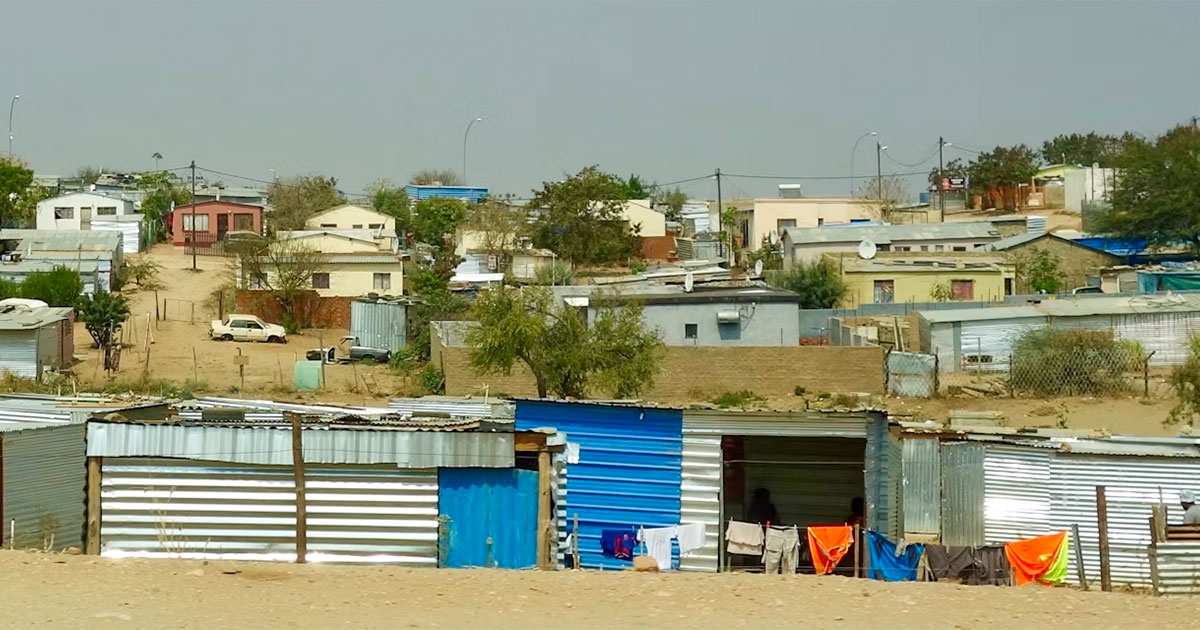
The pressures do not stop at income levels, as the report shows that the physical environment surrounding the elderly can increase their health and care needs, as some of the elderly live in housing with zinc and corrugated iron roofs, which get very hot in the summer and water seeps into them during the rainy season, and some entrances do not allow wheelchairs to pass, while bathrooms are located far away or are completely absent.

The report's data also indicates that 63% of elderly households lack sanitation facilities nearby, forcing caregivers to deal with waste disposal themselves.
These conditions also overlap with health problems common among the elderly. About half of them suffer from high blood pressure, approximately one in five face difficulties in movement, while eye problems affect about a third.
And so it becomes Cost of living It is also linked to the quality of housing and infrastructure, because an unprepared environment may increase the need for care, treatment and daily assistance.
Families bear the burden of care
The researchers found that care in Namibia was highly dependent on family members, especially women and young people. They found that in approximately 72 out of 80 families, the main caregiver lived in the same household as the elderly person, while only three families could afford paid help.
Fifty-nine of the 80 primary caregivers were women, a large proportion of whom were between the ages of 18 and 39, and at least half of whom were raising children at the same time.
Care tasks include feeding the elderly, helping them bathe, use the toilet, and taking medication, as well as fetching water and firewood and providing companionship.
To reveal this reality that pressure Cost of living for families Going beyond direct money, unpaid care hours become an additional burden on individuals who may themselves face unemployment or other family responsibilities.
This intersects with Goal 10 of the Sustainable Development Goals, which calls for reducing inequalities and enhancing protection for the most vulnerable groups.
The countryside faces greater pressure
The nature of the crisis differs between cities and rural areas, but the pressures appear in both cases in different forms. In urban areas, families suffer from limited space and crowding, which makes it difficult to allocate a suitable place for a person who is bedridden or uses a wheelchair.
In rural areas, larger areas and agricultural land may be available, but poor infrastructure imposes other costs, such as the need to bring water and firewood from long distances.
The decline in income in the countryside makes any expenditure on food, transportation, or debt consume a larger proportion of the budget, which increases the impact of the cost of living on families that depend largely on pensions or irregular sources of income.
Some families resort to agriculture for self-sufficiency, collecting wild fruits, informal trade, and rationing consumption, while food aid and subsidies reach only a limited portion of families.
What do families need?
To deal with this crisis, the report called for policies that combine social protection, health, housing, infrastructure, and adaptation to climate conditions.
When caregivers and the elderly were asked about priorities that could improve their situation, clear demands were repeated: increasing pensions, allocating an allowance for caregivers, enhancing food security, improving water and electricity, and recognizing the work of family members who provide unpaid care.
This is linked to the first goal of the Sustainable Development Goals, which focuses on eliminating poverty and strengthening social protection systems, especially for groups that depend on limited or unstable incomes.
Namibia's experience reveals that the cost of living for older people is the result of an interaction between limited pensions, debt, health care, poor infrastructure, and high dependence on family members.
From there, take control The Earth Guards Foundation Highlighting the need to enhance economic protection for the elderly within a vision that goes beyond increasing income, to include improving basic services, reducing the cost of care, and supporting families who bear a large part of their burdens. The absence of this integrated network may turn any health emergency or utility bill into the beginning of a new cycle of debt.


