

Bullying Threatens Childhood and Hinders Sustainable Development

Bullying threatens childhood and hinders sustainable development
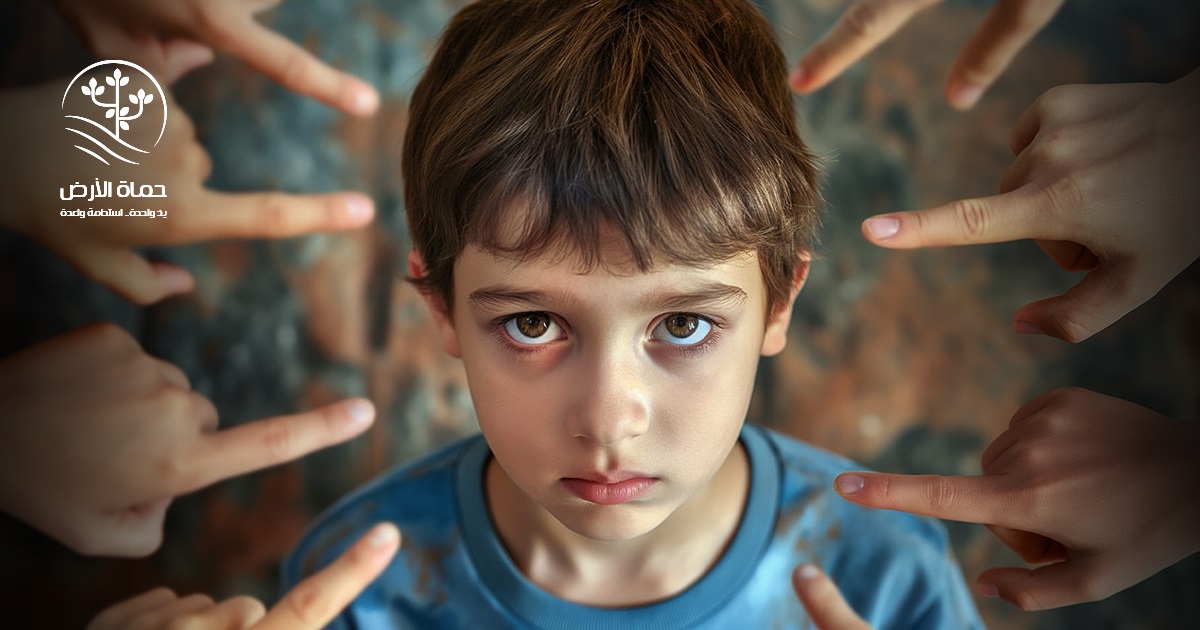
In one of the classrooms, a child sits isolated, surrounded by the mocking looks and whispers of his colleagues; The school space turns from a place of learning and growth into an arena of psychological conflict that leads to the erosion of confidence and behavioral disorders, and may sometimes lead to tragic consequences, such as the suicide cases documented by UNICEF reports and psychological studies centers.
What makes the matter more complex is that bullying, whether verbal, physical or electronic, permeates the child’s daily environment, driven by multiple factors, most notably the lack of family awareness, weak school supervision, and digital chaos in cyberspace. The United Nations Children’s Fund (UNICEF) confirms that one in 3 students in the world are exposed to some form ofBullyingIn their educational environments.
In this article,Earth Guards sheds light on this phenomenon from a comprehensive perspective, linking its psychological and social roots, and the field challenges associated with confronting it, with a focus on the role of children’s rights in reducing these practices. It also addresses how bullying affects the path of sustainable development, and calls for understanding it as a development issue that directly affects education, health, and social justice. So keep reading.
Where does bullying start?
Bullying occurs as a result of cultural, social, and psychological accumulations. This phenomenon often highlights a family environment suffering from disintegration or violence, in which a culture of dialogue and mutual respect is absent. The child then moves to a school environment that may lack mechanisms to contain aggressive behaviors or proper guidance. As many studies indicateوالأبحاث إلى أن من بين أكثر العوامل شيوعًا في سلوك المتنمرين هي التعرض للعنف المنزلي أو الإهمال العاطفي، وهو ما يخلق حالة من عدم الاتزان النفسي تتجلى في سلوك عنيف تجاه الآخرين.

On the other hand, the lack of community awareness contributes to amplifying this phenomenon. Some still see bullying as a way to prove themselves, without realizing the dire consequences that may result from it. Perhaps the most dangerous thing is that many cases of bullying are not reported, for fear of retaliation or because the victim feels ashamed, which makes the phenomenon more like an “iceberg” from which we only see the tip, as described in a report published on the scientific website (Nature).
Because this phenomenon continues and is not dealt with properly, this reflects the existence of an unhealthy environment in society that does not respect the dignity of individuals.Especially children, which undermines sustainable development efforts. Building inclusive and safe societies is one of the Sustainable Development Goals (SDGs), specifically Goal (16), which focuses on promoting peaceful and inclusive societies for sustainable development, providing access to justice for all, and building effective, accountable and inclusive institutions at all levels.
The danger of bullying in the digital world
With the rapid development of technological means and the widening of their use among children, bullying is no longer confined to classrooms or traditional playgrounds, but rather has transcended the boundaries of reality and expanded into the digital space, where bullies find a fertile environment and open platforms to practice abuse and defamation away from the eyes of censorship.
Today, cyberbullying has become one of the most common forms of bullying among children and adolescents, due to the ease it provides.Access to the victim, the possibility of anonymity, and the speed of circulation of offensive content; Which doubles its psychological and social impact and makes confronting it a complex challenge that requires awareness and multi-level intervention.
وتواجه المؤسسات التعليمية تحديات حقيقية في رصد هذا النوع من التنمُّر أو التفاعل معه بالسرعة المطلوبة؛ Many schools still lack clear policies to confront bullying, or do not provide adequate training for teachers to identify signs of psychological or physical abuse, and the challenge becomes more serious when the child is in an environment that does not provide him with a voice or real legal protection.

In light of these challenges, there is a close overlap between confronting this phenomenon and achieving the Sustainable Development Goals (SDGs), especially Goal (4) concerned with ensuring quality education for all. Comprehensive and equitable education cannot be achieved in a camping school environmentIt entails fear, and the child is exposed to chronic psychological pressures that weaken his motivation to learn and limit his participation. The impact of bullying extends beyond the classroom, directly affecting Goal (3) related to good health and well-being, as traumatic experiences lead to a deterioration in children’s mental health. Which negatively affects efforts made to enhance children’s psychological well-being and their ability to grow in a safe and supportive environment.
The role of children’s rights in confronting bullying
In the face of this reality, many international conventions and agreements have emerged calling for the protection of children’s rights, most notably the Convention on the Rights of the Child, which was adopted bythe United Nations in 1989, as this convention stipulates in its 19th article the protection of children from all forms of violence or abuse, including bullying.

Is not the application of theseRights on the ground still face many difficulties, starting with the weakness of local legislation in some countries, and reaching the limited resources allocated to child protection in educational institutions. There is no doubt that involving children themselves in awareness campaigns and enabling them to express their problems represents a fundamental pillar in addressing the problem from its roots.
Preventing bullying is a shared responsibility
One party cannot be held responsible for this phenomenon; Effective treatment requires the combined efforts of the family, school, and community, as prevention begins at home, and parents must instill the concepts of tolerance, respect, and conflict resolution through dialogue from an early age, while showing psychological and emotional support to the child without conditions.
In schools, clear strategies must be adopted to monitor and prevent bullying, and training educational personnel on how to deal with these cases quicklyEffectively, topics such as psychological education and positive communication must be integrated into educational curricula. A recent study published by the British scientific reference “BioMed Central” indicates that introducing awareness programs within schools led to a decrease in bullying rates by 25% in some American states.
On the other hand, society and the media play an essential role in changing the stereotype about bullying, through awareness campaigns that show its true effects and promote a culture of acceptance and diversity. Strengthening these collective roles is a key tool for achieving Goal (11) of the Sustainable Development Goals (SDGs) related to building safe societies capable of facing social challenges.
Egypt’s efforts to combat bullying
As part of the ongoing efforts to combat the phenomenon of bullying among children, the Egyptian government launched a series of initiativesNational, in cooperation with international organizations, with the aim of promoting a safe and healthy educational environment; In 2018, the first national anti-bullying campaign was launched, in cooperation between the National Council for Childhood and Motherhood and the Ministry of Education, and with support fromUNICEF and the European Union, with the aim of encouraging children, parents and caregivers to speak out against this phenomenon in educational and non-educational environments, and to resort to the National Childhood Hotline 16000 to obtain support and report severe cases that threaten the child’s safety.
In addition, the government has developed a national strategy and an executive action plan to end violence against children, in cooperation with UNICEF. This strategy includes strengthening the role of child protection committees and case management units, launching multiple media campaigns to confront violence and bullying directed at children, and promoting a culture of societal rejection.For these phenomena.
These integrated efforts indicate the Egyptian state’s commitment to providing a safe environment that protects children from all forms of violence and bullying, and with the continued activation of national initiatives and the expansion of community awareness, the opportunities for building an educational system that takes into account the rights of the child and ensures his growth in a climate that respects his dignity and preserves his psychological health will be enhanced.
How does bullying affect sustainable development?
The issue of bullying has long-term development dimensions. A society that neglects to protect its children from it is a society that excludes a vulnerable group from participating in achieving sustainable development. A UNICEF study indicates that children who are exposed to bullying are more likely to drop out of education and engage in dangerous behaviors. Which leads to the loss of human potential that could have contributed to building a more sustainable future.
Building a communitySustainable requires a nurturing environment from childhood that develops in the individual the values of belonging and cooperation, not aggression and exclusion. Social justice begins with protecting the child in his school, empowerment begins with his feeling of safety within his family, and sustainability begins with educational curricula that establish the values of human dignity.
Therefore, every effort made to confront bullying not only serves to protect children, but also contributes to achieving Sustainable Development Goals (SDGs) and building more just and inclusive societies. In light of the challenges that this phenomenon imposes on our children and our societies,Earth Guards calls for us to reconsider the way we deal with this phenomenon, not only as an educational or social issue, but as A major part of the vision of sustainable development that places people at the heart of every development trend.


