

Plastic Pollution in Oceans: An Environmental and Economic Crisis Threatening Global Sustainability
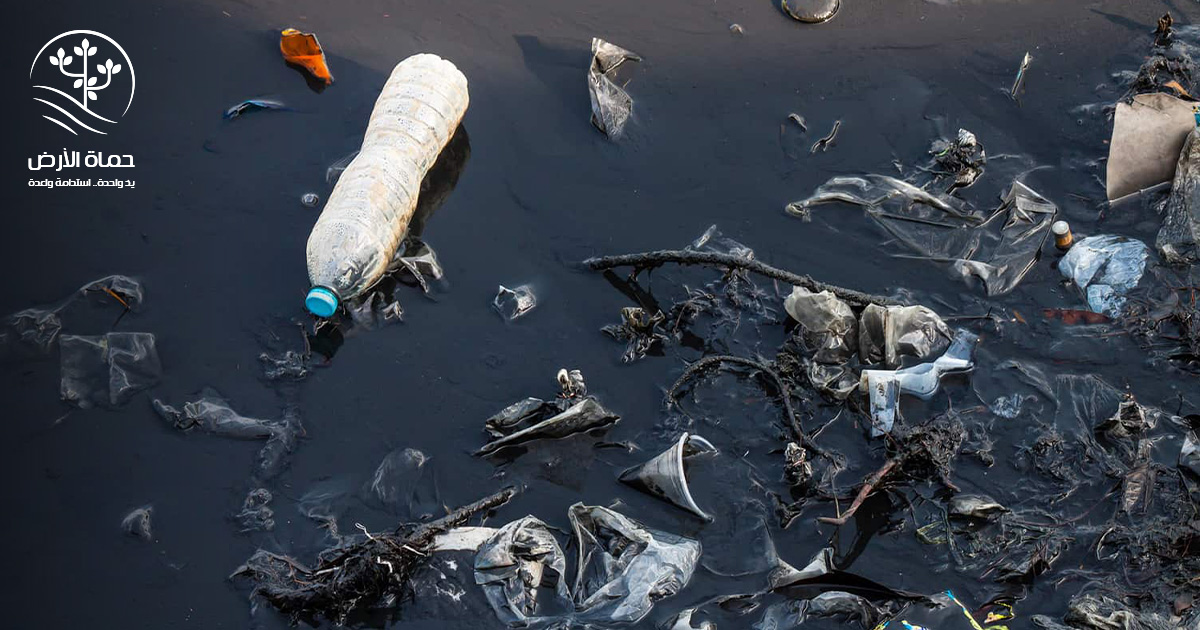
Plastic pollution in the oceans…an environmental and economic crisis that threatens global sustainability
For decades, scientific evidence has been accumulating that reveals the disastrous effects of plastic on marine life, from ingestion and entanglement by organisms, to the destruction of natural habitats, to the leakage of toxic chemicals. These risks prompted the international community to take action, through legislation aimed at phasing out single-use plastic, applying the principle of extended producer responsibility, encouraging biodegradable alternatives, and imposing restrictions on the trade in plastic waste.
Nevertheless, national and regional responses remained unable to confront the scale of the crisis. مما دفع المجتمع الدولي نحو مفاوضات دولية لإبرام معاهدة عالمية للبلاستيك تكون مُلزمة قانونيًّا، وتشمل معالجة التلوثMarine, but the biggest challenge lies in the plastic legacy. That is, millions of tons that have already accumulated in the oceans. Even if new emissions stop tomorrow, these quantities will remain present for decades and perhaps centuries, affecting ecosystems and the global economy with increasing losses, whether through a decline in fish wealth, rising costs of coastal tourism, or damage to marine supply chains.
This is what makes the issue not only environmental, but also economic, closely linked to achieving the Sustainable Development Goals (SDGs), especially Goal (12) “Responsible Consumption and Production,” and Goal (14) “Life Under Water.” In this context, theThe Earth Guards Foundation will address in this article this crisis, and explore how international policies can contribute to transforming this crisis. Challenges to opportunities towards more sustainable development.
Floating Plastic
Studies indicate that more than half of the plastic mass produced annually consists of polymers that are less dense than seawater, which is what makes them float after they reach the oceans. Some of them quickly return to the shores, while a large portion remains trapped in marine eddies, such asNorth Pacific gyre or what is known as the “Great Garbage Patch.” This region alone contains millions of tons of plastic, the main source of which is lost or discarded fishing gear.

The economic impact of this phenomenon is clearly evident in the fishing and tourism sectors. Fishermen lose their resources when lost fishing gear continues to be “ghost fishing” (ghost fishing occurs when fishing gear thrown into the water or lost in the oceans continues to trap fish or other marine life;This may kill everything that sticks indiscriminately. Which reduces fish stocks, and leads to annual losses estimated at billions of dollars. Beaches polluted by marine litter also become less attractive to tourists. Which is reflected in the revenues from coastal tourism, an industry that represents an essential economic lifeline for many island states and developing coastal states.
In addition, the spread of plastic in marine value chains entails hidden costs, such as repairing ships damaged by collisions with waste, or cleaning fishing ports and sea lanes. These increasing costs place a financial burden on governments and the private sector, and confirm that plastic pollution is not just an environmental crisis, but rather a global economic threat that calls for solutions based on international cooperation.

Microplastic danger
One of the mostThe most complicated aspect of the plastic crisis is its gradual transformation into fine particles known as microplastics and nanoplastics. These particles spread in water and are difficult to detect or dispose of. Although emissions can be reduced through preventive policies, the environmental burden resulting from decomposing plastic will continue to accumulate in the environment around us. Which exacerbates the environmental and economic damage in the long term.
Economically, microplastics directly affect what is known asthe blue economy, that is, economic activities dependent on marine resources; Biogeochemical models reveal that pollution of the oceans with microplastics leads to a decrease in primary productivity by up to 55% in some areas, and a decrease in the export of biocarbon to the depths by up to 65%.
This decline is not limited to…The marine environment, but it translates into losses in fish wealth and a decline in food security, and this threatens the income of millions of people who depend on the sea as their primary source of income.
Microplastic leakage into the food chain opens the door to high health costs. As these particles reach people’s tables through fish and marine life, and between the rising health care costs and the decreased workforce productivity as a result of potential health impacts, we find that microplastics constitute an additional, invisible, but extremely dangerous economic burden.

Questions about cost
Although everyone realizes that reducing plastic emissions at the source is the most effective approach to confronting the crisis, the question remains: How can we deal with the plastic legacy deposited in the seas and oceans? And inIn search of a way to do this, some initiatives have already launched projects to clean water bodies on a large scale, but these efforts have not been free from severe criticism related to their economic cost and environmental impact.
On the one hand, marine clean-up operations depend on huge investments in specialized equipment and ships, and consume huge amounts of fuel, which means emitting more Greenhouse Gases (GHGs). Studies estimate that cleaning up the North Pacific Ocean alone within ten years may generate about 2.9 million tons of carbon, equivalent to emissions from entire cities. This equation makes environmental experts doubt the feasibility of directing resources to clean-up instead of investing in prevention measures.
On the other hand, cleanup proponents argue that the long-term economic benefits may exceed the costs; Reducing the breakdown of plastic into microplastics mayIt protects fish wealth and the health of ecosystems, which reflects positively on food security and the blue economy, and here the economic dimension appears in its full form: that is, balancing the direct costs of cleanup with the economic losses that may result from letting pollution worsen.

Circular Economy
The debate over the cost of prevention versus the cost of cleanup reveals the necessity of adopting a more comprehensive approach, based onthe circular economy, this approach focuses on reducing the production of plastic from the ground up, and reusing and recycling it effectively, rather than allowing it to leak into the environment.
From an economic standpoint, investing in the circular economy may be more feasible than continuing the current model of production and consumption. According to estimates, the world could save hundreds of billionsDollars annually by improving waste management systems, expanding recycling, and developing biodegradable alternatives.
These policies also generate new job opportunities in the fields of green technology and environmental infrastructure. Which enhances the achievement of the Sustainable Development Goals (SDGs), especially Goal (8) “Decent Work and Economic Growth.”
In addition, the circular economy contributes to reducing dependence on raw materials, and limits the environmental and health costs resulting from plastic, which means that the economic solution is not only in treating current waste, but rather in redesigning the entire production system so that it is compatible with sustainability principles.

Towards an economic and environmental treaty to save the oceans
Plastic pollution in the oceans is no longer just an environmental or scientific issue, but ratherA global economic challenge that threatens the sustainability of natural resources and the security of people. From fishing and tourism losses, to health care costs, to hidden burdens on marine value chains, it is clear that ignoring the problem will lead to economic damage that far exceeds the costs of confronting it.
The ongoing negotiations to formulate a global plastics treaty represent a defining moment in the process of confronting the crisis. If countries succeed in reaching a binding agreement that balances reducing emissions, cleaning up existing pollution, and promoting the circular economy, the world may put itself on a new, more sustainable path. This path will not only protect the oceans, but will also ensure a more secure economic future for future generations.
In light of the above, theFoundationEarth Guards spreads awareness of the importance of providing innovative solutionsIt reformulates the relationship between humans and their natural resources within the framework of the circular economy. Hence, the decisive international role in the success of a global plastics treaty becomes a strategic necessity to protect food security, ensure the sustainability of marine value chains, and reduce the health and economic burdens on societies.


