

How have climate shocks affected maize yields and threatened food security in Europe?

How have climate shocks affected maize yields and threatened food security in Europe?
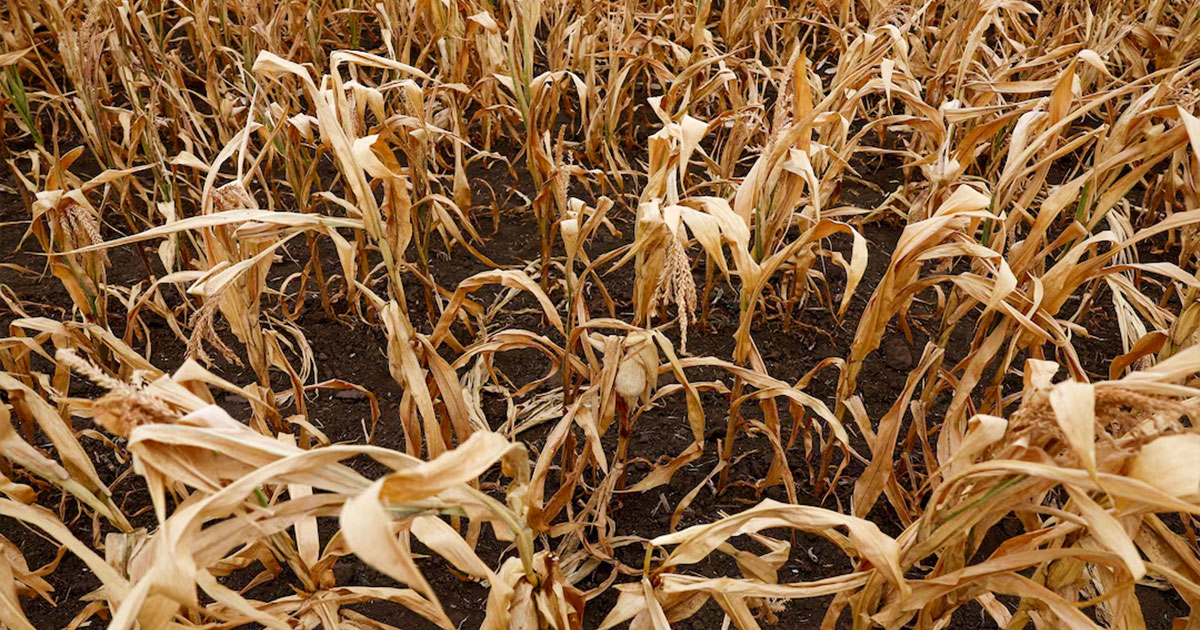
Károly Kovac stood in the middle of a withered cornfield in northeastern Hungary, remembering a season that was far removed from today's reality. About 16 years ago, one acre gave him 7 tons of crop, and the rains were approaching a thousand millimeters annually. Now, he describes the rain with one word: the absent present.
What Kovac sees in his field is being repeated on a larger scale in Central and Eastern Europe, where occasional droughts have become a recurring threat, accompanied by record temperatures and chronic water shortages. With each weak season, corn loses part of its position within two regions that have long been an important pillar of European production: Hungary and Romania.
The effects of this shift go beyond farmers' accounts; It began to extend to trade and importsFood security European Union, amid expectations that the corn crop in the European Union this year will reach a level approaching the lowest yield in two decades.
Corn yield is at its lowest levels
The European Commission expects the corn crop in the European Union to reach about 50.1 million tons during 2026, a decrease of nearly one-fifth compared to the average of the past three years.
Maize is traditionally the second-largest grain crop in the European Union, giving the decline weight beyond the affected fields themselves.
If the dry summer seasons continue at this pace, analysts expect the European Union's need for imports to increase, while the ability of some regions that used to produce a surplus to export will decline.
Commodity market analyst Gabriel Antonio estimates that European corn imports will rise by between 8% and 9% during the 2026-2027 season if cultivated areas and productivity continue to decline.
And here it begins Food security In shifting from a broad concept to an equation linked to the number of tons that a farmer succeeds in removing from his land, and the amount that local markets can provide before resorting abroad.

Hungary moves to import
A few years were enough to change Hungary's position in the corn market. The country that used to export the crop will need to import it this year, according to the government, after expected production fell to about 2.5 million tons, that is, less than a third of the levels recorded during the years 2018 and 2019.
Romania faces a similar path. Although its crop has avoided the worst European droughts this year, production is expected to reach about 8 million tons, a level that is more than half less than the production of 2018 and 2019.

Romanian corn exports also contracted from more than 7 million tons near the beginning of the decade to a range of 2.2 to 4.7 million tons during the period from 2023 to 2025.
These numbers change the position of the two countries within the European grain trade, and reveal how water shortages can rearrange the roles that markets used to treat as stable.

The soil loses its moisture
Because SDG 6 places sustainable water management at the foundations of development, what happens below the surface of the soil in Hungary and Romania becomes a direct part of the agriculture and production equation.
OECD data show that both countries perform weaker than the EU average on soil moisture indicators, while Central Europe is under increasing pressure from heat and water shortages.
During the past decade, maximum temperatures in June and July in Hungary exceeded the average for the period between 1961 and 1990 by about 3.1 degrees Celsius, while Romania recorded an increase of nearly 3 degrees.
This heat draws more moisture from the soil at a time when the corn crop needs water during sensitive stages of its growth, so the farmer finds himself facing a season that may start well and then quickly decline with the arrival of a drought.
The Organization for Economic Co-operation and Development believes that the continued loss of soil moisture has direct implications for agricultural production and water resource management, up to… Food security and residents' livelihoods.
Farmers change course
For some farmers, it is no longer just a matter of a poor crop in a passing season. Tamás Petóházy, president of the Grain Producers Association of Hungary, says that some farmers have left the business entirely, while others have been forced to look for additional jobs after family farms are no longer able to provide them with sufficient income.
He described the required change as a radical shift in the way agriculture is dealt with, especially with the decline in rain and the decline in the level of the Danube River to levels that even affected the operation of nuclear reactors in Hungary and Romania during the past month.

To learn how the decline in the level of the Danube extended from agriculture to the energy sector, read on: How the Danube River exposed the water, food and energy crisis.
As for Kovac, who begins the article in his field, he thinks about the day he might stop growing corn. Among the options before him is producing dry pasta using the eggs of the chickens he raises.
This is how the climate shock moves from the field to the way of making a living itself, and forces the farmer to reimagine the activity on which he has relied for many years.
Why do you plant and reap little?
In Romania, the picture is clearer for some small farmers, as Cesar Gheorghe, from the consulting company AGRIColumn, believes that climate change has prompted farmers to reduce their corn acreage and turn to autumn crops, after widespread losses have occurred since 2020.
Plants may begin their season normally, then a drought later arrives, burning large parts of the crop. Sustainable Development Goal 2, to end hunger and promote sustainable agriculture, poses a practical question: How does a food system maintain stability when one of its main crops becomes more vulnerable to heat and water shortages?
One answer appears in changing the type of crops. Romanian farmer Stefan Moraru turned to growing sunflowers, which require less water than corn.

To learn how more resilient crops can support food security, read on: How do chickpeas combat the impact of climate change?.
Irrigation equipment waiting for water
Moraro invested in irrigation systems after major losses to his crops in 2020, but the experience revealed to him the limits of the solution when the basic resource itself becomes scarce, as the canal that supplies water to his farms has been stopped since mid-July.
Farms can buy pumps, pipes and irrigation systems, Moraro explained, but the value of that equipment depends on the water it will work with.
This paradox presents agricultural adaptation with a deeper challenge. Technology can improve the efficiency of resource use, while water availability remains the starting point for any irrigation system.
Hence, investing in water resource management, storing them, and selecting crops best suited to new conditions becomes part of protecting production itself.
Food security faces a new map
European Commission forecasts indicate a high degree of uncertainty surrounding maize productivity in Eastern Europe in the coming years, prompting farmers and markets to prepare for a different agricultural map.
As hot and dry summers continue, maize acreage may decline further, and cultivation of other crops expand, while the EU needs to import more to cover the gap.
Here you reach a goal The thirteenth goal of sustainable development, on climate action directly to the field; Adapting to high temperatures and water shortages has become a means to protect farm income, stabilize food supplies, and the ability of agricultural areas to continue production.
Based on the transformations taking place in Hungary and Romania, The Earth Guards Foundation Crop diversification and efficient water management are at the heart of European agriculture's ability to adapt to a changing climate. A farmer who changes his crops, or recalculates his irrigation needs, is practically responding to a new reality imposed by heat and available water.
This transformation is granted Food security A dimension that exceeds the size of the crop in one season; It is linked to the ability of agricultural systems to change their tools and crops before recurring losses turn into a permanent decline in production.
As for Kovach, he still looks at the corn field that once yielded 7 tons per acre, while year after year that number becomes a memory of an agriculture that depended on a climate more generous with water.


